Labour's Existential Crisis and Starmer's Pragmatic Path Forward
There is no denying that the Labour Party is engulfed in a profound crisis, yet in a peculiar twist, Prime Minister Keir Starmer might be uniquely equipped to salvage it. As a pragmatist with minimal ideological baggage, Starmer possesses the potential to forge now-essential links with other political parties, a move critical for Labour's survival and relevance.
The Endless Internal Debate: Left Versus Right
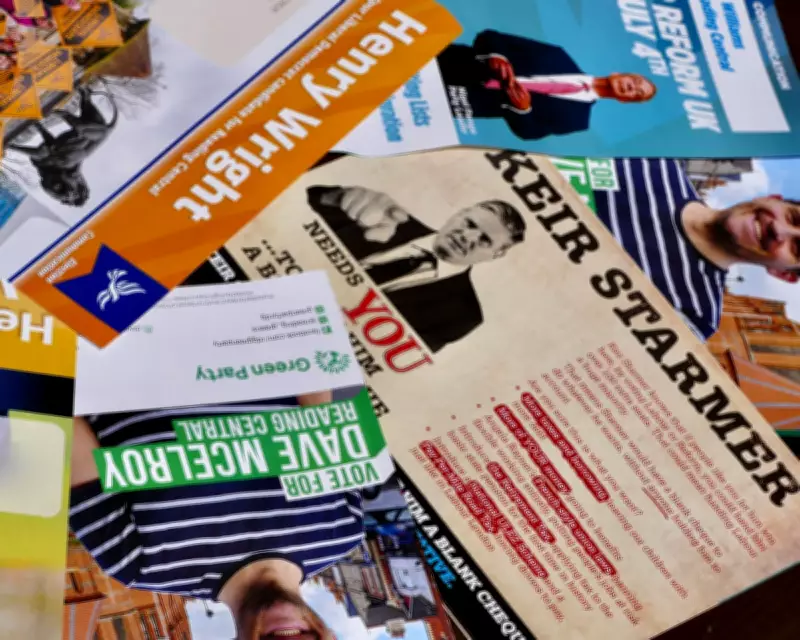
Since the earliest hints that Keir Starmer was not the Corbyn-in-a-tie figure his leadership campaign suggested, Labour members have been locked in a relentless argument. Should Starmer strive harder to incorporate the left flank of the movement, or at the very least, cease efforts to expel them? This same quandary shapes Labour's approach to the general electorate: should party apparatchiks focus less on the threat from Reform and more on the challenge posed by the Greens?
Questions abound, from the perplexing "island of strangers" speech to whether Shabana Mahmood was appointed to aggressively target migrants or if her actions are unexpected. Morgan McSweeney's legendary animosity towards the left, akin to dousing a fire to keep a cave cosy, raises further inquiries. How did he become so indispensable that only after his ally Peter Mandelson's downfall did anyone scrutinise his political beliefs?

Ultimately, all these issues converge on a single dilemma: should Starmer attempt to save his skin by feinting left or right? For Labour, the broader concerns include its aimless appearance, inability to convey a mission beyond a mere policy list, constant backtracking, and the deep, cross-spectrum unpopularity it has achieved. This invariably leads to the age-old conflict: prioritising values (left) versus pursuing victory (right).
The Shifting Political Landscape and Reform's Impact
Recent interventions, such as from the not-for-profit research group Persuasion UK, argue that Labour should worry more about leftwing defectors than rightwing ones. The reasoning includes their greater numbers, stronger opposition to racist cosplay compared to the right's concern over nationalising utilities, and the fact that rightwing switchers have largely already departed. While this adds psephological novelty, the debate itself belongs to a bygone era.
Labour must acknowledge it is no longer the sole political force. Reform has fundamentally altered the landscape, though not as the government perceives. Instead of unveiling a nation eager for xenophobic bidding wars, Nigel Farage has energised voters—both his supporters and those who despise his complacent, capitalist-serving agenda and social scapegoating. These voters are determined and flexible, as seen in byelections like Caerphilly and Gorton and Denton, where Plaid Cymru and the Greens benefited respectively.
It is not just turnout that has been galvanised but resolve. Opposition to figures like Matt Goodwin is not about voting for a more mature alternative; it is a barricade against hard-right ideologies. For Labour to even participate in opposing the hard right, it must genuinely oppose it and cease wasting energy positioning itself as the only righteous foe.
Lost Trust and the Need for Humility
Labour has already suffered significant losses, often unacknowledged. Some MPs reference the "Muslim vote" losing faith post-Gaza genocide, using it as a dog-whistle to delegitimise Muslim voters. Labour must revisit this conversation without dismissive undertones. Many individuals, Muslim and non-Muslim, will never support Labour again due to its logically and morally incoherent stance on Palestinian statehood and protest criminalisation. These voters cannot be hectored back or vanished with snide remarks; the only recourse is to ally with the parties they have turned to.
Labour politicians often dismiss the Greens as hapless chancers, a narrative that may play well on current affairs shows but fails to satisfy voters who align with Green values of equality, radicalism, and environmental love—values many Labour MPs claim to share. Similarly, Labour criticises the Liberal Democrats for their coalition past while adopting language and policies reminiscent of David Cameron's era.

The party now requires qualities foreign to its DNA: humility, agility, self-reflection, and compromise. It must genuinely reopen discussions on electoral reform and proportional representation, moving beyond periodic pretence. As its base explores alternatives, Labour should treat this not as infidelity but as an opportunity to understand what other parties offer that it does not.
Starmer's Potential in a Daunting Challenge
Keir Starmer appears trapped and demoralised, understandable given his status as the most unpopular prime minister ever, with ratings that seem to have no floor. Yet, an enormous, intricate challenge awaits: transforming a party that views alliance as a blood wedding—any colour so long as it's red—into one that can embrace a rainbow coalition. A pragmatist unblinded by passion, untroubled by loyal sentiment to ideas or cliques, and undeterred by detail might just meet this moment.
Starmer's greatest fear may be a bad headline, but once he accepts that headlines will invariably be negative, he could emerge as fearless. This pragmatic approach, light on ideology, could be the key to navigating Labour through its crisis and forging essential alliances in a fragmented political landscape.