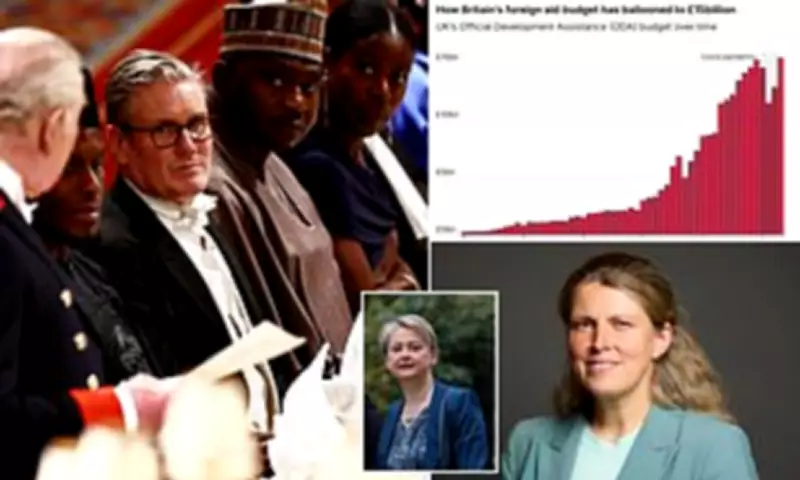
Labour Members of Parliament are intensifying pressure on Prime Minister Keir Starmer to abandon his government's controversial plans to slash the United Kingdom's foreign aid expenditure, even as the nation grapples with a severe cost-of-living crisis. Backbench rebels within the party are demanding an immediate reversal of the decision to reduce the £15 billion overseas development budget, which they argue should be preserved to bolster Britain's global influence rather than redirected toward defence spending.
Foreign Secretary Outlines New Aid Strategy
Foreign Secretary Yvette Cooper is scheduled to address Parliament today, detailing how the diminished aid allocation will be distributed following last year's significant reductions. The budget has been cut to less than 0.4 percent of national income this year, with projections indicating a further decline to 0.3 percent by 2027 under policies announced by Sir Keir Starmer in 2023. This represents a dramatic departure from the longstanding commitment to allocate 0.7 percent of gross national income to international development.
Internal Rebellion and Moral Arguments
The Prime Minister and Foreign Secretary face mounting opposition from within their own ranks. York Central MP Rachael Maskell, who faced a brief suspension from the Labour Party last year after rebelling against welfare payment cuts, has publicly implored the government to reinstate the 0.7 percent target. Maskell emphasised that the reductions would disproportionately harm women and children in vulnerable regions.

'While I acknowledge the fragile economic challenges confronting our country, better targeted aid constitutes a serious investment in our global future, alongside stronger diplomacy,' Maskell stated. 'It is the morally right thing to invest in.'
Geopolitical Tensions and Economic Fallout
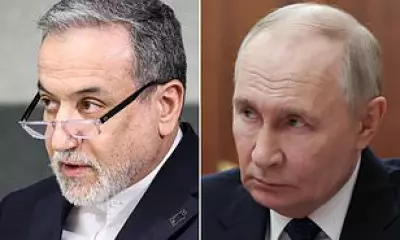
This internal dispute unfolds against a backdrop of escalating global instability. The economy is bracing for substantial shocks from the fallout of the US and Israeli conflict with Iran. European natural gas prices surged by over 30 percent today following former US President Donald Trump's threat to 'massively blow up' a major gas field in the Middle East.
There are growing fears that crude oil prices could skyrocket to $200 per barrel after Tehran recently threatened to cripple the global energy market through a 'full-scale economic war,' involving intensified missile attacks on oil and gas infrastructure. In the UK, petrol prices have already begun to climb, with energy experts warning that rationing measures may become necessary.
Strategic Refocusing of Aid Priorities
Billed as a 'fundamental change' in Britain's approach to international development, Yvette Cooper is expected to reposition the UK as an 'investor' rather than a mere 'donor.' This new strategy will emphasise providing technical expertise and support alongside financial assistance. Key priorities will include:
- Humanitarian aid to conflict-ravaged nations such as Ukraine, Gaza, Lebanon, and Sudan
- Targeted support for women and girls' programmes
- Climate change mitigation initiatives
- Mobilising private investment and enhancing collaboration with international institutions like the World Bank
Notably, G20 nations will no longer receive bilateral aid payments, with Turkey being the sole exception due to its ongoing refugee support requirements.
Parliamentary Dissent and Policy Alternatives
Ahead of her official announcement, Foreign Secretary Cooper defended the strategic shift: 'With less investment we need to refocus to ensure it has the most impact. Responding to desperate humanitarian crises, preventing conflict and upholding international law are not only a core part of Britain's values and our common humanity. They are also central to Britain's interests, because in an increasingly interconnected world, we know that instability abroad affects us back at home.'

However, Labour MP David Taylor, a member of the Commons International Development Committee, argued that the Treasury should collaborate more extensively on debt relief initiatives to compensate for the shrinking aid budget. 'It's all the more crucial now that the Treasury work with the FCDO on innovative forms of development finance, and debt relief, that would increase the share of the pie,' Taylor asserted. 'The last Labour government led the way at this. It's time for HMT to start finding ways to say yes instead of no.'
Calls for Complete Policy Reversal
Some Labour backbenchers are advocating for a more comprehensive overhaul of aid policy. Former aid minister Gareth Thomas warned: 'In an already unsafe world, cutting aid risks alienating key allies and will make improving children's health and education in Commonwealth countries more difficult. We risk creating more opportunities for regimes who don't share our values. Our security depends not just on a stronger military but also on building soft power so that our soldiers aren't needed.'
Beccy Cooper, chairwoman of the all-party parliamentary group on global health security, echoed these concerns: 'Labour is, and always has been, a party of internationalism. When we step back from our shared commitments, we lose both our strength and our standing in the world. We are a soft power superpower and we should be proud of that. Today's spending plans put Britain and the world at risk. When health systems in the poorest countries are not supported to become resilient, diseases spread faster and further. Protecting public health at home means investing in strong health systems everywhere.'
The deepening rift within the Labour Party highlights the difficult balancing act between domestic economic pressures and international obligations, with significant implications for Britain's global role and humanitarian commitments.