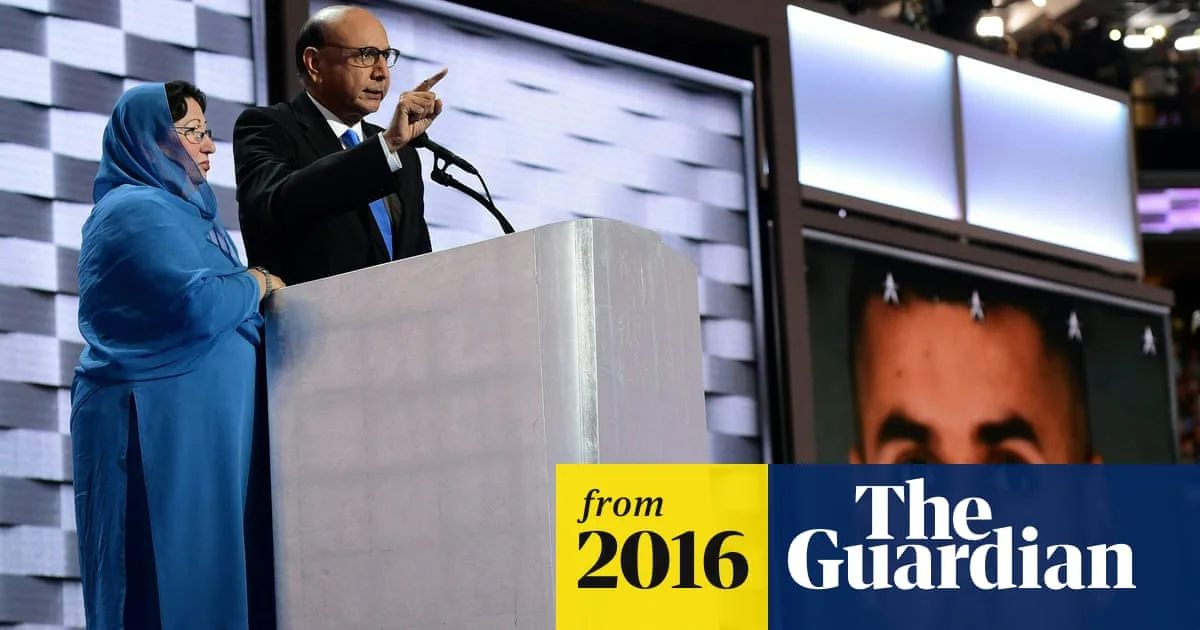
Donald Trump has ignited a diplomatic storm with his first response to Khizr Khan, the father of a Muslim American soldier killed in Iraq. In an interview with the New York Times, Trump said: 'I'd like to hear his wife say something.' He also suggested that Hillary Clinton's speechwriters scripted Khan's Democratic National Convention address, which Khan has said he wrote with his wife, Ghazala Khan.
In a separate interview with ABC, Trump questioned why Ghazala Khan stood silently during her husband's speech: 'She had nothing to say. She probably, maybe she wasn't allowed to have anything to say. You tell me.' Later, Trump released a statement praising Captain Humayun Khan as a hero, saying 'we should honor all who have made the ultimate sacrifice to keep our country safe.'
Hillary Clinton responded, calling for Americans to stand with the Khans and all families of fallen soldiers. She expressed sorrow over the current state of political discourse, saying: 'We're living in a time of really hot politics. People say all kinds of things – hateful things, insulting things. I'm sorry about that.'
During a campaign stop in Pennsylvania, Clinton also defended retired General John Allen, whom Trump had called a 'failed general.' She said: 'Our commander-in-chief shouldn't insult and deride our generals, retired or otherwise.'
Khizr Khan's convention speech directly challenged Trump's proposed Muslim ban, asking if Trump had read the Constitution or visited Arlington Cemetery. He said Trump had 'sacrificed nothing and no one.' Khan later called on Republican leaders Mitch McConnell and Paul Ryan to repudiate Trump, saying it was a 'moral imperative.'
A spokeswoman for Ryan's office said the speaker has 'made clear many times that he rejects this idea' and has spoken about Muslim Americans making the ultimate sacrifice. However, neither Ryan nor McConnell have rescinded their endorsements of Trump, despite criticising some of his remarks.