Keir Starmer's Delicate Dance on Iran: Between US Pressure and Public Opinion
As the British government confirms that Royal Air Force jets could soon participate in American-led military actions against Iran, targeting missile sites deemed lawful for defensive strikes, Labour Party pacifists express growing anxiety. They fear Britain risks being drawn into what they describe as "another Iraq"—a prolonged and controversial conflict. However, a closer examination of historical parallels and current political rhetoric suggests a more nuanced reality is unfolding.
The Legal and Strategic Tightrope
Prime Minister Keir Starmer has authorized US forces to utilize British bases for defensive operations against Iranian missile launch sites, actions he considers lawful under international norms. Yet, he has refrained from ordering the RAF to conduct direct strikes on Iranian territory. Currently, British fighter aircraft are engaged solely in intercepting drones and missiles already airborne from Iran, a more defensive posture.
This cautious approach has drawn criticism from political opponents. Kemi Badenoch recently questioned why the RAF is not permitted to "destroy missile launch sites to defend British territory." While Starmer did not respond directly, Defence Secretary John Healey has not ruled out a policy shift to allow British strikes within Iran. Deputy Prime Minister David Lammy has further indicated that Britain could independently "take down sites" in Iran if they threaten British personnel, asserting such actions would be legal.

Labour's Internal Divisions and Historical Echoes
Within the Labour Party, figures like Richard Burgon warn of "mission creep," fearing Britain will be pulled deeper into a war alongside US President Donald Trump and Israeli Prime Minister Benjamin Netanyahu. However, Starmer's stance appears consistent with his long-stated position. According to leaked accounts from a National Security Council meeting, Starmer maintained that initial US-Israeli strikes were unjustified, but once Iran begins firing missiles at neighbors, Britain must assist in prevention efforts.
Strategically and legally, the argument for pre-emptive defensive action gains traction now that Iranian attacks have endangered British allies and citizens. Starmer's handling of the Iran conflict intriguingly mirrors the hypothetical scenario of Robin Cook as prime minister during the Iraq War. Like Cook, Starmer opposes initial military interventions deemed lacking in clear objectives or viable planning, yet supports defensive measures and humanitarian aid post-conflict.
Public Opinion and International Law
The parallels to 2003 are striking. Critics then argued the US and Britain targeted the wrong nation, with Iran posing a greater regional threat. Today, Iranian proxies have even struck a British base in Cyprus, fulfilling fears once mocked during the Saddam Hussein era. A key difference is President Trump's dismissal of a ground invasion as a "waste of time," limiting escalation risks.
Starmer's adherence to a strict interpretation of international law serves a dual purpose. It aligns with public sentiment, which largely views the US attack on Iran as unwise but defensive actions against Iranian retaliation as justified. This reflects the lesson Tony Blair learned belatedly: military actions abroad falter without domestic support. Blair might advocate finishing the job with US and Israeli allies, but Starmer, attuned to average British voters, prioritizes avoiding initial provocations and maintaining distance from full-scale involvement.
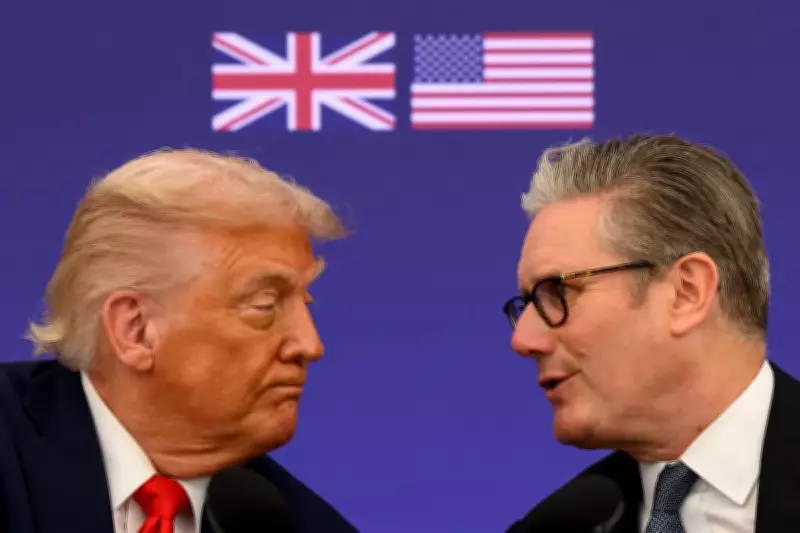
Ultimately, Starmer navigates the challenging dynamics of managing US presidential expectations while heeding public opinion and the cautious legacy of figures like Robin Cook. This ensures Britain avoids standing shoulder-to-shoulder with President Trump in Iran, instead pursuing a measured, legally-grounded approach that balances alliance obligations with national interests and democratic accountability.