FBI Director Kash Patel's Controversial Tenure Draws Historical Parallels
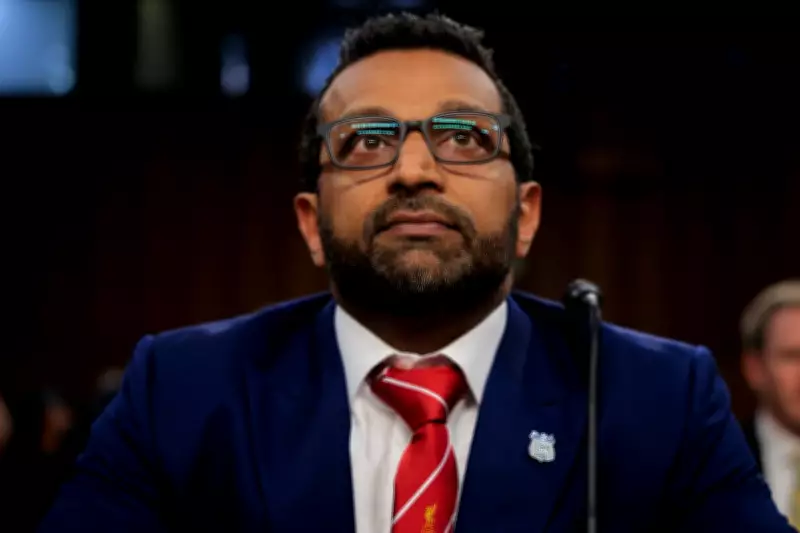
Since assuming the role of FBI director one year ago, Kash Patel has been embroiled in a series of controversies that have sparked intense scrutiny from political opponents and bureau insiders alike. The 46-year-old former public defender and Trump aide, known for his self-promotional tendencies, has implemented sweeping reforms and faced allegations of misusing taxpayer funds, leading some to question his fitness for the position.
Patel's Leadership Under Fire
Patel's tenure has been marked by several contentious decisions that have drawn criticism from multiple quarters. He has conducted mass firings of agency staff perceived as disloyal to the president, while simultaneously attracting ridicule for prematurely disclosing details of high-profile investigations on social media platforms. His penchant for tactical gear has drawn unflattering comparisons to former Homeland Security chief Kristi Noem, who was famously dismissed as "ICE Barbie."
Further controversy has emerged regarding Patel's use of government resources for personal purposes. This includes utilizing government jets for trips to a Texas ranch and Scottish resort, as well as providing his country music star girlfriend, Alexis Wilkins, with a SWAT team security detail during her attendance at the Olympics, which she defended as FBI security provision.

Democratic lawmakers have been particularly vocal in their criticism, with Illinois Senator Dick Durbin accusing Patel of "beyond the pale" misconduct last month. Numerous current and former FBI personnel have expressed concerns that Patel is "in over his head" and has left the bureau "rudderless" during his leadership.
An FBI spokesperson has refuted these allegations to media outlets, while Patel himself has taken to social media to defend his actions, describing the criticism as "baseless" and vowing to remain "laser-focused" on rebuilding the bureau from its foundations.
Historical Context of FBI Controversies
Despite the intensity of current scrutiny, Patel is far from the first FBI director to face such challenges. Throughout the bureau's 118-year history, numerous directors have weathered accusations of partisanship, corruption, civil liberties violations, and other significant missteps.
Alexander B. Bielaski (1912-1919)
As the head of the newly established Bureau of Investigation, Bielaski presided over what Penn State history professor Douglas M. Charles describes as "mass civil liberty violations." During World War I, the bureau conducted "Slacker Raids" targeting draft dodgers, relying on volunteers with fake badges to detain Americans without proper oversight. Bielaski resigned following congressional pushback at the war's conclusion.
William J. Flynn (1919-1921)
Appointed by Attorney General A. Mitchell Palmer, who praised him as an "anarchist chaser," Flynn operated during America's first "Red Scare." His bureau rounded up foreigners for deportation and established a "Radical division" under J. Edgar Hoover that systematically violated civil rights in pursuit of anti-anarchist objectives.
William J. Burns (1921-1924)
Dubbed the "American Sherlock Holmes" by Arthur Conan Doyle, Burns modernized the FBI by introducing fingerprinting technology and hiring the bureau's first female and Black agents. However, his tenure was marred by corruption, including using wiretaps to advance his boss's interests and prosecuting senators investigating the Teapot Dome Scandal. He was ultimately fired for his misconduct.
J. Edgar Hoover (1924-1972)
Perhaps the most notorious FBI director, Hoover transformed the bureau into a powerful institution while secretly gathering information on American citizens. He targeted civil rights groups, anti-war activists, leftists, and gay individuals, compiling dossiers on politicians and celebrities for potential blackmail. Despite serving eight presidents, Hoover maintained his position until his death in 1972.
L. Patrick Gray (1972-1973)
Appointed by President Richard Nixon following Hoover's death, Gray attempted to obstruct the FBI's Watergate investigation, even burning documents from a conspirator's safe. His efforts to purge resistant FBI officials met with internal resistance, leading to his resignation after less than a year in office.

James Comey (2013-2017)
More recently, Comey faced criticism for announcing the reopening of an investigation into Hillary Clinton's emails just eleven days before the 2016 presidential election. His description of Clinton's handling of classified material as "extremely careless" was seen by many as influencing the election outcome. Comey was later fired by President Trump after refusing to pledge personal loyalty.
Contemporary Implications
The historical context provided by these previous directors highlights that controversy has been a recurring theme throughout the FBI's leadership history. While Patel's current challenges are significant, they follow established patterns of scrutiny faced by bureau directors across different political eras. The ongoing debate about his leadership style, spending practices, and reform initiatives continues to unfold against this historical backdrop of FBI directorial controversies.