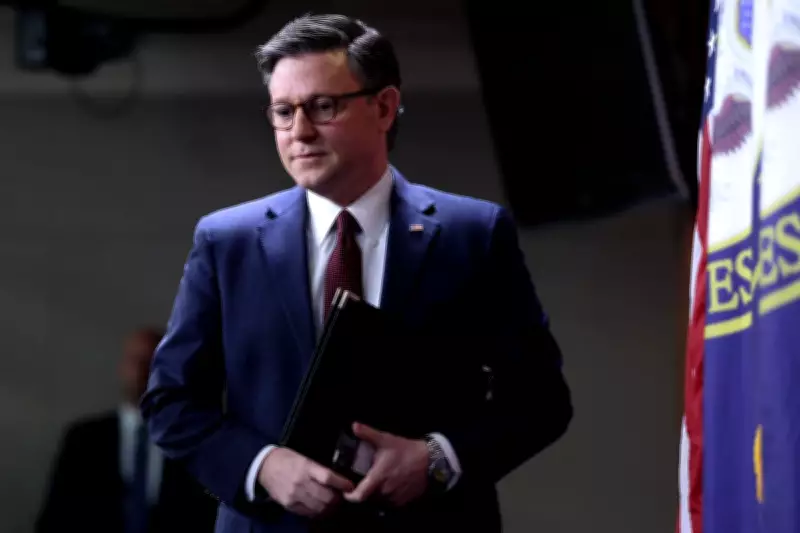
Speaker Johnson's DHS Funding Reversal Sparks Fury Among Republican Allies
House Speaker Mike Johnson is facing significant internal rebellion from within his own party following what critics are calling a "bait-and-switch" maneuver on Department of Homeland Security funding legislation. According to multiple reports, even Johnson's closest allies have expressed fury over his sudden reversal on a critical DHS appropriations bill that has left the department unfunded for a record 52 days.
The Controversial Funding Flip-Flop
Johnson initially rejected what he called the Senate's "joke" proposal for DHS funding, which would have provided money for most agency operations while excluding specific funding for Immigration and Customs Enforcement (ICE). Instead, the Speaker pushed House Republicans to pass a 60-day stopgap measure that had little chance of Senate approval.
Yet in a dramatic turn of events just days later, Johnson abruptly abandoned his own stopgap proposal and agreed to the Senate's two-track funding approach after closed-door discussions with White House officials. This sudden reversal has left many House Republicans feeling betrayed and questioning Johnson's leadership strategy.

Republican Backlash Intensifies
During recent House Republican Conference calls, members have voiced strong frustrations with Johnson's handling of the DHS funding battle. According to reports from Punchbowl News and the New York Times, lawmakers criticized both Johnson and Senate Majority Leader John Thune for endorsing what they see as a flawed strategy.
One Republican member described Johnson's maneuver to Politico as "pretty pathetic," while another complained that the two-track bill represented "taking a step back" in negotiations. The depth of anger suggests significant fractures within Republican ranks over immigration and funding priorities.
Consequences of the Funding Impasse
The ongoing DHS funding battle, which began in February when Democratic lawmakers refused to pass appropriations without additional regulations for immigration enforcement agents, has created real-world consequences. DHS employees have worked without pay for weeks due to their designation as national security personnel, while Transportation Security Administration workers have called out sick or quit entirely, leading to historically long security lines at airports across the country.
President Donald Trump provided temporary relief by signing an executive order declaring DHS staff should be paid during the shutdown, but this did not resolve the underlying funding crisis.
Looking Ahead: Uncertain Path Forward
The House is scheduled to return on April 14, but Johnson is not expected to bring the DHS funding bill to the floor unless the Senate makes substantial progress on funding for both ICE and Customs and Border Patrol. According to sources familiar with the matter who spoke with Axios, this condition creates additional uncertainty about when the funding impasse might finally be resolved.
Republican leadership has argued that funding most DHS agencies while keeping immigration enforcement regulations open for negotiation represents the best available option. As Senator Thune noted, "You've got to figure out what's in the realm of the possible." However, Johnson's handling of the situation has left many questioning whether this pragmatic approach has come at too high a political cost within his own party.