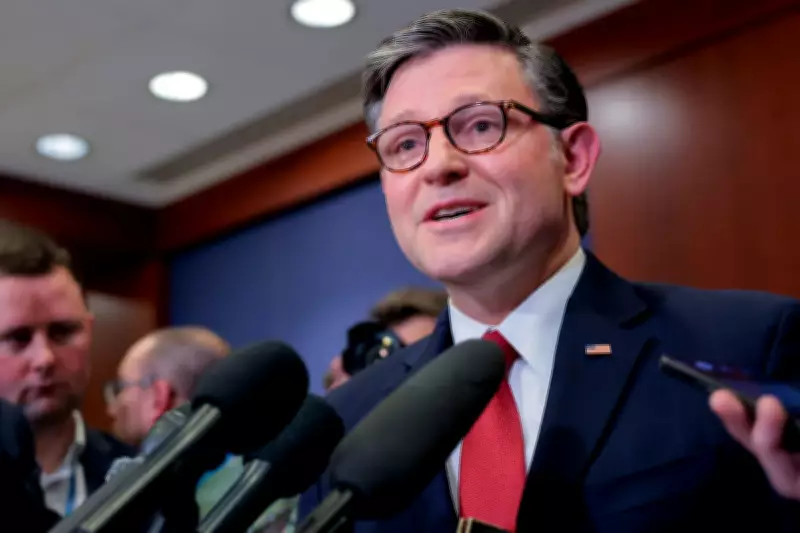
In a striking declaration that has ignited political debate, House Speaker Mike Johnson has firmly stated that the United States is not at war with Iran at this moment. This assertion comes directly in contrast to recent comments from President Donald Trump and Defense Secretary Pete Hegseth, both of whom have described the situation as a state of war.
Contradiction in Leadership Statements
During his weekly press conference, Speaker Johnson, a Republican from Louisiana, addressed the escalating tensions following a military campaign in Iran. He dismissed the notion that the House of Representatives needs to vote on the War Powers Act, a resolution aimed at curbing presidential military authority. "We're not at war right now, we're four days into a very specific clear mission and operation," Johnson told reporters, emphasizing the limited scope of current U.S. actions.
Background of the Conflict
The controversy stems from a barrage of actions and statements by the Trump administration targeting Iran, which have led to widespread speculation about an official war status. Despite this, Johnson has argued that Iran declared war on the United States, yet he maintains that the U.S. response does not constitute a full-scale war. This nuanced position highlights the complex dynamics in U.S. foreign policy and military engagements.

Political Implications and Reactions
Johnson's rejection of the War Powers Act resolution has drawn criticism from some lawmakers who fear unchecked executive power. The debate underscores broader issues of constitutional authority and the balance of power between the legislative and executive branches during international conflicts. As the situation evolves, this disagreement among top U.S. leaders could impact diplomatic strategies and public perception of the ongoing operations in Iran.