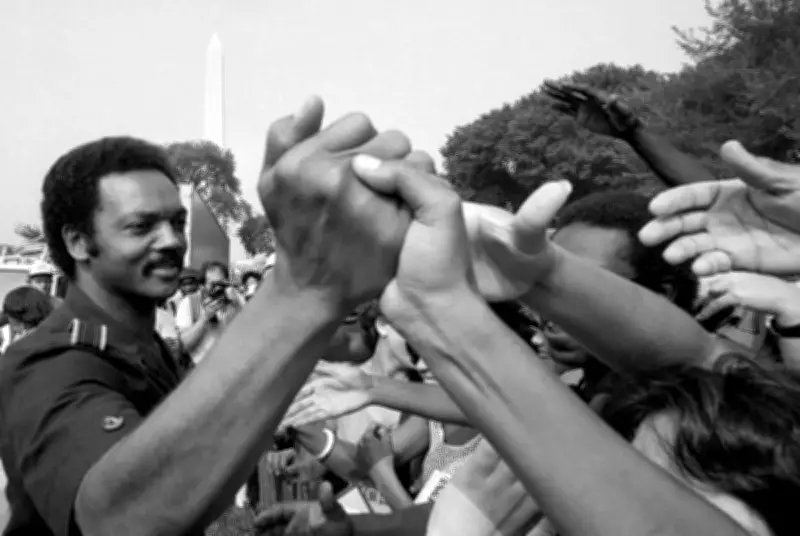
How Jesse Jackson's 'Radically Inclusive' Vision Shaped the Democratic Party Today
Reverend Jesse Jackson, the civil and human rights trailblazer who passed away on 17 February, envisioned an America where marginalised communities became central to political discourse. His progressive outlook, more ambitious than many in the Democratic party thought feasible after the civil rights movement, was realised through the National Rainbow Coalition, launched following his 1984 presidential campaign, setting the stage for a transformative era.
A Legacy of Inclusivity and Coalition Building
Charles McKinney, a history professor at Rhodes College, described Jackson's Rainbow Coalition as the embodiment of a national politics that is radically inclusive. Jackson's approach catered to diverse groups, from the middle class and elites to working-class individuals, reflecting a capacious and transgressive vision that has influenced contemporary politicians like Barack Obama, Bernie Sanders, and Zohran Mamdani.
Jackson's formative years as an organiser in the civil rights movement were pivotal. As a student at North Carolina A&T, he participated in the Greensboro sit-ins and became one of the youngest lieutenants in Martin Luther King Jr's Southern Christian Leadership Conference (SCLC). In 1966, King appointed him as the first director of Operation Breadbasket in Chicago, which aimed to enhance economic conditions, later evolving into Operation Push, the precursor to his national coalition.

Mobilising Black Voters and Shifting Democratic Dynamics
During the Reagan era, Jackson was alarmed by the Democratic party's rightward shift. With no clear successor after Jimmy Carter's defeat, Jackson seized the opportunity to forge a multiracial, cross-class coalition within the party, encompassing working-class whites and Blacks, progressives, and the college-educated upper classes. His 1984 presidential bid marked the first time an African American was a serious contender for the nomination.
Jackson's efforts revitalised Black voter participation, which had waned post-civil rights movement. Through voter registration campaigns, he helped enrol approximately 2 million Black voters, particularly in the south, demonstrating their electoral power. This surge in turnout, known as the Jesse Jackson effect, contributed to Democrats retaking the Senate in 1986, solidifying Black voters as a backbone of the party.
Championing Gay Rights and Progressive Causes
In his 1984 Democratic National Convention speech, Jackson made history by explicitly mentioning lesbians and gays, asserting that the rainbow includes all and that no American should be denied equal protection under the law. Decades before gay marriage was legalised, Jackson's unwavering support for human and civil rights extended to the LGBTQ+ community, from speaking at the 1993 March on Washington to endorsing Massachusetts's legalisation of gay marriage and backing Obama's support for same-sex marriage in 2012.
Advocating for the Working Class and Palestinian Liberation
Jackson's Rainbow Coalition mobilised voters across racial and economic lines, emphasising a collective struggle against billionaires and capitalists. This stance resonated with working-class Americans, helping him win the Michigan Democratic presidential caucus in 1988, a victory that stunned political observers and highlighted his focus on economic justice.
Beyond domestic issues, Jackson extended his coalition building to international causes. His 1984 campaign included an Arab American committee, and he pushed for Democratic platform planks supporting Palestinian self-determination. Although unsuccessful at national conventions, his advocacy led 11 state parties to adopt pro-Palestinian rights platforms, mainstreaming the debate within the party long before it became widely accepted.
Jackson's legacy endures through his radical inclusivity, which reshaped the Democratic party into a more diverse and progressive force, influencing generations of leaders and movements.