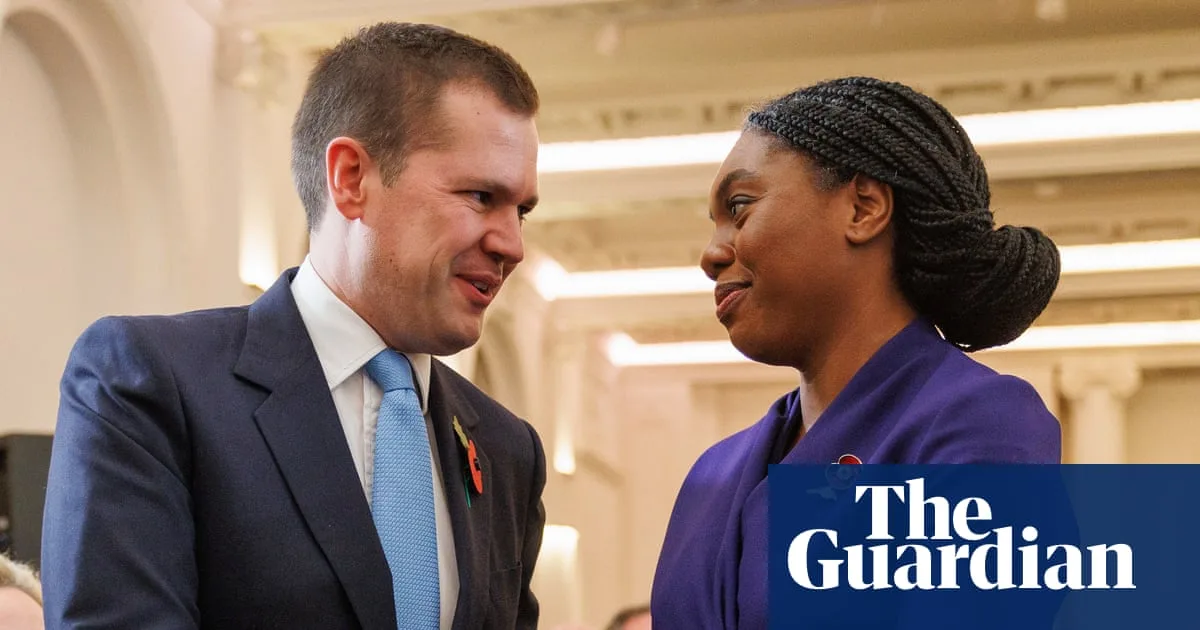
The political world is no stranger to heated debates, but a recent incident involving Robert Jenrick has shifted focus to a seemingly simple yet profoundly symbolic issue: the correct pronunciation of names. Following his defection to the Reform party, Jenrick faced scrutiny after repeatedly mispronouncing the surname of his former Conservative colleague, Kemi Badenoch, in a public statement. This gaffe has sparked a broader discussion about respect, power dynamics, and the subtle ways in which individuals, particularly women, can be undermined in professional and political spheres.
The Badenoch Mispronunciation: A Deliberate Slip or Genuine Error?
Kemi Badenoch's surname, correctly pronounced as "Bade-noch" (with no "bad" in it), has been a point of confusion for some, often mistakenly said as "Bad-e-noch." However, for a senior political figure like Robert Jenrick, who worked alongside Badenoch, such an error raises eyebrows. When questioned by broadcaster Kate McCann about mispronouncing the name three times, Jenrick responded with what many perceived as disingenuousness, claiming he had "no idea" what she was talking about and suggesting she needed her "head checking" for raising the issue. This reaction has been widely criticised as dismissive and indicative of a deeper lack of respect.
A Pattern of Disrespect: Historical Precedents in Politics
Jenrick's behaviour is not an isolated incident in the political arena. It echoes tactics used by other high-profile figures, most notably former US President Donald Trump, who frequently mangled the names of political rivals like Kamala Harris and Ilhan Omar. Trump admitted to not caring about correct pronunciation, using it as a tool to belittle opponents. This strategy is reminiscent of the "negging" technique from pick-up artist culture, where small put-downs are employed to undermine confidence and assert dominance. In politics, mispronouncing a name can serve as a subtle power play, signalling contempt or a refusal to acknowledge someone's identity and status.
For many women, this issue hits close to home. Experiences of bosses, colleagues, or acquaintances deliberately or carelessly getting names wrong are common and often felt as a form of professional or emotional undermining. As highlighted in the original article, even minor misnaming, like calling someone "Rowena" instead of "Rowan," can be a petty act of revenge or dismissal, especially when rooted in gender biases or cultural ignorance.
The Broader Implications: Why Pronunciation Matters
Getting someone's name right is more than a matter of etiquette; it is a fundamental sign of respect and recognition. In a diverse society like the UK, where names from various cultural backgrounds are commonplace, making an effort to pronounce them correctly acknowledges individuality and fosters inclusivity. Mispronunciations, particularly when repeated after correction, can alienate and marginalise, reinforcing feelings of otherness.
Of course, not all mispronunciations are malicious. Many people struggle with unfamiliar names or linguistic nuances, as seen with examples like David Bowie's surname or the Swiss town of Davos. However, the key distinction lies in intent and response. When errors are made in good faith, a simple apology and effort to learn suffice. In contrast, feigned ignorance or dismissal, as alleged in Jenrick's case, transforms a simple mistake into a statement of disregard.
Cultural Sensitivity and the Political Landscape
This incident underscores the importance of cultural sensitivity in politics. With the UK's political landscape becoming increasingly diverse, understanding and respecting different names and backgrounds is crucial for effective representation and public trust. Missteps like Jenrick's can damage relationships within parties and with the electorate, highlighting a need for greater awareness and education.
Moreover, the reaction to Jenrick's gaffe reflects a growing public intolerance for such behaviours. In an era where social media amplifies every slip, politicians are held to higher standards of conduct. The backlash against Jenrick suggests that voters and commentators are increasingly attuned to these subtle forms of disrespect, viewing them as indicative of broader attitudes towards colleagues and constituents.
Moving Forward: Lessons for Public Figures
For public figures, the takeaway is clear: taking the time to learn and use correct pronunciations is not just a minor detail but a significant aspect of professional integrity. It demonstrates respect, builds rapport, and avoids unnecessary controversies. As the debate around Jenrick's actions shows, failure to do so can lead to accusations of pettiness, misogyny, or cultural insensitivity, tarnishing one's reputation and credibility.
In conclusion, while mispronouncing a name might seem trivial to some, it carries weighty implications in the political realm. Robert Jenrick's experience serves as a cautionary tale for all in public life, reminding us that in an age of heightened scrutiny, even the smallest gestures of respect—or lack thereof—can have outsized consequences. As society continues to champion diversity and inclusion, getting names right is a simple yet powerful step towards a more respectful and cohesive political culture.