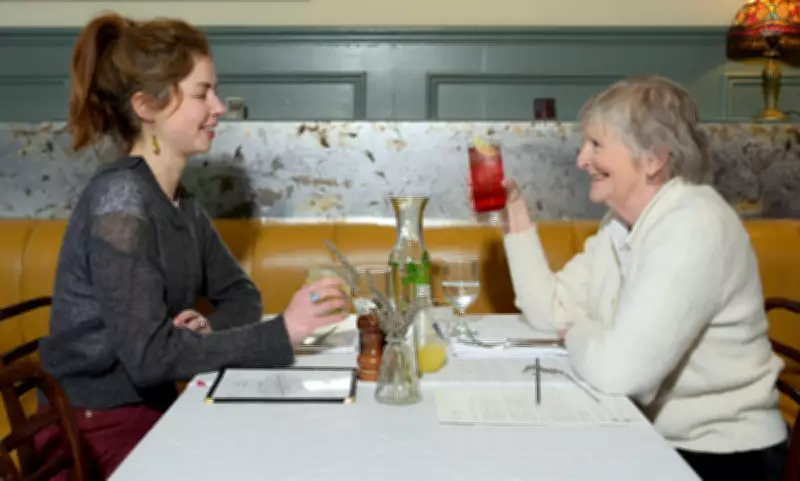
In a London French bistro, two Irish women with opposing political viewpoints sat down for a conversation that would traverse party leadership, housing affordability, and the contentious issue of who should foot the bill for policing demonstrations. Ruth, a 30-year-old Green Party member and consultant from Cork, and Moira, a 76-year-old retired floating voter from County Clare with Conservative leanings, found common ground in their heritage but diverged on policy.
A Meeting of Minds Across the Political Divide
The lunch at Le Petit Citron in London W6 began with pleasantries and personal histories. Both women originally planned short stays in the capital but found themselves long-term residents. Moira enjoyed coq au vin and a lavender mocktail, while Ruth opted for ratatouille, choosing to stay sober for the weighty discussion ahead.
Charisma Versus Substance: The Polanski Question
The conversation quickly turned to Green Party deputy leader Zack Polanski. Moira expressed a conflicted view, acknowledging his articulate and charismatic nature, which she compared to Boris Johnson. "Charisma is fantastic, but it needs depth and integrity," she stated, revealing her concern that Polanski might replicate what she saw as Johnson's prime ministerial shortcomings. She also referenced an unusual past incident involving hypnosis, which gave her pause.

Ruth offered a robust defence of the politician. She argued that seeking political opportunity is inherent to the role and that Polanski is genuinely attempting to address social issues for left-leaning individuals who feel politically homeless. "He's humble, he's genuine and he's willing to speak to people," she asserted, praising his handling of criticism over economic policies like wealth taxes, despite not being a technical expert.
The Housing Crisis and Economic Policies
A tangible point of concern for both was the UK's housing crisis. Moira highlighted the stark reality faced by Ruth's generation: "There's something radically wrong when a well-educated, hard-working person of 30 cannot see their way to owning property," she said, specifically referencing London's prohibitive market. This shared anxiety over housing provided a bridge between their differing political allegiances.
Should Protesters Pay for Policing?
The debate intensified when discussing the policing of demonstrations. Moira, while supporting free speech and protest rights, questioned the financial burden on the public purse. She proposed a novel, controversial solution: "I propose the activists are asked to contribute for some of the policing and costs involved in closing off streets and damaging business. A tenner a head, say."
Ruth strongly opposed this idea, framing it as a dangerous precedent that would create a privilege-based system. "The trouble with that scenario is it becomes a privileged system: protesting is all well and good but only if you can afford it," she countered. She also questioned the practicality of enforcement and suggested there were already too many police at events like Palestine solidarity marches.
An Unexpectedly Warm Exchange
Despite their disagreements, both women emphasised the cordial and respectful nature of their encounter. They reflected on an Irish tendency for civil disagreement, attributing it to the small size of their homeland where personal connections often temper conflict. Moira admitted she had expected dogmatism but found Ruth "lovely," expressing admiration for her younger counterpart's charm and power. Ruth, in turn, left with "fondness" for Moira, noting she would be delighted to see her again.
Their discussion underscored the complex layers of modern political identity, where personal background, generational experience, and core values intersect, sometimes creating unexpected alliances and respectful disagreements over lunch.