Hungarian Thriller Feels Like Home Ignites Political Debate Amid Election Fever
In a packed Budapest cinema on a Tuesday evening, audiences are not flocking to a Hollywood spectacle but to a modest Hungarian psychological thriller titled Feels Like Home. This film, with its minimal budget and striking visuals, has unexpectedly become a cultural phenomenon, resonating deeply with viewers as Hungary approaches crucial parliamentary elections on 12 April.
A Story of Captivity and Control
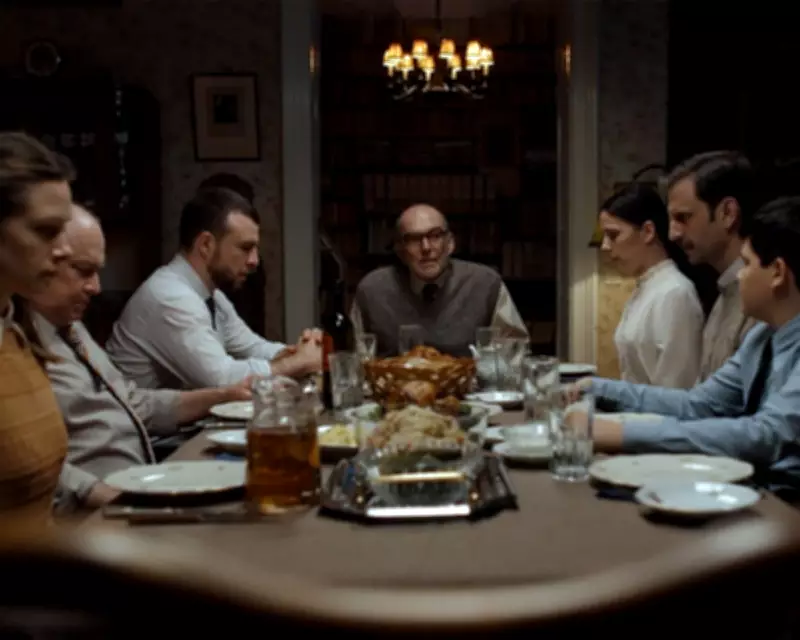
Feels Like Home narrates the harrowing tale of Rita, a saleswoman abducted by a family ruled by an authoritarian father-figure known as Papa. In this oppressive household, members gain privileges only by adhering to strict rules. Rita's desperate attempts to escape reveal a chilling reality: even the outside world appears to be under the family's dominion, leaving her with nowhere to turn for help.
Director Gábor Holtai insists the film was not conceived as a direct metaphor for life under Prime Minister Viktor Orbán's 16-year rule. However, in the feverish final weeks of the election campaign, Hungarian audiences have overwhelmingly interpreted it as such. Critics argue that Orbán has systematically dismantled democratic institutions, enriched his loyalists, and consolidated power, creating a climate where the film's themes feel eerily familiar.

Political Parallels and Audience Reactions
At a screening in Buda, attendees like Bea, a 52-year-old sales assistant, wore T-shirts emblazoned with the logo of the Tisza party, led by Péter Magyar, who is challenging Orbán from within his former circle. Bea expressed shock at the film's portrayal of intimidation and control, stating, "I understood that we are the ones shaping our fate: we are the other members of the family." This sentiment echoes widely, with viewers drawing direct links between the movie's characters and Hungary's political leadership.
Holtai acknowledges this interpretation, noting that audiences in countries with histories of dictatorial regimes have similarly reflected on their past and present. The film's lack of state funding and minimal PR budget has not hindered its success; instead, it has thrived through word-of-mouth and social media promotion by its cast, many of whom are vocal critics of Orbán.
Industry Impact and Critical Acclaim
Independent film critic Gellért Kovács highlights several factors behind the film's success. "First of all, this is a great movie," he says, "and compared to other Hungarian films, it's rare to find one that meets Hollywood standards for a psychological thriller. It serves as an allegory of the ever-present situation in Hungary, highlighting certain archetypes through its characters."
The Hungarian film industry has felt the weight of Orbán's government, which controls the National Film Institute (NFI), primarily funding projects aligned with Fidesz ideology. Kovács points to a new wave of films born from "necessity, pain, and despair"—created without state subsidies yet capable of generating greater impact than big-budget productions. Feels Like Home stands as a testament to this trend, holding up a mirror to both the industry and society.
Audience members like Róbert, a 73-year-old retail worker who returned for a second viewing, attest to the film's lasting power. "This is a movie that makes you think for days," he remarked, expressing frustration with Hungary's divisive political climate. As the election looms, Feels Like Home continues to spark conversations, underscoring the deep-seated tensions within the nation.