France's New Mayors of Colour Face Racist Backlash After Historic Wins
The 2026 French municipal elections marked a significant shift as a new generation of politicians of colour emerged, particularly in the Paris suburbs. However, this democratic milestone has been met with a surge of racism, exposing deep-seated anxieties in a nation that often struggles to see itself as anything other than white.
Historic Victory in Saint-Denis
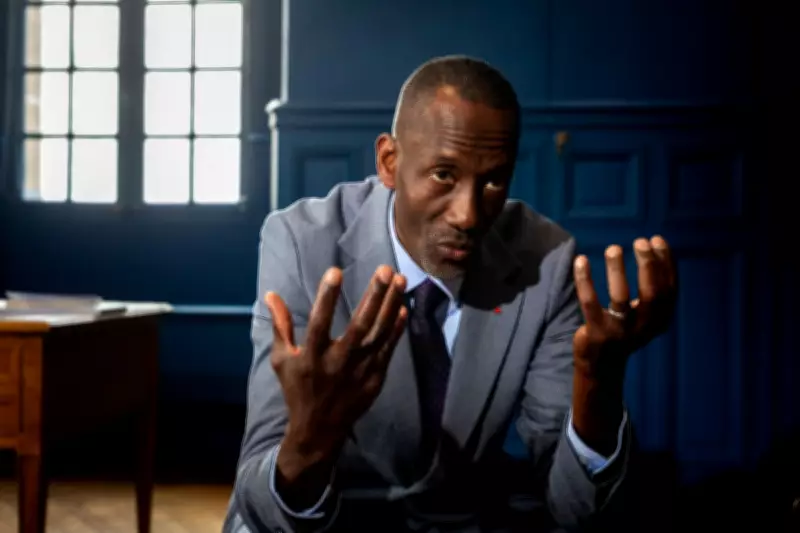
In Saint-Denis, a city just over 9km from Paris centre but located in the poorest department of metropolitan France, Bally Bagayoko achieved a remarkable feat. Leading a leftwing list that united La France Insoumise and the Communist party, he decisively won the mayoral race in the first round, avoiding a runoff. This made him the only candidate in a city of over 150,000 residents to do so.
Bagayoko, a 52-year-old child of Malian immigrants and a long-time elected representative since 2001, has a conventional political trajectory, including roles as deputy mayor and vice-president of the departmental council. His victory was celebrated with joyous scenes, as crowds carried him shoulder-high, chanting his name. For the first time, Saint-Denis, home to 130 nationalities, has a mayor who reflects its diverse community.

Wider Trend and Immediate Backlash
Bagayoko is not alone. Across Seine-Saint-Denis, 13 out of 39 mayors elected were people of colour, representing various political labels. This surge should be hailed as a sign of a healthy democracy, especially as the far right gains ground nationally. Yet, instead of celebration, it triggered a political earthquake.
Almost immediately, Bagayoko faced a racist backlash. False claims spread on social media and mainstream media, alleging he said he would make Saint-Denis a "city of Black people," when he actually referenced "la ville des rois," a historical nod to the Basilica of Saint-Denis. This misinformation, initially pushed by the far right, gained credibility solely due to his skin colour.
Attacks escalated, with a white journalist insinuating drug dealer backing and a CNews guest comparing him to a "primitive tribal chief" and a monkey, leading to a police investigation. Despite this, institutional responses were weak. Prime Minister Sébastien Lecornu and Interior Minister Laurent Nuñez condemned the attacks only after media pressure, while President Emmanuel Macron offered a vague statement without addressing the specific incidents.
Government Absence and Broader Implications
An anti-racism rally in Saint-Denis drew tens of thousands, but no government members attended. Discrimination Minister Aurore Bergé claimed it was "not the role of the state," despite previous state-led marches against antisemitism. This highlights a disparity in how racism is addressed compared to other forms of discrimination.
Newly elected officials across Paris suburbs, often rooted in local networks like sports and community organising, have all faced racist scrutiny. Media and political actors treat them as illegitimate, questioning high voter turnout in certain areas and casting them as intruders. For instance, four Black members of the national assembly received a letter suggesting they belong in a zoo.
Deep-Seated Racial Panic
The disproportionate scrutiny reveals a racial panic in France, rooted in colonial history and white supremacy. The issue is not just the presence of people of colour, but their access to power. As descendants of colonised people aspire to lead, France grapples with an identity crisis. With low voter turnout and urgent needs in these poor, young districts, the focus should be on governance, not racism.
This generation of leaders has built projects reflecting their communities' trajectories, yet they face barriers that undermine democratic progress. The elections have reignited a civilisational anxiety, showing that France's journey toward inclusive representation remains fraught with challenges.