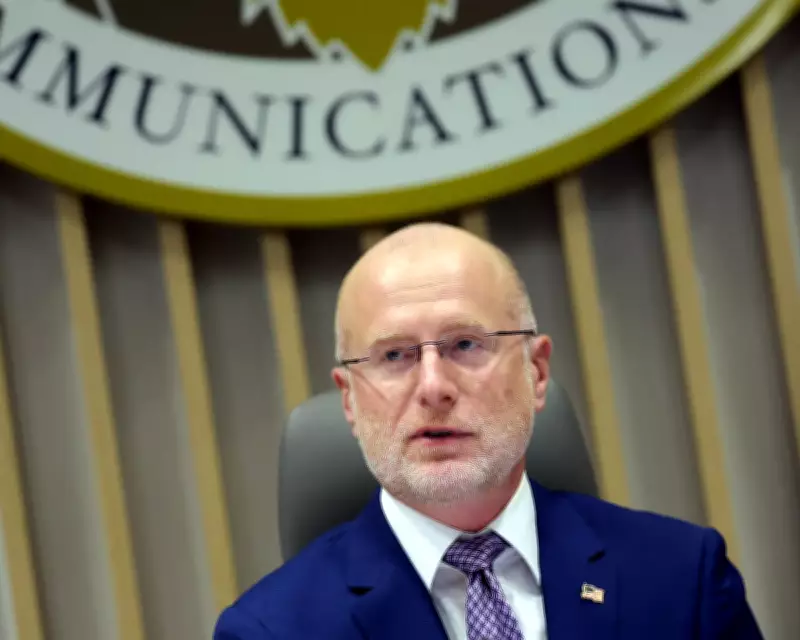
FCC Chair's Threats Align with Trump's Attacks on Press Freedom
Over the weekend, former President Donald Trump expressed outrage on Truth Social regarding newspaper coverage of attacks on US tanker aircraft in Saudi Arabia. Within hours, Federal Communications Commission Chair Brendan Carr reposted Trump's rant and vowed to revoke the licenses of broadcasters airing what he termed "fake news." Carr added a reference to Trump's "landslide election victory" for good measure.
Early Monday, Trump completed the cycle with a second post, expressing enthusiasm for Carr's threats and accusing unnamed media outlets of "treason" and unpatriotic behavior for reporting on AI-generated fakes linked to Iran. The media has consistently reported on these fakes to debunk them, making Trump's accusations unclear.
Legally Hollow but Effective Threats
Carr's threats lack legal foundation, and he is aware of their inaccuracy. However, this has not deterred him previously. Carr has targeted late-night comedians, talk shows, major networks, public broadcasters, and radio stations, while removing the word "independent" from the FCC website. His message is unambiguous: displease Trump, and the FCC will impose consequences.

Every instance where Carr has labeled a news report as "distortion" or a comedic remark outside the "public interest" has involved content that irritates Trump, whose image adorns Carr's lapel pin.
Despite their legal emptiness, these threats prove effective. Station owners, fearing costly legal battles or merger delays, often comply rather than resist. They suppress reporting critical of the Trump administration or reduce political coverage and commentary altogether.
Silencing War Reporting
This is precisely what Carr and Trump aim to achieve with their baseless threats against news outlets covering the Iran war. The Trump administration prefers to avoid public discussion on American soldier casualties, war costs, or strategic shortcomings. Threats that induce media self-censorship serve as tools to silence such reporting.
War reporting is inherently challenging. Few journalists are stationed in Iran, and a communications blackout there hampers information verification. Iran disseminates propaganda, while US and Israeli officials seek to influence news coverage. Journalists strive for accuracy, but errors are inevitable. If minor mistakes risk FCC retaliation, journalists may become paralyzed or silenced by management.
The Trump post amplified by Carr did not identify a specific error; it merely criticized headline framing, echoing Pete Hegseth's call for more "patriotic" war cheerleading. If Carr's unprecedented public interest policing extends to headline phrasing—threatening licenses over it—licensees cannot predict what censorship he might deem within FCC authority next.
Precedents of Self-Censorship
Licensees have self-censored to appease Carr before. When the FCC targeted California radio station KCBS over its immigration raid coverage, the station owner discouraged reporting on "controversial" topics and strictly monitored news stories about politics or the Trump administration.
Doug Sovern, a former investigative and political reporter for KCBS, now retired, recounted that KCBS's owners "ran for their lives and were terrified" after Carr launched an investigation. Managers blocked news reports Sovern intended to air on his live interview program, including an interview with Representative Katie Porter after her gubernatorial campaign announcement, fearing she might say something "anti-Trump."
Call to Action for Media and Lawmakers
Carr employs the same tactics against news outlets covering the Iran war because they have proven effective. This will persist unless the media and lawmakers take a firm stand.
News executives must recognize that yielding to Trump and his allies once does not guarantee safety. It merely signals to bullies that compliance is assured. Media companies must cease surrendering for convenience and, when necessary, resist.
Viewers must also demonstrate that they reject state-run nightly news. For every outlet that has capitulated, others have not. These outlets and independent journalists merit American clicks, subscriptions, and support.

Finally, lawmakers must act. While unlikely in the current Congress, they should remove Carr as FCC head. At minimum, they must condemn his actions and Trump's assaults on the free press. Thus far, only a few Democrats and one Republican have denounced Carr's latest threat.
Dire Consequences of Inaction
If Carr and Trump's attacks on the press continue unchecked, the outcome could be severe. The president and FCC chair do not desire an independent press. They seek a press resembling that of Iran: largely obedient, state-run broadcasters disseminating propaganda glorifying a supreme leader and his wars. It is difficult to conceive of anything less patriotic.