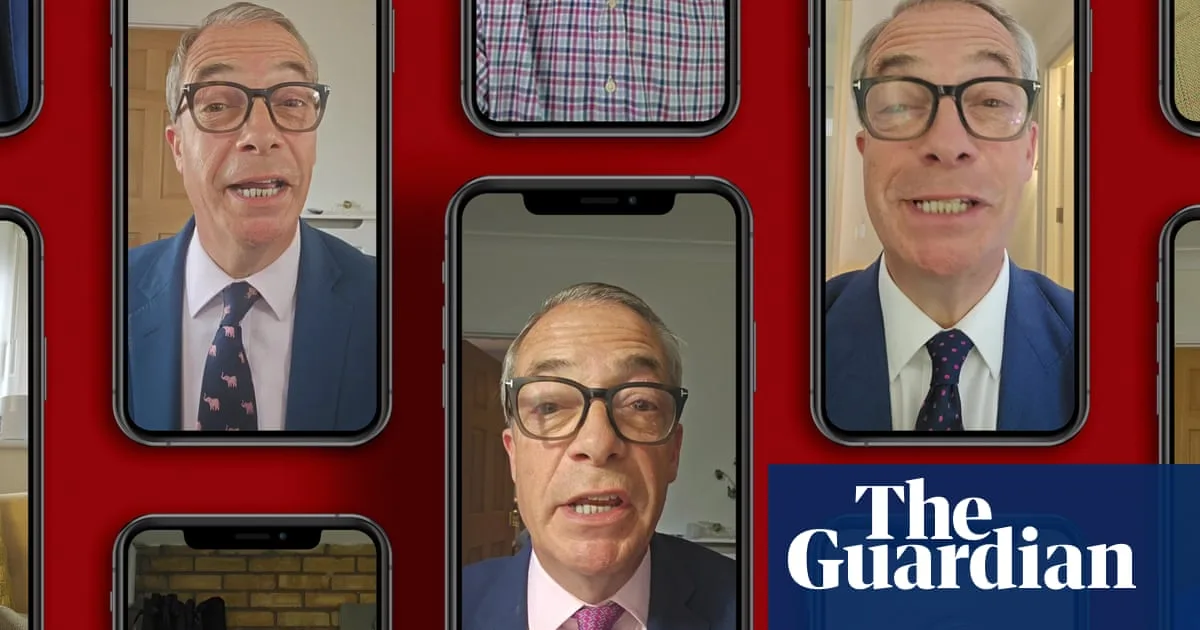
Nigel Farage's Controversial Cameo Videos Exposed
Newly uncovered videos from Nigel Farage's paid Cameo account reveal startling support for a convicted far-right rioter, promotion of a neo-Nazi event, and repeated use of extremist slogans. An exclusive Guardian investigation into more than 4,000 clips produced by the Reform UK leader has identified numerous instances where Farage recorded messages containing misogynistic remarks, antisemitic conspiracy theories, and endorsements of extremist figures.
Endorsing Convicted Rioters and Neo-Nazi Propaganda
The revelations could prove particularly damaging for Farage, whose party currently leads in UK polling. They raise significant questions about his relationship with far-right elements and his willingness to accept money from questionable sources. In one particularly concerning video from 2025, Farage charged £155 to record a message for Ben Tavener, a man who had received a 16-month prison sentence for violent disorder during far-right riots in Bristol.
Despite knowing Tavener's conviction, Farage told him: "Keep your head up, keep believing in the right things, keep acting in the right way." This message appears directly contradictory to Farage's public condemnation of the same riots just months earlier, when he stated: "We do not support – I do not support – street protest, violence or thuggery in any way."
Promoting Canadian Neo-Nazi Group
Perhaps even more alarming is a video Farage recorded just ten days after his election as an MP in July 2024. For £141, he produced a promotional clip for the "Road Rage Terror Tour," an event organized by Diagolon – a Canadian group designated as a far-right extremist organization by the US State Department. Farage began the video with the group's slogan "They have to go back," which references forced repatriation of migrants.
He encouraged attendance at what he called "the most talked-about show in Canada," suggesting attendees might walk out saying it was "the best thing that ever happened." Within hours, the neo-Nazi group had edited Farage's clip into propaganda featuring fascist salutes and antisemitic imagery, including AI-generated slides depicting Jewish men as drug dealers "stealing our birthright."
Repeated Use of Far-Right Slogans
The investigation identified more than twenty instances where Farage used or alluded to the hardline anti-immigration phrase "If in doubt, kick them out" – a slogan prominently used at Tommy Robinson rallies and far-right protests against asylum hotels. While Farage initially expressed reluctance about using the phrase in May 2021, saying it "could be misconstrued," he later adopted variations including "If in doubt, keep them out" and "If in doubt, proper border controls."
Dr Ashton Kingdon, a criminology lecturer at the University of Southampton, noted that this phrase represents "a well-established far-right slogan" and that Farage appears to be "choosing to cultivate this audience and to speak its language back to it."
Antisemitic Conspiracies and White Nationalist References
In one particularly disturbing £76 video, Farage demonstrated apparent familiarity with antisemitic conspiracy theories when asked about "secret societies controlling everything." He volunteered: "Is it the Bilderbergers that are running the world? You know, there are many, many other theories. It could be the Masons. Some think it's the Rothschilds. Maybe it's George Soros."
Dr Kingdon explained that references to these four conspiracies together "form a recognized canon of far-right, antisemitic and white nationalist thought." In another video, Farage concluded with the phrase "up the Rhodesia" – Rhodesia being the former white minority-rule state now known as Zimbabwe, which has become a common reference point for white nationalists.
Misogynistic and Offensive Content
The analysis uncovered multiple videos containing crude and offensive material. Farage twice made misogynistic comments about female politicians, including ridiculing someone "simpering for Alexandria Ocasio-Cortez's big naturals" – a reference to the US congresswoman's breasts. He also recorded videos for users expressing transphobic views and made numerous references that appear designed to resonate with far-right internet subcultures.
Farage recorded videos for individuals who openly expressed offensive views in their prompts, including one user who wrote "Ps vote national front" and another who described their friend as a Ukip supporter who "dislikes – the gypsies."
Questionable Time Management as MP
The sheer volume of Farage's Cameo activity raises questions about his focus as a Member of Parliament and party leader. Analysis of 4,366 videos suggests he has recorded approximately three videos daily since joining the platform in 2021, earning at least £374,893. On the day of his election to Parliament on July 4, 2024, Farage recorded eight Cameo videos, and he uploaded clips during 212 parliamentary business days.
This includes six videos uploaded during the second reading of the renters' rights bill and one birthday message recorded during a parliamentary vote that Farage missed. His spokesperson defended his parliamentary attendance, stating he has voted "more times than Kemi Badenoch and Keir Starmer combined since July 2024."
Behind the Scenes: A Different Farage
While most videos project Farage's carefully crafted public persona as an amiable well-wisher, outtakes discovered by the Guardian reveal a different side. On several occasions when his recording was interrupted by phone calls or messages, requiring him to re-record videos, Farage displayed noticeable irritation and anger – contrasting sharply with his usual public demeanor.
A spokesperson for Farage stated that he has recorded "many thousands of videos for genuine supporters" and that "at that scale, the occasional mistake can occur." They emphasized that the videos "should not be treated as political statements or campaign activity" and that Farage has "long been clear in his opposition to extremism and political violence."
However, the cumulative evidence from these videos presents a troubling pattern that contradicts these assertions and raises serious questions about judgment, associations, and priorities at a time when Reform UK seeks to position itself as a mainstream political force.






