

Fact Check: Trump's First 2026 Cabinet Meeting Claims Under Scrutiny
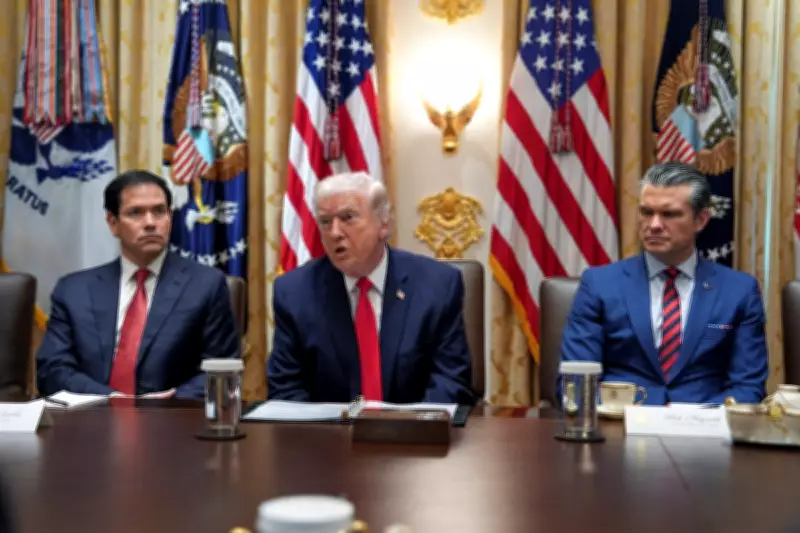
President Donald Trump convened his inaugural cabinet meeting of 2026 on Friday, centring discussions on key domestic issues including the economy, housing, energy, health initiatives, and drug prices. While the administration presented a positive narrative of its achievements, several statements made by Trump and his officials have been challenged as inaccurate or misleading by fact-checkers.
Investment Claims Exaggerated
Trump asserted: “$18 trillion is being invested now.”
The facts: The President has not provided verifiable evidence to support this substantial figure for domestic or foreign investment in the United States. Analysis of company statements, foreign government announcements, and the White House’s own official website suggests this number is significantly inflated and speculative. The White House website lists a much lower figure of $9.6 trillion, which itself appears to incorporate some investment commitments originally made during the preceding Biden administration.

A recent study published on Tuesday casts further doubt, questioning whether over $5 trillion in investment pledges from America’s major trading partners last year will actually materialise and how such funds would be allocated if they did.
Housing Market Statistics Overstated
Scott Turner, Secretary of Housing and Urban Development, claimed: “Because of your policy sir, home sales in December, they rose sharply to their strongest pace in three years.”
The facts: This characterisation overstates the current reality of the housing market, which remains a persistent concern for many American consumers. The National Association of Realtors reported that the seasonally adjusted annual rate of home sales in December increased to 4.35 million units, which it described as “nearly” the highest level in three years. However, this represented only a modest 1.4% year-over-year increase.
More critically, this may represent a temporary monthly fluctuation, as the association separately noted that pending home sales in December actually declined by 3% compared to the previous year. President Trump has previously expressed a desire to maintain high home prices to boost net worth, but this strategy is likely to suppress construction levels and further disadvantage potential first-time buyers.
Misleading Statements on California Wildfire Recovery
Trump, discussing permitting for rebuilding after the 2025 Los Angeles wildfires, stated: “They have been unable to give permits. There are like three houses being built out of thousands and thousands. They have no permits.”
The facts: On Friday, the President signed an executive order directing FEMA and the Small Business Administration to develop regulations that would override state and local permitting rules, allowing builders to “self-certify” compliance with health, safety, and building standards.
Contrary to Trump’s assertion, data from Los Angeles county and city authorities indicate that approximately 3,100 permits have been issued within the Palisades and Eaton fire zones as of Thursday. While fewer than a dozen residences have been fully rebuilt, around 900 homes are currently under construction.
California Governor Gavin Newsom responded via social media, defending the pace of local officials and urging the Trump administration to approve the state’s $33.9 billion disaster aid request. Survivor advocates noted that permitting is not the primary obstacle for many affected households, who instead face challenges with insufficient insurance payouts and significant gaps between received funds and actual rebuilding costs.
Expert analysis suggests that recovery from major wildfires typically follows an 18-month timeline for the permitting process to gain momentum, citing patterns from previous disasters like the 2021 Colorado blaze.
Inaccurate Claims About Water Supply and Wildfires
Trump also claimed regarding the 2025 Los Angeles wildfires: “They should have allowed the water to come down from the Pacific Northwest, which was very plentiful. But they didn't do that.”

The facts: This statement is factually incorrect, as no water supply system connects the Pacific Northwest to California. The state primarily sources its water from northern mountain snowmelt, which flows into river systems and is distributed south via federal and state-operated canal networks.
While some Los Angeles fire hydrants experienced outages during the wildfires, local officials attributed this to the municipal system’s design limitations in coping with such a large-scale disaster. Small Business Administration Administrator Kelly Loeffler referenced an executive order that directed water to a dry lake basin over 100 miles from Los Angeles, not directly to the fire scenes as implied.
Additional Questionable Assertions
The meeting also featured other claims that have been challenged:
- On foreign policy: Trump’s boast of having “extinguished eight wars” is considered a significant exaggeration, with his diplomatic impact being less definitive than portrayed.
- On coal: The President’s insistence on the term “clean, beautiful coal” is misleading; while coal production has become cleaner historically, it is not considered an environmentally clean energy source.
- On China and wind energy: Trump’s suggestion that China manufactures wind turbines but rarely uses them is inaccurate. China is the world’s leading producer of wind turbines and is installing them domestically at an unprecedented rate.
This fact-focused analysis highlights the discrepancies between the administration’s rhetoric and the verifiable data, underscoring the importance of scrutinising political claims amidst ongoing policy debates.





