EU's Hungary Dilemma Endures Beyond Orbán's Potential Election Defeat
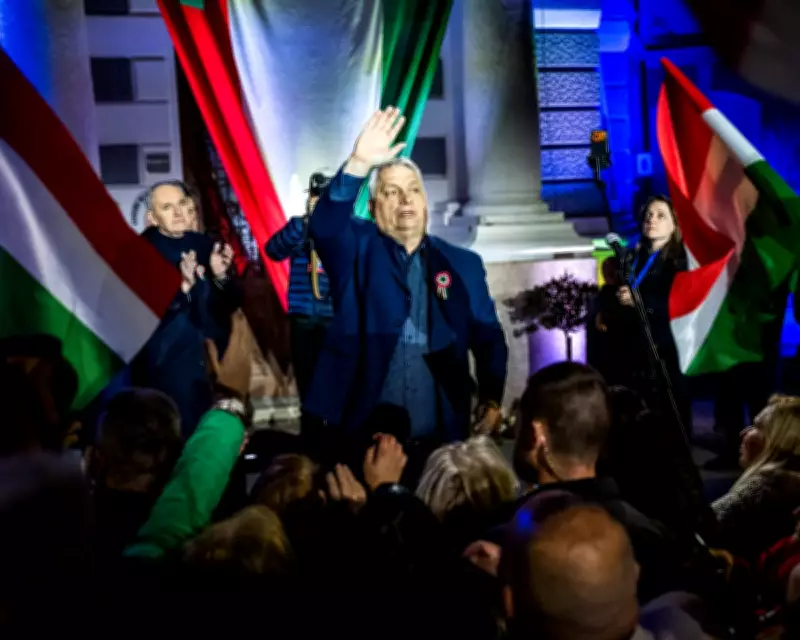
The European Union's persistent challenges with Hungary are unlikely to dissipate even if Prime Minister Viktor Orbán is ousted in the upcoming April election. As EU leaders prepare for a summit in Brussels, Orbán's disruptive tactics continue to dominate the agenda, particularly his blockade of a crucial €90 billion loan package for Ukraine.
Orbán's Disruptive Legacy in European Politics
Hungary's prime minister has established himself as the EU's foremost troublemaker, consistently undermining collective decision-making processes. Despite Hungary representing just 1.1% of the EU's GDP and 2% of its population, Orbán's actions have created disproportionate headaches for the bloc through his assault on rule of law principles and opposition to EU foreign policy initiatives.
According to Brussels correspondent Jennifer Rankin, "Reneging on a deal agreed by heads of state and government strikes at the heart of how the EU operates. There's no appetite for cobbling together alternative financial plans for Ukraine when unanimous agreements have already been reached."

Multiple Blockades and International Alignments
Hungary currently blocks not only the Ukraine loan package but also accession talks with Kyiv, new sanctions against Russia, measures against violent Israeli settlers in the West Bank, and actions targeting Georgia's ruling party. Orbán has maintained particularly close ties with Russia, meeting President Vladimir Putin at least four times since Russia's full-scale invasion of Ukraine and approximately fifteen times since assuming power in 2010.
German Green MEP Daniel Freund emphasizes that Orbán has become "the poster child for the illiberal movement in Europe," gathering around him like-minded EU-critical leaders including Slovakia's Robert Fico, the Czech Republic's Andrej Babiš, and potentially Slovenia's Janez Janša.
Uncertain Election Dynamics and Potential Outcomes
While polls show centre-right challenger Péter Magyar and his Tisza party leading by 9-11 percentage points, several factors complicate the electoral picture. Orbán's government has implemented hundreds of electoral rule changes over four terms that effectively exaggerate Fidesz's parliamentary majorities. In 2014, Fidesz secured nearly 70% of seats with just under 45% of the popular vote, demonstrating how the system advantages the ruling party.
The prime minister is running a classic populist campaign, portraying Hungary as "an island of security and tranquility" under his leadership while depicting Magyar as an agent of Brussels and Kyiv who would drag the country into chaos and war. Orbán has intensified rhetoric against Ukraine recently, accusing Kyiv of threatening his family and ordering extra security at critical energy sites.
Potential Scenarios Post-Election
Even if Orbán loses, especially by a narrow margin, he could potentially refuse to step down, creating what the European Policy Centre describes as "an unprecedented situation: an illegal and illegitimate government sitting at the table." Analyst Eric Maurice warns that Orbán could rely on captured courts and the outgoing parliament to obstruct power transition, urging the EU to establish clear red lines regarding election manipulation and refusal to accept democratic outcomes.
Should Magyar achieve victory and Orbán accept defeat, the new government would face formidable challenges. After sixteen years of Orbán's rule, his appointees dominate public media, courts, state agencies, and the central bank. If these institutions refuse to cooperate with a new administration, Tisza could face snap elections within a year.
Limited Policy Shifts Expected
Daniel Freund notes that while a Tisza-led government would likely seek to avoid isolation within the EU, significant policy shifts on contentious issues like Ukraine or immigration should not be expected. The experience of Poland's Donald Tusk demonstrates how difficult it can be to roll back institutional changes implemented by previous nationalist governments, with Tusk struggling against reforms enacted during just eight years of Law and Justice rule compared to Orbán's sixteen-year tenure.

For now, EU leaders remain cautiously optimistic about securing Orbán's agreement on the Ukraine loan package, with one senior diplomat emphasizing that "a deal is a deal." However, if Orbán continues on his current course for electoral advantage, he would cross unprecedented boundaries in EU diplomacy.
The fundamental reality remains that regardless of April's election outcome, the EU's relationship with Hungary will continue to present complex challenges that extend far beyond any single political figure. Systemic issues, institutional entrenchment, and deep policy divisions ensure that Europe's Hungary problem will persist well beyond the upcoming vote.