EU Fishing Fleet Poised to Exploit Chagos Waters Under Labour's Sovereignty Plan
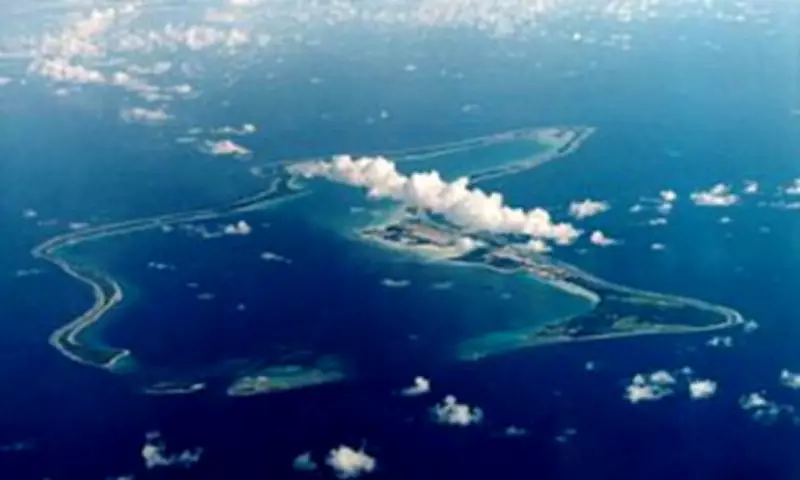
The European Commission has identified a significant opportunity for EU fishing vessels in Labour's proposed surrender of UK sovereignty over the Chagos Islands. According to internal briefing documents, Brussels anticipates that relinquishing control of the Indian Ocean archipelago could substantially enhance the value of a renewed fishing agreement currently under negotiation with Mauritius.
Protected Waters at Risk of Commercial Exploitation
For the past fifteen years, a strict no-take zone has been enforced around the Chagos Islands, creating a sanctuary that protects numerous marine species from commercial fishing activities. This conservation measure has preserved one of the world's most biodiverse marine environments. However, the European Commission's analysis suggests that Mauritius, upon assuming sovereignty, might issue new fishing rights that could open these waters to vessels from France, Italy, Portugal, and Spain.
These fleets primarily target tuna species, despite the commission's own scientific assessments indicating that many fish populations in the region are already being overfished. The briefing document, initially reported by the Telegraph, explicitly states that while the transfer of sovereignty remains incomplete, its completion would "further increase the relevance of the agreement to EU shipowners."

Political Opposition and National Security Concerns
Shadow Foreign Secretary Priti Patel has launched a scathing critique of Labour's position, describing Sir Keir Starmer's approach as "outrageous Chagos surrender" that directly contradicts Britain's national interests. Patel emphasized that this policy has garnered support from geopolitical rivals including Iran, China, and Russia, while simultaneously benefiting Brussels.
"Not only does this surrender undermine our security and defence at a time of rising global tensions," Patel warned, "it also opens the door to EU trawlers wrecking the protected waters around the Chagos Islands." Her comments reflect broader Conservative concerns that the seas could become "a fishing free for all including Chinese factory trawlers" if the current protections are lifted.
Complex Sovereignty Agreement and Environmental Warnings
In May of last year, the UK government reached an agreement to transfer sovereignty of the Chagos Islands to Mauritius, while securing a 99-year leaseback of the crucial military base on Diego Garcia. This arrangement aims to preserve British and American strategic interests in the region following a 2019 International Court of Justice advisory opinion that supported Mauritian sovereignty claims.
However, implementing legislation has encountered significant parliamentary delays, compounded by fluctuating support from former US President Donald Trump. Meanwhile, environmental experts have raised alarms about potential ecological damage. Labour's foreign affairs committee chairwoman, Dame Emily Thornberry, noted that despite conservation assurances from the Mauritian government, the ecosystem around Mauritius itself has experienced substantial degradation.
Conservation History and Legal Challenges
The UK established the Chagos Marine Protected Area in 2010, implementing patrols to enforce the no-take zone and protect unique habitats and marine biodiversity. This conservation status has faced consistent opposition from Mauritius, which successfully challenged its legality before a UN tribunal in 2015. The tribunal ruled that the marine protected area violated Mauritius' fishing rights, setting the stage for the current sovereignty negotiations.
The European Commission's assessment highlights how geopolitical decisions about sovereignty can have far-reaching consequences for environmental protection and economic interests. As negotiations continue, the future of one of the world's most important marine sanctuaries hangs in the balance between conservation priorities and commercial fishing ambitions.