
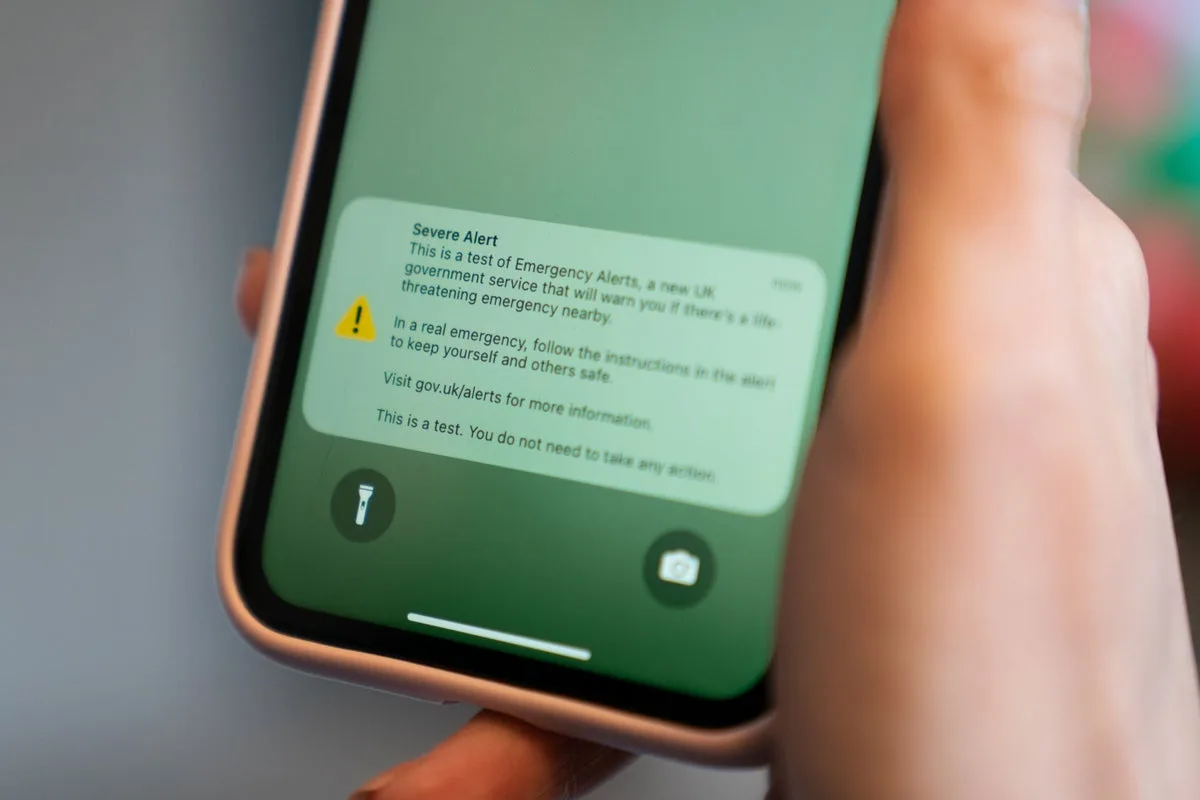
The Government considered using the emergency alerts system during the 2024 summer riots, which targeted mosques and asylum hotels, a freedom of information request has revealed. The alert system, launched in 2023, sends a loud siren-like sound and a message to mobile phones in areas where there is a danger to life.
The freedom of information (FOI) request, submitted to the Cabinet Office by the Press Association, disclosed a list of “near misses” when alerts were considered but not sent. This included the riots following the Southport attack on 29 July 2024, where three young girls were murdered. Government analysis said the violence was “largely instigated” by far-right groups and quickly spread across northern England, with attacks on mosques, community centres, and hotels housing asylum seekers.
Other near misses included a potential “boil notice” for 40,000 people in Brixham, Devon, after the water supply was contaminated with the cryptosporidium parasite in May 2024. The Cabinet Office also considered an alert about debris from a Chinese Zhuque-3 space rocket weighing 11 tonnes, which could have hit the UK upon re-entering the atmosphere. The debris eventually crashed 1,200 miles south of New Zealand in January 2026. In September 2025, the Kilroot power station in Northern Ireland approached its running limit, raising the possibility of power outages, and alerts were also considered for severe weather events such as flooding in Cumbria, Lancashire, and Greater Manchester in 2025, and Storm Babet in 2023.
A government spokesperson said: “As the public rightly expects, the government actively considers how to respond to a wide range of potential events. The Emergency Alerts system is a vital public safety tool designed to be used sparingly. Its activation threshold is very high and strictly reserved for threats to life.”




