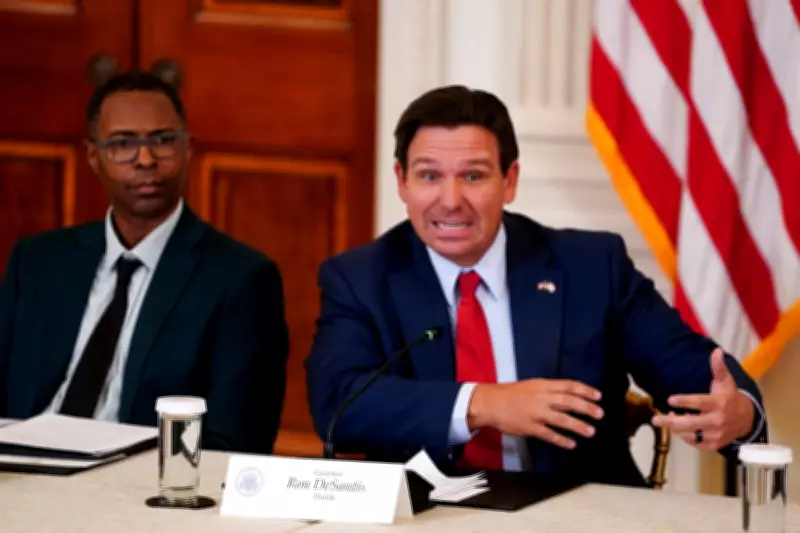
Florida Governor Ron DeSantis has ignited a fresh debate over airport security by proposing the United States abolish the federal Transportation Security Administration and revert to a privatised system. This radical suggestion aims to eliminate the lengthy queues and flight delays that have plagued major airports during recent government funding lapses.
Questioning TSA's Safety Legacy
In a post on social media platform X, Governor DeSantis directly challenged the efficacy of the TSA, established after the September 11 terror attacks. "Is there evidence that creating TSA has made air travel safer over the past 25 years?" he asked. "If not, then why not let the airlines and airports handle it?"
DeSantis was responding to another user who referenced a 2017 ABC News article alleging an 80 percent failure rate at airport security checkpoints. "Yes that has been a perennial issue," the governor acknowledged, though comprehensive data on checkpoint failure rates remains scarce.

The Impact of Government Shutdowns
The debate has gained urgency since funding for the Department of Homeland Security expired in February, forcing TSA agents and air traffic controllers to work without pay. This has led to significant staffing shortages, with hundreds calling out or resigning, resulting in extended wait times and delays at some of the nation's largest airports.
"Why give politicians the power to play games with the travel of our people?" DeSantis questioned, highlighting the vulnerability of the current system to political disputes.
Historical Context and Current Alternatives
Before 9/11, airport security was managed by private firms contracted by airlines, with passengers typically only passing through metal detectors and not always required to show identification. Since then, robust security measures have been implemented to prevent terrorist threats.
Currently, the TSA is the primary security agency, but approximately 20 smaller U.S. airports participate in the Screening Partnership Program, using private security companies instead of government agents. These airports are less affected during shutdowns as private firms can continue paying employees.
Concerns Over Privatisation
Critics, including the American Federation of Government Employees, which represents about 47,000 transportation security officers, warn that privatisation could compromise safety. They argue that security contracts often go to the lowest bidder, prioritising profit over worker well-being, potentially leading to staffing shortages and high turnover.
TSA Performance and Accountability
Recent reports from the Government Accountability Office have raised concerns. A 2023 report found that TSA could improve its scanning of dangerous items and noted that screening technology degrades over time. A 2024 report recommended addressing potential cybersecurity threats.
Despite these issues, the TSA reported in 2023 that it prevented more than 6,700 firearms, mostly loaded, from entering secure airport areas or aircraft, underscoring its ongoing role in aviation security.
The Independent has sought comment from the TSA regarding DeSantis's proposals and the broader debate over airport security privatisation.