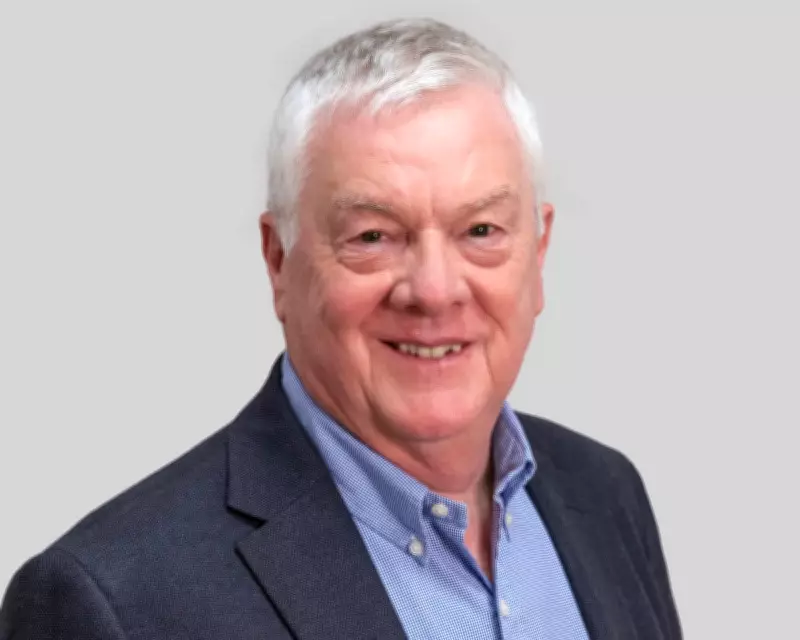
David Judge: Strathclyde Professor Who Shaped Parliamentary Studies Dies at 75
David Judge, emeritus professor of politics at the University of Strathclyde and a leading scholar of parliamentary politics and democratic representation, has died aged 75 from oesophageal cancer. His wife confirmed his passing, noting his profound impact on academic and institutional understanding of British and European legislative systems.
Influential Academic Contributions and Publications
Among his most significant works was The Parliamentary State, published in 1993, which addressed fundamental questions about British politics and institutional authority. This seminal text explored the core dynamics of governance and the role of parliamentary structures in shaping democratic processes.
In 2003, he co-authored The European Parliament with David Earnshaw, a major academic study examining the political dynamics of the European parliament and its critical role in debates about democracy and legitimacy across the continent.

Most recently, he co-edited Reimaging Parliament in 2024 with Cristina Leston-Bandeira, a forward-looking volume that questioned what parliament should be in the 21st century. His consistent argument that "institutions matter" and that "parliamentary institutions particularly matter" shaped an entire generation of legislative studies and political science research.
In total, David Judge published 13 books alongside numerous academic articles, establishing himself as a preeminent voice in his field. His later research included a 2022 article in the Political Quarterly journal titled Would I Lie to You?: Boris Johnson and Lying in the House of Commons, as well as a 2021 publication, Walking the Dark Side, which analysed the evasion of parliamentary scrutiny and was cited by Lady Smith of Basildon in the House of Lords.
Early Life and Academic Career
David Judge was born in Sheffield to Bernard Judge, a local government officer supervising refuse collection, and Lily (née Batch), a hospital administrator. He attended Westfield comprehensive school in Sheffield before studying politics at Exeter University, graduating in 1972. Tragically, his father died in March of that year, prompting David to return home to support his mother.
He later pursued a PhD at Sheffield University, which was awarded in 1978, solidifying his academic foundations. He met his wife at Exeter University, and they married in 1973, initially living in Thrybergh, near Rotherham.
In 1974, the couple moved to Scotland after David was offered a lecturing position at Paisley College of Technology, now the University of the West of Scotland. He joined the University of Strathclyde in 1988, where he remained for nearly three decades until his retirement in 2013.
Professional Leadership and International Recognition
During his tenure at Strathclyde, David Judge combined intellectual distinction with institutional leadership, serving multiple terms as head of department and later as head of the School of Government and Public Policy. He argued consistently for the central place of politics within a technological university, especially during periods of institutional restructuring.
His international acclaim was underscored by visiting professorships at the University of Houston as a Fulbright fellow from 1993 to 1994, and at the College of Europe in Bruges from 2004 to 2007. These roles allowed him to influence political studies on a global scale.
David once humorously remarked that one of his chief achievements in academia was "not getting sacked", noting the "remarkable forbearance" of senior managers when, as head of department, he felt obliged to speak truth to power. Colleagues remember him not only as a distinguished scholar but also as unfailingly kind and supportive.
Personal Life and Legacy
Beyond his professional accomplishments, David Judge was a loving and supportive father and husband, an avid Guardian reader, and a proud Yorkshireman. He and his wife enjoyed many exciting holidays, most notably in Brazil and Australia, with a recent highlight being their golden wedding anniversary celebration at Gleneagles in 2023.

He is survived by his wife, their children Ben and Hannah, and his brother Roy. His legacy endures through his extensive body of work, which continues to inform and inspire students, academics, and policymakers engaged in the study of parliamentary institutions and democratic representation.