Prime Minister Sir Keir Starmer has faced sharp criticism after unveiling a government strategy to combat anti-Semitism that has been labelled 'timid' and insufficient for failing to directly confront 'rampant Islamism'.
Report Admits Rising Hate and 'Normalised' Anti-Semitism
In a newly published report, Sir Keir acknowledged that anti-Jewish hatred has been 'rising in recent years'. He stated that in many instances, this is driven by 'hatred of the world's only Jewish state, Israel'. The Prime Minister conceded that many in the Jewish community have told him anti-Semitism has become 'normalised', forcing some to 'hide their Jewish identity'.
He specifically condemned how some individuals have exploited protests against Israel's military actions in Gaza, following the October 7 atrocities, as a 'despicable excuse to threaten British Jews and stoke division and hate in our communities'.

Government's Action Plan and Funding Pledges
The report outlined a series of measures and financial commitments designed to tackle anti-Semitism and enhance security. Key actions include:
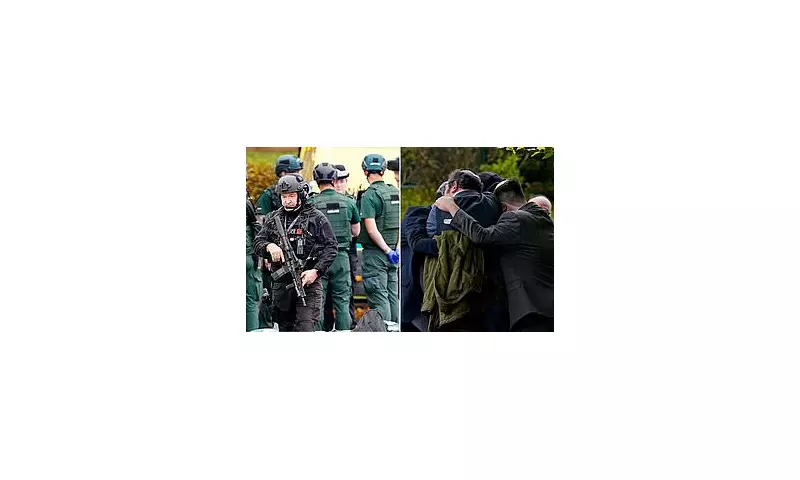
- Continuing the £18 million per year Jewish Community Protective Security Grant and providing an extra £10 million following the fatal terrorist attack at the Heaton Park synagogue in Manchester.
- Introducing legislation in the new Crime and Policing Bill to allow police to stop protests outside places of worship and ban face coverings at marches.
- Committing £7 million to tackle anti-Semitism in schools, colleges, and universities, including a fund to combat online misinformation.
- Launching a 'rapid review' into anti-Semitism within the NHS after reports Jewish patients felt unsafe.
- Barring extremists convicted of hate crimes from serving as charity trustees.
Critics Decry 'Disappointing' and 'Timid' Response
Despite these pledges, the strategy has been met with significant backlash. The Campaign Against Antisemitism called it a 'very disappointing document' that fails to match the gravity of the situation after years of government inaction. A spokesman highlighted the conspicuous absence of a promised move to proscribe Iran's Islamic Revolutionary Guard Corps (IRGC) as a terrorist organisation, a manifesto pledge now seemingly abandoned.
The spokesman argued that tackling deep-seated issues requires acknowledging they exist, stating: 'Tackling problems such as rampant Islamism and two-tier policing requires a recognition that these problems actually exist.'
Lord Walney, the government's former adviser on political violence, echoed this sentiment, telling the Daily Mail the strategy was 'too timid'. He criticised its failure to mention the 'Islamist extremism on display at the Gaza marches', accusing ministers of ignoring the 'Islamist elephant in the room'.
The criticism underscores the intense political and social pressure on the Labour government to deliver robust, tangible action against a surge in anti-Jewish sentiment, with opponents arguing the current plan lacks the necessary boldness and specificity.