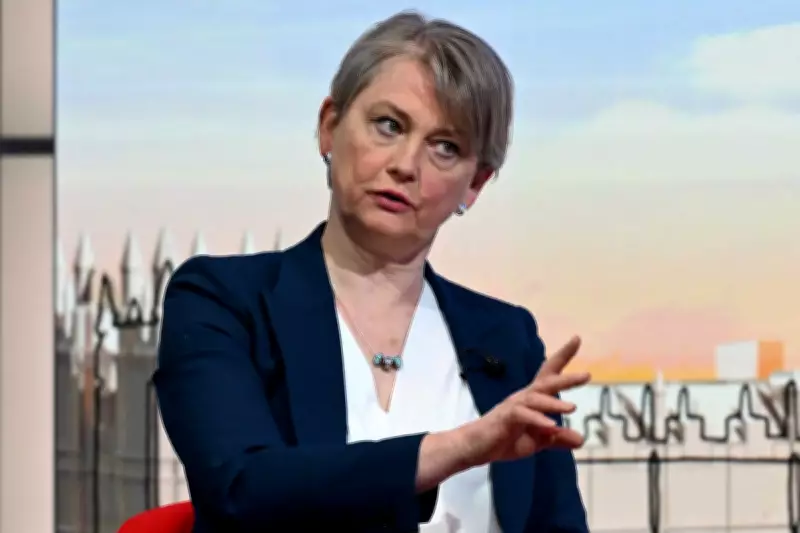
Cooper Defends Starmer's Iran Policy, Cites Iraq War Lessons in Response to Trump
Foreign Secretary Yvette Cooper has robustly defended Prime Minister Sir Keir Starmer's approach to the ongoing conflict in Iran, emphasising that Britain must "learn the lessons" from the Iraq war. Her comments come amid sustained criticism from former US President Donald Trump and former Prime Minister Sir Tony Blair regarding the UK's initial decision not to participate in offensive military strikes against Iran.
Defending National Interest Over Alliance Pressure
Cooper articulated the government's position clearly, stating that the UK's foreign policy must be determined by its own national interests rather than automatic alignment with allies. "There are some people in politics who think that we should always agree with the US," she told Sky News. "There are other people in politics who think we should never take action with the US again whatever the circumstances. I don't think either of those positions is in the UK's national interest."
The Foreign Secretary stressed that Prime Minister Starmer's responsibility is to act in the best interests of British citizens, a principle that guided the decision not to immediately join US and Israeli offensive actions last weekend. This stance has drawn sharp rebukes from prominent figures on both sides of the Atlantic.

Blair and Trump's Criticism of UK Stance
According to reports in the Daily Mail, Sir Tony Blair stated at a recent event that Britain "should have backed America from the very beginning" of the conflict. Blair, who as Prime Minister supported the controversial 2003 invasion of Iraq, represents a significant voice in the debate over UK foreign intervention.
Donald Trump has been particularly vocal in his criticism, using his Truth Social platform to assert that the US "does not need anyone to join wars after we've already won." Earlier in the week, Trump escalated his rhetoric, claiming Starmer was "no Churchill" and had damaged international relationships through his handling of both the Iran situation and the Chagos Islands agreement.
Learning from Historical Mistakes
Cooper directly addressed Blair's position, stating she "disagrees" with his assessment. When questioned about whether she was implying Blair had been a "poodle" to US interests during the Iraq war, she redirected the conversation toward historical reflection. "I think the point is to make sure that, actually, we learn the lessons from some of the things that went wrong in Iraq," Cooper explained, "and I think that is exactly what Keir Starmer has done."
This reference to Iraq carries significant weight, as the 2003 invasion and subsequent occupation resulted in substantial loss of life, regional destabilisation, and lasting political controversy in Britain regarding the decision-making process that led to military action.
Current UK Involvement and Government Philosophy
While Britain did not participate in the initial offensive strikes against Iran, the government has since authorised US forces to utilise British bases for defensive operations. Cooper clarified the UK's current role, stating: "We are providing defensive support in a conflict, and that is, I think, the way to describe it."
Prime Minister Starmer has consistently stood by his decision, telling Parliament that his government "does not believe in regime change from the skies," a pointed critique of the US administration's bombing campaign. This philosophy extends to the government's broader approach to international relations.
Steady Leadership Over Social Media Diplomacy
Cooper emphasised that Starmer's leadership style prioritises substance over spectacle. "The prime minister would not turn to 'rhetoric or hyperbole' and would focus on 'calm, steady decision-making'," she stated, urging observers to "focus on the substance and not social media posts."

Regarding the ongoing diplomatic tensions with the Trump administration, Cooper maintained a measured perspective. "It's for the US president to decide what he thinks is in the US national interest, and that's for him to do," she told the BBC's Sunday With Laura Kuenssberg. "But it is our job as the UK Government to decide what's in the UK national interest, and that doesn't mean simply agreeing with other countries or outsourcing our foreign policy to other countries."
The Foreign Secretary concluded by affirming that the UK must "take decisions ourselves" and that Starmer is "right to stand up for Britain and Britain's interests" in this complex international situation.
Meanwhile, the US administration has sought to distinguish the current conflict from the Iraq war, with Secretary of Defence Pete Hegseth telling reporters: "This is not Iraq, this is not endless." This statement reflects Washington's attempt to frame the military action as more limited and targeted than previous Middle Eastern engagements.