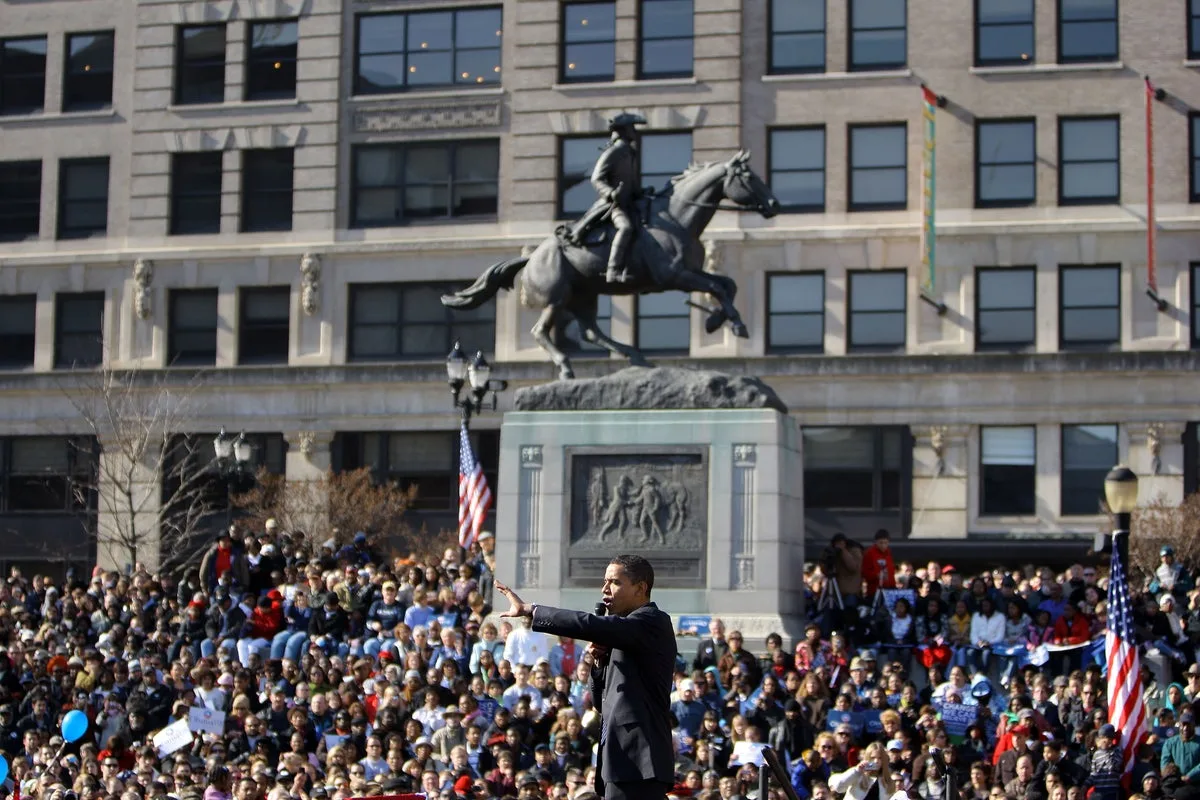
A bronze statue of Caesar Rodney, a founding father who enslaved up to 200 people, is set to be temporarily installed in Washington D.C. as part of the semiquincentennial celebrations marking America's 250th birthday. The statue, which was removed from public view in Delaware during the 2020 racial justice protests, has been stored in a warehouse for the past six years.
According to Interior Department documents, the statue will be placed in Freedom Plaza on Pennsylvania Avenue, a federal park named in 1988 to honour Dr. Martin Luther King Jr. The relocation is the latest move by the Trump administration to restore monuments that were toppled or removed following the murder of George Floyd.
In recent months, the administration has overseen the reinstallation of a Confederate memorial at Arlington National Cemetery and the restoration of a statue of Confederate General Albert Pike in downtown D.C. A reconstruction of a Christopher Columbus statue, previously dumped into Baltimore's harbour, is also slated for the White House grounds.

An Interior Department spokesperson said the administration is committed to celebrating the full breadth of the nation's history, highlighting Rodney's role in securing American independence. However, critics argue that placing the statue in a plaza honouring a civil rights icon is a provocation. Adam Rothman, director of Georgetown University's Center for the Study of Slavery and Its Legacies, accused the administration of manipulating history to advance its ideology.
In Delaware, reaction remains divided. Republican State Senator Eric Buckson, who initiated talks with the Park Service, argued that Rodney is the reason the country has a Fourth of July and expressed hope that the statue would eventually return to Delaware. But Shané N. Darby, a Wilmington councilwoman, said glorifying Rodney is 'a slap in the face' to the city's Black and brown residents.