Churchill's Iron Curtain Warning: A 1946 Speech That Shaped the Cold War
Churchill's 1946 Iron Curtain Speech Shaped Cold War

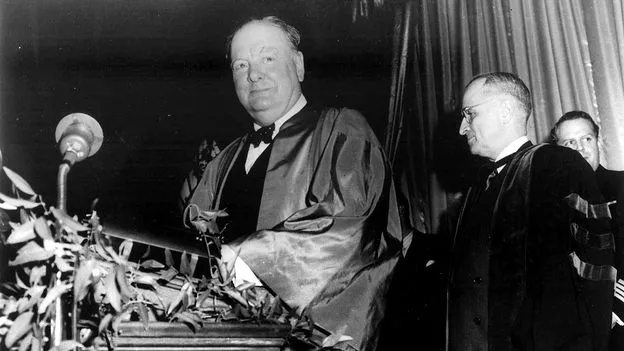
On March 5, 1946, former British Prime Minister Winston Churchill stood before an audience at Westminster College in Fulton, Missouri, delivering a speech that would echo through history as a defining moment of the early Cold War era. His address, famously known as the 'iron curtain' speech, sounded a stark warning about Soviet expansionism and laid the groundwork for Western alliances that shaped global politics for decades.

The Shadow of Catastrophe

In his remarks, Churchill articulated a grave concern for the world's stability, highlighting what he termed the "expansive and proselytising tendencies" of Soviet Russia and its Communist International organisation. He emphasised that these forces posed a direct threat to Christian civilisation, facilitated by communist fifth columns operating across Europe. Despite this, Churchill clarified that he did not believe Russia desired war, stressing the necessity of fostering a good understanding with the nation.

Proposals for Averting Disaster

To counter the looming danger, Churchill put forward several key suggestions aimed at preserving peace and security. These included:

Wide Pickt banner — collaborative shopping lists app for Telegram, phone mockup with grocery list
  • The immediate formation of an international air force under the United Nations Organisation.
  • A close, fraternal association between the British Empire and the United States, encompassing the joint use of naval and military bases.

He warned that time was short, cautioning that without swift action, the world risked regressing to the dark ages or even the stone age, propelled by "the gleaming wings of science."

The Iron Curtain Descends

Churchill's speech is most remembered for its vivid depiction of a divided Europe. He stated, "From Stettin in the Baltic to Trieste in the Adriatic, an iron curtain has descended across the Continent." Behind this line, he noted, lay the capitals of ancient states in central and eastern Europe—including Warsaw, Berlin, Prague, Vienna, Budapest, Belgrade, Bucharest, and Sofia—all falling within the Soviet sphere and subject to increasing control from Moscow.

Reactions and Legacy

The speech sparked immediate and varied reactions. In the United Kingdom, an editorial in The Guardian on March 11, 1946, suggested that Churchill's ideas were not novel, noting that British foreign policy had long assumed a special relationship with the United States, reinforced by their partnership during World War II. However, in the Soviet Union, the response was vehemently critical. Pravda, the organ of the Russian Communist Party, denounced the speech as "poisonous and hate-filled," accusing Churchill of revealing his true anti-Soviet sentiments now that the wartime alliance had ended.

Churchill's address at Fulton is widely regarded as a pivotal moment that helped crystallise Cold War tensions, advocating for a united Western front against Soviet influence. His call for a strong US-UK alliance and international cooperation under the UN foreshadowed the geopolitical strategies that would dominate the latter half of the 20th century.

Pickt after-article banner — collaborative shopping lists app with family illustration




