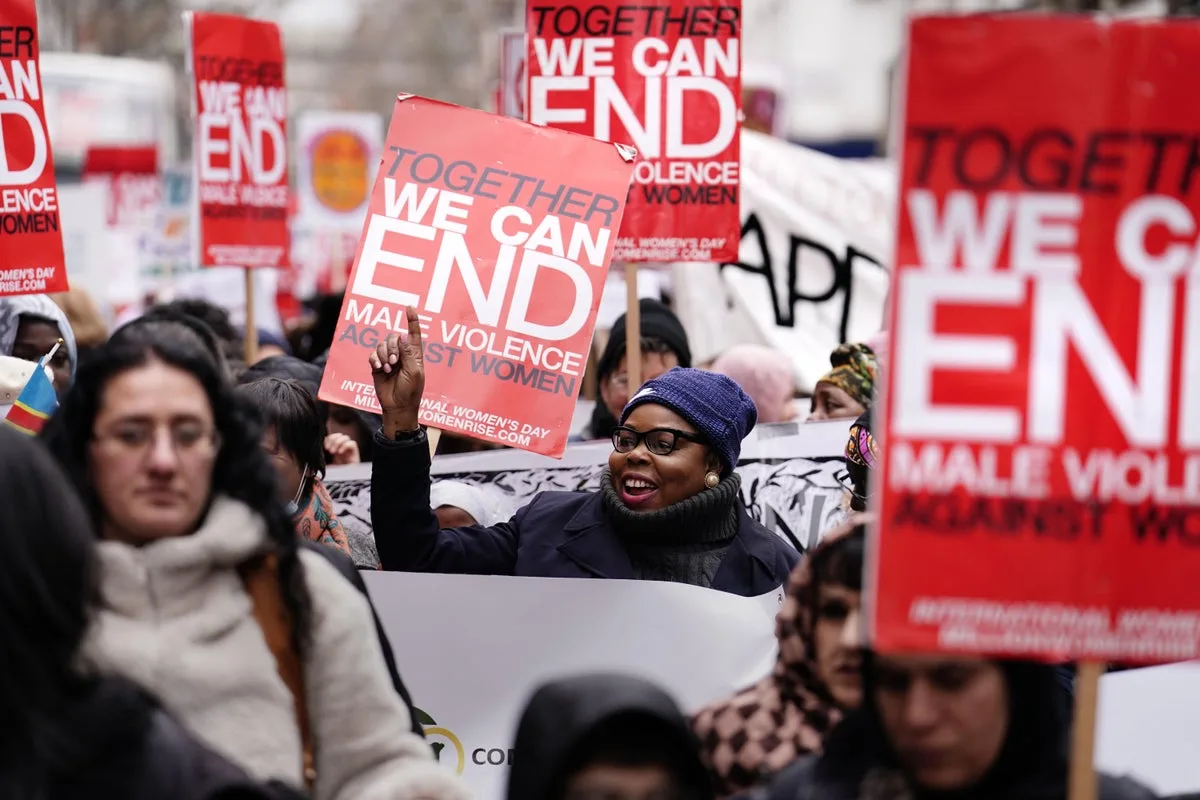
A new report has revealed that Britons are significantly more concerned about violence against women and girls than they are about immigration, placing substantial pressure on the government to expedite its efforts to address this critical issue. The findings, which come from a comprehensive poll, indicate a profound shift in public priorities, with safety for women emerging as a top-tier concern alongside traditional economic and healthcare worries.
Overwhelming Public Concern for Women's Safety
The report, published by the Health Equality Foundation on Wednesday, highlights that decades of underinvestment and inattention have severely eroded women's trust in the systems designed to protect them. According to the poll, conducted by GGF Insights between March 13 and 17, approximately nine in ten adults, or 88 per cent, express concern about violence against women and girls. This places VAWG only slightly behind the NHS, which concerns 91 per cent of respondents, and the cost of living, at 93 per cent.
Comparative Priorities: Immigration and Unemployment
Notably, the level of concern for violence against women and girls far surpasses that for immigration, which stands at 77 per cent, and unemployment, at 72 per cent. This disparity is striking, given the government's current focus on immigration as a central agenda item, particularly in Labour's strategy to regain support from Reform UK amid challenging approval ratings.
While Labour has committed to halving violence against women and girls within a decade, as outlined in its long-delayed VAWG strategy unveiled in December, this mission has received less prominence compared to Sir Keir Starmer's initiatives to curb migration. The poll results suggest that the public may be urging a re-evaluation of these priorities.
Impact on Daily Life and Trust
The survey further uncovers alarming statistics about personal safety. Over the past twelve months, almost half of women, specifically 44 per cent, have avoided certain places, routes, or situations due to feelings of insecurity. In contrast, only 26 per cent of men reported similar behaviour. This data underscores the tangible, everyday impact of safety concerns on women's lives.
Baroness Nargund, founder of the Health Equality Foundation and a Labour peer, emphasised that concern about violence against women and girls is not an abstract anxiety. She stated, "It is about women feeling unsafe on their streets, on public transport, and even in their own homes." She acknowledged the government's progress in placing women's concerns at the heart of its agenda, citing initiatives like the Violence Against Women and Girls strategy, the renewal of the Women's Health Strategy, and the expansion of funded childcare as positive steps.
Call for Immediate Action and Delivery
However, Baroness Nargund stressed that the priority now must be swift implementation. "It is imperative that policies that put women's safety and wellbeing at the forefront are implemented without delay," she urged. She added that if women can witness and experience tangible changes in their daily lives over the next year, trust in the system could begin to be rebuilt.
The poll, which engaged 4,007 nationally representative British adults, serves as a clarion call for policymakers. As the government balances its focus between immigration control and women's safety, the public sentiment clearly indicates a strong demand for accelerated action on VAWG. The Home Office has been approached for comment on these findings, reflecting the ongoing scrutiny of governmental responses to this pressing issue.