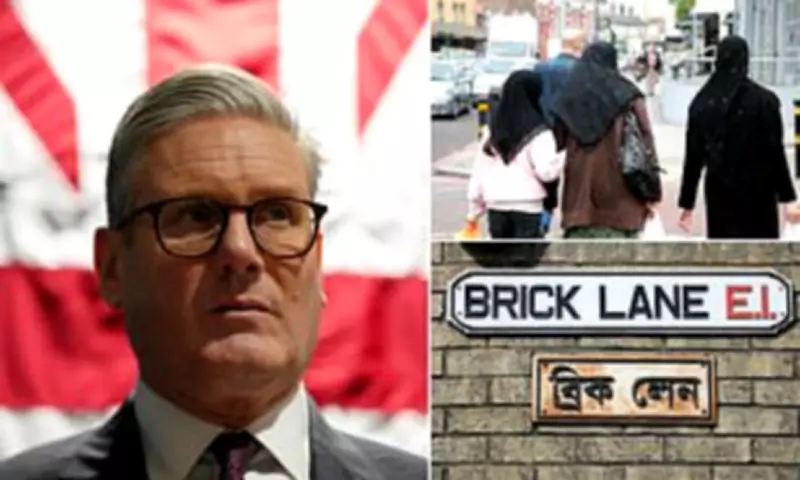
Britain's Quiet Crisis: How 'Suicidal Empathy' is Erasing National Identity
There are pivotal moments in a nation's history when transformation occurs not through dramatic revolution but through a gradual, almost imperceptible erosion of confidence. Britain currently finds itself in precisely such a moment, experiencing what commentator Matt Goodwin describes as a profound loss of national self-awareness.
The Drift of National Institutions
For decades, the foundational institutions that once defined British society—Parliament, the civil service, the judiciary, law enforcement, the BBC, educational establishments, corporate leadership, religious bodies, and cultural organizations—have steadily distanced themselves from the citizens they were established to serve. This separation has created what Goodwin identifies as a new ruling class that views itself not as guardians of a living nation but as administrators of a borderless global humanitarian project.
This elite class operates with what Goodwin terms 'suicidal empathy'—a distorted worldview that prioritizes compassion for outsiders over the wellbeing of Britain's own population. The ideology measures moral worth not by defending one's country but by demonstrating limitless generosity to the world, even when such actions undermine national stability and survival.
The Consequences of Ideological Shift
The practical manifestations of this ideological shift are increasingly visible across British society:
- Government institutions appearing to lack control
- Border policies that seem increasingly meaningless
- Public services operating beyond capacity
- Political leadership perceived as lacking courage
- A nation exhibiting diminished confidence in its future
Goodwin warns that within a single generation, Britain risks ceasing to be recognizably Britain. The nation built by ancestors faces replacement by something fundamentally different, not through conquest but through abandonment by those entrusted with its protection.
Demographic Transformation and Cultural Displacement
The scale of demographic change represents perhaps the most tangible evidence of Britain's transformation. According to Goodwin's analysis:
- By 2100, the proportion of White Britons without immigrant parents will decline from approximately 95% in the 1990s to just 33%
- The foreign-born population and their immediate descendants will increase from 19% to over 60%
- Muslim representation will rise from about 6% to 25% of the population, reaching 33% among younger demographics
These changes will occur within the lifetime of children born today, with White Britons projected to lose majority status by 2063. Already, numerous urban centers including London, Manchester, Birmingham, Leicester, Luton, Slough, and Watford have majority non-White British populations, with many other areas following this trajectory.
Cultural Indicators and Social Impact
The transformation manifests in everyday cultural markers. By 2023, Muhammad had become the most popular boy's name in Britain, replacing traditional names like Thomas, Jack, Oliver, and Noah. Between 2001 and 2021, the foreign-born population increased to 17%, now approaching 20%—approximately 13 million residents born outside Britain.
Language diversity presents another significant indicator. Over five million people in Britain now prefer speaking languages other than English, with the NHS reporting in 2025 that one in ten patients lacks functional English skills, primarily speaking Urdu or Bengali.
Institutional Responses and Public Sentiment
A More In Common survey revealed that nearly half of Britons feel 'like a stranger in my own country', a sentiment shared across ethnic backgrounds. Yet expressions of this cultural displacement often meet with dismissal, shaming, or mockery from elite circles.
Goodwin identifies the election of Tony Blair's New Labour government in 1997 as initiating an unprecedented experiment in mass immigration. Since then, Britain has experienced more annual immigration than during the combined 1,500 years between the Anglo-Saxon arrival and the end of World War II.
Economic and Social Costs
The financial implications of current policies are substantial:
- Welfare spending projected to exceed £400 billion annually by 2030
- Taxpayers contributing £10 billion yearly to support over 1.2 million foreign nationals on Universal Credit
- An estimated £6 billion annually subsidizing social housing for foreign-born households
- Each low-wage migrant worker projected to represent a £465,000 net fiscal cost by age 81
Proposed Solutions for National Continuity
Goodwin advocates for measured but decisive policy changes to preserve Britain's national character:
- Ending dependence on low-wage, low-skill migration from outside Europe
- Withdrawing from the European Convention on Human Rights and repealing the Human Rights Act
- Replacing multiculturalism with assertive assimilation policies
- Redirecting welfare spending from non-British recipients to frontline public services
- Creating incentives for British families to have more children
- Reintegrating economically inactive British-born citizens into the workforce
The commentator emphasizes that Britain stands at a historic crossroads. The coming decade will determine whether the nation reclaims its future or succumbs to what Donald Trump has termed 'civilisational erasure'—the disappearance of unique identity, culture, and people.
Goodwin concludes that while the hour is late, it is not too late for Britain to reverse course. The nation faces mortal danger but remains capable of salvation if it acts decisively to preserve the country that generations have known and loved.