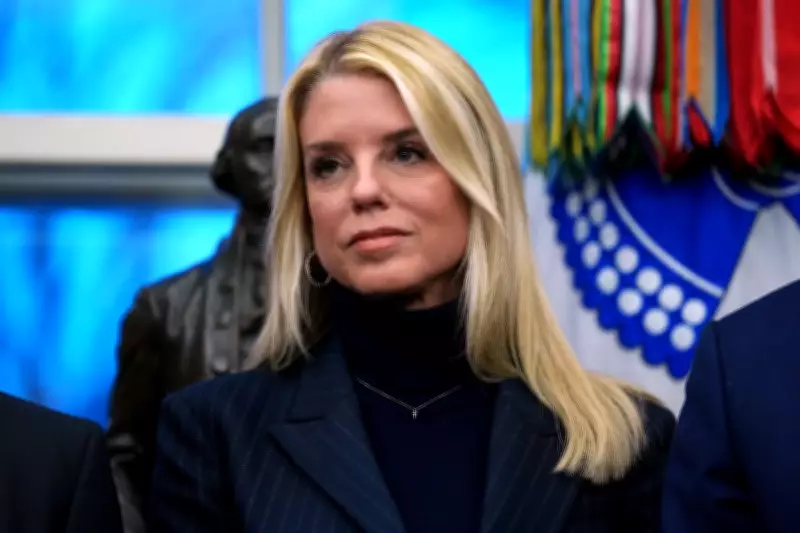
Former Attorney General Pam Bondi Could Face Contempt Charges Over Epstein Testimony No-Show
Former Attorney General Pam Bondi is potentially facing contempt of Congress charges after she failed to appear for a scheduled deposition before the House Oversight Committee. The deposition was intended to gather her testimony regarding the federal government's handling of investigations into Jeffrey Epstein, the convicted sex offender.
Bipartisan Subpoena and Legal Standoff
Bondi, who was dismissed by the Trump administration last month, had been issued a bipartisan subpoena compelling her testimony while she served as attorney general. She was due to appear on Tuesday, but her absence has triggered a significant legal and political confrontation.
Representative Robert Garcia, the top Democrat on the House Oversight Committee, issued a strong statement condemning Bondi's actions. "She is evading a lawful congressional subpoena," Garcia asserted, referencing the Epstein files and allegations of a White House cover-up. He emphasized that the subpoena remains valid regardless of her current title and warned that "Oversight Democrats will move forward with contempt proceedings immediately" if she continues to ignore the legal mandate.

Contempt of Congress: Legal Consequences and Precedents
Contempt of Congress is classified as a misdemeanor offense, carrying penalties of up to one year in prison and fines reaching $100,000. This legal avenue has been pursued in recent years against former Trump aides Steve Bannon and Peter Navarro, both of whom were convicted and served prison sentences for refusing to testify before congressional committees investigating the January 6 Capitol attack.
The Republican-controlled committee has countered Garcia's accusations, labeling him a "hypocrite" and drawing comparisons to Bill and Hillary Clinton's past resistance to congressional subpoenas. However, unlike Bondi, the Clintons ultimately testified for several hours each. Oversight Republicans have suggested that Bondi's testimony will merely be rescheduled, dismissing Garcia's outrage as "purely performative."
Department of Justice Intervention and Bipartisan Concerns
Complicating matters, the Department of Justice claimed last week that the subpoena "no longer applies" following Bondi's dismissal. In a letter to Republican Chair James Comer, Assistant Attorney General Patrick Davis requested confirmation that the subpoena be withdrawn, stating the Department's commitment to cooperative oversight without compulsory process.
Despite this, bipartisan members of the committee, including Republican Representative Nancy Mace and Democratic Representative Ro Khanna, have stressed that Bondi "remains obligated" to testify. They argued in a letter to Comer that her removal from office does not diminish the committee's oversight interests, particularly regarding actions taken under her leadership and the withholding of Epstein-related documents from the public.
Scrutiny Over Epstein Files and Transparency Act
Bondi has faced intense bipartisan scrutiny over her handling of the Epstein files and the Justice Department's investigations into the wealthy sex offender and his alleged co-conspirators. Under the Epstein Files Transparency Act, signed into law by Trump in November, the Justice Department was mandated to release all files connected to Epstein investigations by December 19.
While millions of pages have been published, accusations persist that records related to Trump—who socialized with Epstein in the 1990s and early 2000s—have been withheld. It is important to note that Trump has not been accused of criminal wrongdoing, and inclusion in the Epstein files does not imply guilt.
In his subpoena letter to Bondi, Comer outlined that the committee is "reviewing the possible mismanagement" of the Epstein and Ghislaine Maxwell investigations, with Maxwell convicted on sex trafficking charges in 2021. He highlighted Bondi's direct responsibility for overseeing file releases and suggested the investigation could inform legislative reforms on sex trafficking and plea agreements.

Ongoing Political and Legal Implications
Acting Attorney General Todd Blanche, formerly Bondi's chief deputy, commented to Fox News this month, stating that the Epstein files "should not be a part of anything going forward," following the Department's release efforts. This stance contrasts with ongoing congressional demands for accountability and transparency.
The situation underscores deep partisan divides and the escalating tensions between congressional oversight authority and executive branch cooperation. As Bondi's potential contempt proceedings loom, the case highlights broader issues of governmental accountability and the enforcement of congressional subpoenas in high-profile investigations.