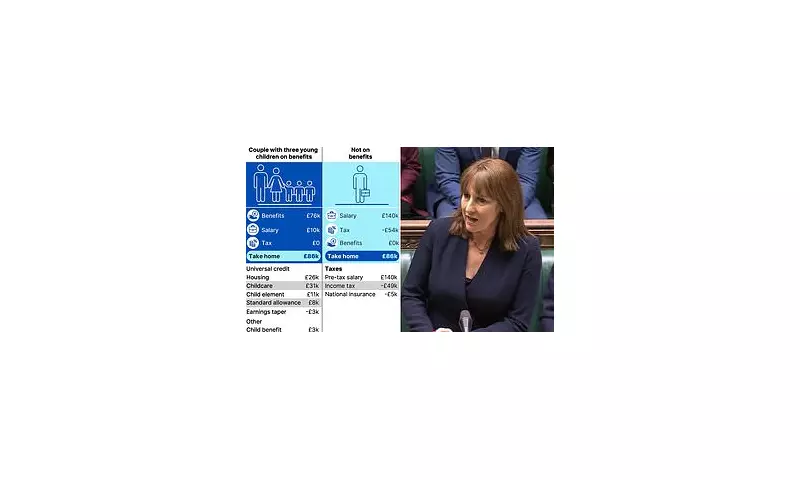
An explosive new analysis has laid bare the dramatic financial impact of Labour's decision to scrap the two-child benefit cap, revealing that some benefit-claiming parents could receive a total income package equivalent to a pre-tax salary of £140,000.
The 'Benefit Street Budget' Windfall
According to a detailed examination by the Daily Mail, a couple with three young children earning a minimal combined income of just £10,152 a year could now top up their earnings with nearly £76,000 in benefits. This represents an increase of around £12,000 compared to the previous system where the cap was enforced.
When their untaxed salary is added, the household's total net income could reach £86,000. Crucially, neither parent would pay any income tax or National Insurance on their earnings. The Mail's calculations suggest this take-home amount is equivalent to the pre-tax income of a single person earning £140,000, or a couple each earning £56,000.

The scenario is similarly striking for single parents. A lone parent with three children in comparable circumstances could see their total income boosted to £83,000, matching the pre-tax earnings of someone on a £135,000 salary. For context, the UK's median pre-tax full-time salary stands at approximately £39,000, rising to £49,000 in London.
Political Backlash and System 'Unfairness'
The findings have ignited a fierce political row. Shadow Work and Pensions Secretary Helen Whately told the Mail: "Thanks to Rachel Reeves' Budget for Benefits Street, the system rewards those who do less and claim more."
She added: "Under Labour, people on modest pay can top up their income with tens of thousands in benefits – the equivalent of a six-figure salary. Our welfare system only works if it's fair to people who're paying in. You don't need a degree in ethics to see this is unfair."
Whately concluded by stating that the welfare system is "broken" and asserted that only the Conservatives, with their proposed £23 billion in savings, have the resolve to fix it and "get Britain working again."
Cost and Wider Implications
Chancellor Rachel Reeves announced the removal of the two-child limit in her November Budget. The move is set to benefit 470,000 larger families on benefits, at an estimated annual cost to the taxpayer of £3.2 billion. The Conservatives have already pledged to restore the cap if they regain power.
This analysis follows a warning from the think-tank the Centre for Social Justice (CSJ), chaired by former Tory Work and Pensions Secretary Iain Duncan Smith. Last month, the CSJ reported that the current system risks eroding work incentives, as it can deliver a higher standard of living for some out of work than for those in employment.
Reeves' Budget was partly funded by a £30 billion tax raid, which includes freezing income tax thresholds for a further three years. This 'stealth tax' is projected to drag millions more earners into higher tax brackets. The Office for Budget Responsibility (OBR) also warned that economic growth under Labour would be lower than previously forecast.
In response to the plans, Conservative leader Kemi Badenoch branded the announcement a "Benefits Street Budget." A government spokesperson countered the analysis, stating: "This is an extreme hypothetical example that doesn't reflect how the benefit system works in practice for the vast majority of families on Universal Credit. In reality, very few families would ever be in these circumstances."
The debate underscores a fundamental clash over welfare philosophy, with Labour emphasising support for larger families and the Conservatives arguing for a system that prioritises work incentives and fairness for taxpayers.