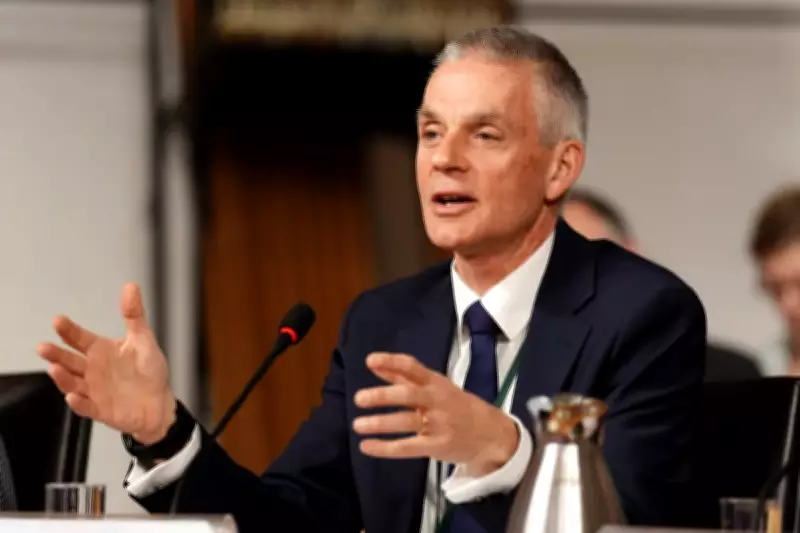
Outgoing BBC director-general Tim Davie has issued a stark warning that the corporation's charter renewal process, with its fixed end date, leaves the broadcaster dangerously exposed to becoming a "political football".
The Charter Renewal Challenge
The BBC's charter, which establishes the broadcaster's public purpose and constitutional foundation, must be renewed every decade. The current charter is set to expire in December 2027, creating what Davie describes as a predictable cycle of political vulnerability.
"Only the BBC has a charter that expires every decade, leaving it open to being treated as a political football," Davie wrote in an article for The Times. "We are not perfect and must be held to account, but the BBC's future should never become a political battleground."

Three Key Reforms Proposed
Davie's comments come ahead of the BBC's formal response to the government's consultation on its future, scheduled for publication on Thursday. In his article, he outlined three critical changes he believes are essential for the broadcaster's survival:
- Eliminate the fixed end date for charter renewals to remove the predictable political pressure points
- Establish an updated funding model that moves beyond the traditional licence fee to something "fit for the future"
- Create a growth-focused regulatory framework allowing the BBC to "move at the pace of today's media world"
Funding and Innovation Concerns
The BBC currently relies predominantly on the licence fee paid by television-watching households across the UK. Davie argues this model needs urgent modernization to ensure the broadcaster can continue fulfilling its public service mission in the digital age.
"The BBC is ready to keep innovating to do more," Davie emphasized. "To tackle disinformation, support local news and strengthen grassroots democracy; to safeguard British storytelling and grow our creative sector; to carry Britain's voice and influence to the world. But it won't be possible without a charter that delivers radical reform."
Warning Against Status Quo
Davie delivered a particularly dire warning about maintaining the current charter structure: "A charter that maintains the status quo will not be enough; it would abandon the BBC to managed decline."
The outgoing director-general's intervention comes at a critical juncture for the broadcaster, which faces increasing competition from global streaming services and ongoing political scrutiny about its role and funding.
Leadership Transition Context
Davie announced his resignation as director-general in November and will officially leave his post in April. His departure follows allegations that the BBC selectively edited a speech by former US President Donald Trump related to the January 6 Capitol attack for a Panorama documentary.
Rhodri Talfan Davies has been confirmed as the corporation's interim director-general and will assume the role from April 3, providing continuity during this period of charter consultation and potential reform.
The government's consultation on the BBC's future represents a crucial opportunity to reshape the broadcaster's constitutional and financial foundations. Davie's warnings highlight the high stakes involved in decisions that will determine whether the BBC can continue serving as a cornerstone of British media and cultural life.