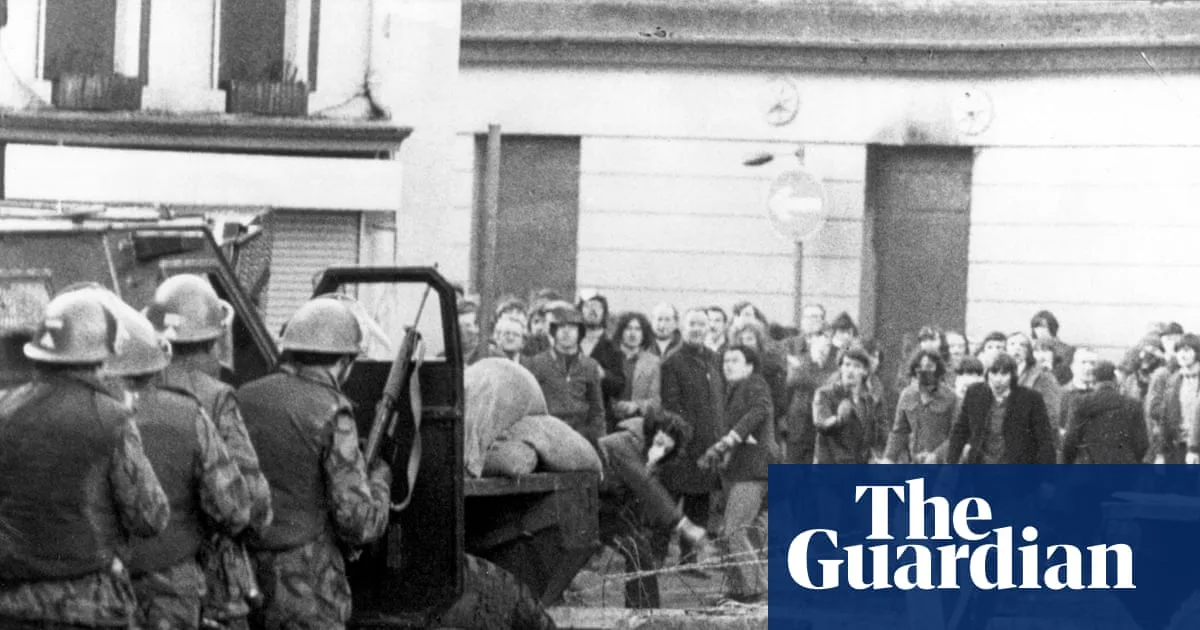
Conservative leader Kemi Badenoch has held a significant meeting with Northern Ireland veterans in Parliament, intensifying her campaign against Labour's plans to dismantle immunity provisions within Troubles-era legislation. The gathering occurred as former soldiers protested the government's intention to repeal legacy laws, setting the stage for a contentious Commons vote on Wednesday.
Remedial Order Sparks Constitutional Clash
Ministers are attempting to pass a 'remedial order' to amend the Northern Ireland Troubles (Legacy and Reconciliation) Act 2023. This legislative move would eliminate measures that previously allowed perpetrators of Troubles-related crimes to receive immunity from prosecution in exchange for cooperation with a truth recovery body. Furthermore, the government's order seeks to remove the existing bar on new civil claims concerning Troubles cases, potentially opening veterans to renewed legal scrutiny.
Mrs Badenoch has voiced strong concerns that these actions will expose veterans to what she describes as 'vindictive lawfare', pledging to challenge Labour's approach both in the Commons and the Lords. 'I support our veterans because it's the right thing to do,' she asserted. 'Labour's plans won't just impact those veterans facing prosecution today, but also those thinking about joining our Armed Forces in the future. Because why would anyone choose to serve and fight for their country if they don't think the Government will have their backs afterwards?'
Legal Foundations and Human Rights Concerns
The impetus for this legislative shift stems from a Belfast High Court ruling that declared parts of the 2023 Act incompatible with the European Convention on Human Rights (ECHR). While the previous Conservative administration was appealing this decision, the new Labour government, following the 2024 general election, opted to drop the appeal. Labour has subsequently introduced its own Troubles Bill to replace the existing Act and terminate the immunity scheme embedded within that legislation.
During Prime Minister's Questions, Mrs Badenoch directly challenged Sir Keir Starmer, urging him to 'do the right thing' and abandon the government's plans. 'We support our Armed Forces in every possible way,' she stated. 'Later today, my party will vote to protect our veterans from unfair prosecution. He is ordering his MPs to vote against them. In our national interest, and for the sake of all the brave people in the Armed Forces, past, present and future, will the PM do the right thing and vote in support of our veterans, not against them?'
In response, Sir Keir defended the government's position, noting that 'Under the last government, they passed legislation which was struck down, leaving our veterans utterly exposed. We're putting in place proper measures to protect them.'
Ministerial Perspectives and Opposition Warnings
Northern Ireland Secretary Hilary Benn addressed the Commons, arguing that the 2023 Act 'fundamentally failed' due to its incompatibility with the UK's human rights obligations. He elaborated: 'One of the main reasons for the failure of the legacy Act was its attempt to grant immunity, including to terrorists who murdered in cold blood soldiers and civilians in Northern Ireland and in towns and cities across England. Now, it probably, in fairness, seemed reassuring to veterans, it was almost certainly reassuring to terrorists who had committed those acts. But it was a false promise, and it protected no one.'
Mr Benn emphasised the necessity for swift action, stating: 'The Government is clear that these repeals need to happen as quickly as possible. Why? Because we need to provide clarity on immunity to build trust amongst victims, survivors and indeed veterans in the independent commission. Because while immunity remains on the statute book, it will be harder for them to obtain the confidence of some victims and survivors.'
Conservative Counterarguments and Veteran Anxieties
Shadow Northern Ireland Secretary Alex Burghart contended that the remedial order represents a 'continuation of the Troubles by other means' and argued it was time to draw a line under the conflict. He aligned with Conservative MP Lincoln Jopp, who characterised the situation as a 'proxy war' to 'relitigate the question 'who won?''.
Senior Tory MP Sir David Davis issued a stark warning, asserting that Labour's Bill will 'reopen the door to criminal prosecutions against our veterans'. In a detailed article, he cautioned: 'This week is the beginning of a process which will expose British soldiers, particularly the SAS, to vindictive lawfare in Northern Ireland. Veterans face decades of investigation, repeated questioning, and public suspicion, even when there is no realistic prospect of a charge.'
Sir David highlighted the human cost, noting that in at least one instance, a veteran died from a heart attack under the strain of a prolonged legal ordeal, with his family attributing his death to the stress of a twenty-year legal battle. He stressed the impossibility of retrospective investigations comprehending the split-second decisions made under live fire, concluding: 'The consequences are now being felt by the two million veterans across the country who rightfully feel betrayed.'
Proposed Protections and Broader Implications
The government has indicated it will introduce new safeguards for veterans, including:
- Protection from repeated investigations
- A right to give evidence remotely
- Protections for health in old age
- A right to seek anonymity
- Protection from cold calling
Mr Benn reiterated the government's stance, stating: 'Today, I am asking the House to endorse a remedial order to remove indefensible and legally defective provisions contained in the previous government's Legacy Act. This remedial order is essential to rebuild the trust of communities across Northern Ireland who are opposed to the idea that the terrorists who murdered their loved ones could be granted immunity from prosecution if they came forward to the commission. It also restores the historic right of citizens of this country to seek redress through the courts.'
The debate underscores deep divisions over how to address the legacy of the Troubles, balancing human rights obligations with protections for military personnel. As the Commons vote approaches, the political and legal ramifications continue to unfold, with veterans' welfare remaining at the heart of the controversy.




