Prime Minister Anthony Albanese Addresses Nation on Middle East Crisis and Fuel Conservation
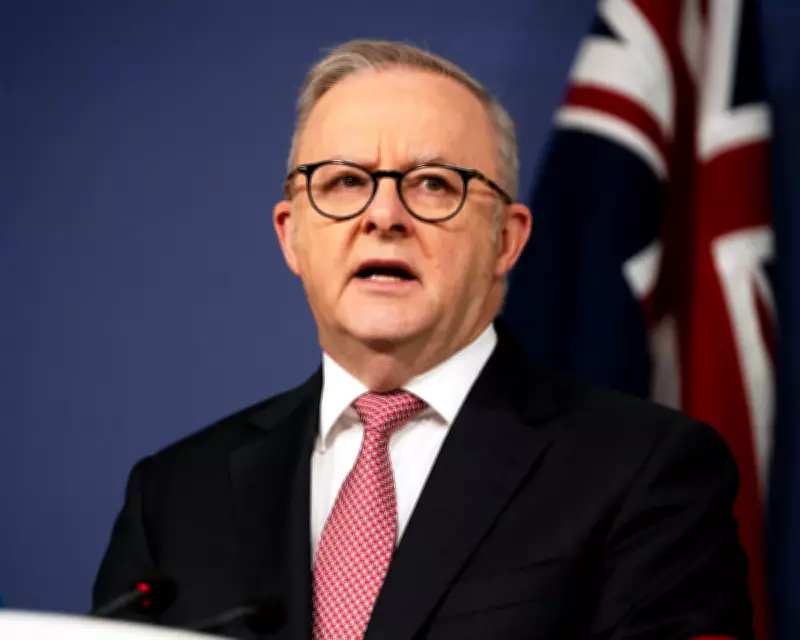
In a rare and significant move, Prime Minister Anthony Albanese addressed the nation on Wednesday evening, focusing on the escalating war in the Middle East and its economic repercussions. His speech, broadcast simultaneously across all television and radio networks from Canberra, marked a departure from his scheduled address to the National Press Club the following day.
Albanese detailed the government's strategic response to the Middle East crisis, emphasizing the need for national unity. He specifically encouraged Australians to play a proactive role by conserving fuel, directing it towards essential areas and industries most affected by the conflict. This call to action underscores the broader economic pressures stemming from the geopolitical turmoil.
Historic Precedents of Australian Prime Ministerial Addresses
Albanese's address places him among a select group of Australian leaders who have halted the nation for pivotal announcements. Such speeches are reserved for moments of profound national importance, reflecting crises that demand direct communication with the public.

2020: Scott Morrison on the Covid Pandemic
The most recent prior address occurred six years ago, when then-Prime Minister Scott Morrison spoke on 12 March 2020 to reassure Australians during the early stages of the Covid pandemic. At that time, 140 cases had been confirmed in Australia. Morrison announced a $17.6 billion stimulus package, including $750 cash payments to 6.5 million low-income earners, asserting that Australia was "well prepared and equipped" to handle the virus. However, his administration later faced criticism for a slow vaccine rollout, despite his repeated claims that it was "not a race".
2008: Kevin Rudd on the Global Financial Crisis
On 14 October 2008, Prime Minister Kevin Rudd addressed the nation amidst what he termed the "worst financial crisis in our lifetime", likening it to a national security threat. He unveiled a $10.4 billion economic stimulus package aimed at supporting low-income families and averting recession. Rudd expressed concern over public anxiety fueled by international economic news, vowing not to "stand idly by". Australia ultimately avoided a recession, outperforming many other advanced economies due to these fiscal interventions.
2003: John Howard on the Iraq Invasion
Prime Minister John Howard made a national address on 20 March 2003, announcing the deployment of Australian troops to Iraq. He justified the decision as "right, lawful, and in Australia's national interest", citing the need to disarm Iraq of weapons of mass destruction. Historically, this decision has been scrutinized, with estimates of the war's death toll ranging from 150,000 to over one million, highlighting its contentious legacy.
1993: Paul Keating on the Mabo Decision
On 15 November 1993, Prime Minister Paul Keating spoke following the High Court's landmark Mabo decision, which overturned the "terra nullius" doctrine and advanced Indigenous land rights. Keating described it as rejecting a "lie" and acknowledging a "truth", calling it an opportunity to "right an historic wrong". He pledged to introduce legislation aligning with the court's ruling, cementing this as a key achievement of his leadership.
1941: John Curtin on War with Japan
The first recorded national address in Australian history was delivered by Prime Minister John Curtin on 8 December 1941, after Japan's attack on Pearl Harbor. He declared, "Men and women of Australia, we are at war with Japan", emphasizing that the conflict was initiated by Japan. Curtin concluded with a poetic flourish, quoting Algernon Charles Swinburne to inspire national resolve during a dark period.
Albanese's speech continues this tradition of using national addresses to navigate crises, blending immediate policy responses with calls for public cooperation in uncertain times.