London Al-Quds Day Organiser's 'Death to IDF' Chants Spark Security Concerns
Al-Quds Day Organiser's 'Death to IDF' Chants in London

London Al-Quds Day Organiser's 'Death to IDF' Chants Spark Security Concerns

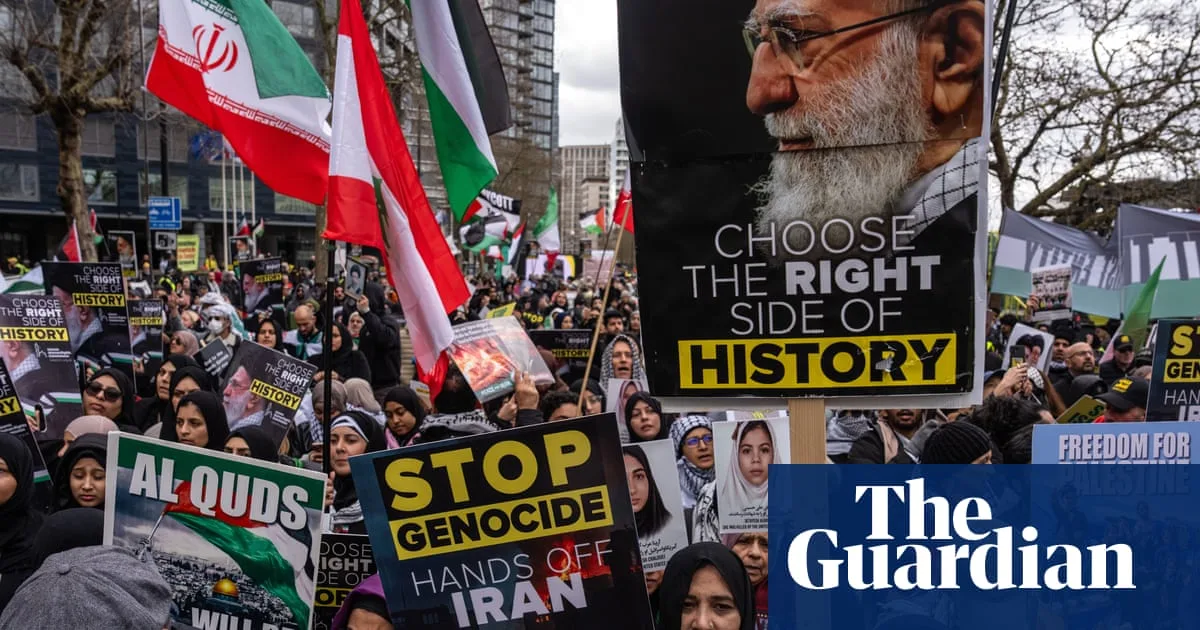
Raza Kazim, a key fundraiser for the group organising the Al-Quds Day rally in London, was filmed leading chants of "death to the IDF" and "Khamenei makes us proud" at a pro-Iran demonstration last weekend. The incident occurred outside the US embassy following the death of Iran's supreme leader, Ayatollah Ali Khamenei, in an Israeli drone strike.

Extremist Slogans and Charitable Links

Footage from the event shows Kazim enthusiastically leading crowds with the chant: "say it clear, say it loud, Khamenei makes us proud." In separate video evidence, he is clearly heard yelling "death to the IDF [Israel Defence Forces]" – a slogan previously condemned as hate speech by Labour leader Sir Keir Starmer.

This week, Home Secretary Shabana Mahmood banned the planned Al-Quds Day march through London organised by the Islamic Human Rights Commission (IHRC) due to serious disorder risks. However, the event will proceed on Sunday as a static protest under strict police conditions.

Mr Kazim, who leads a mathematics teacher training course at Middlesex University, serves as a trustee of the IHRC trust – the charitable arm that funds the IHRC's activities. The IHRC was described in the independent Prevent strategy review as an "Islamist group ideologically aligned with the Iranian regime, that has a history of extremist links and terrorist sympathies."

Although the IHRC claims to be a separate entity from the IHRC trust, both organisations share identical business addresses and telephone numbers, raising questions about their operational independence.

Controversial Statements and Government Response

In a reported statement, Mr Kazim praised Khamenei – whose regime has been responsible for thousands of protester deaths – for "his principled opposition to systems of racial and political oppression." He defended the "death to IDF" chant as a "creative and forceful expression calling for the dismantling of a genocidal military institution responsible for terrorising, killing, raping and torturing Palestinians, while enforcing a system of apartheid that denies their basic humanity."

Lord Walney, the Government's former extremism adviser, described these comments as "deeply disturbing," telling The Times: "These kinds of remarks are not remotely acceptable and not remotely peaceful and they make a mockery of those who claim there is no link between regime supporters and charities."

Organisational Background and Additional Support

Mr Kazim has organised previous Al-Quds Day marches, an event created by Ayatollah Ruhollah Khomeini after Iran's 1979 revolution to express opposition to Israel. The name derives from the Arabic word for Jerusalem.

Other IHRC figures have publicly expressed support for the Iranian regime. Massoud Shadjareh, the organisation's co-founder and chair, previously described meeting with Khamenei to present an IHRC report on Islamophobia. He recalled the supreme leader listening "very attentively" before advising: "This is because they want to destroy your confidence in yourselves as Muslims and in your deen [all-encompassing faith]. Don't let it happen."

Faisal Bodi, the IHRC's spokesman, described the late Iranian leader as a man of "principle and integrity," telling the BBC he would "happily" hold a picture of Khamenei rather than Keir Starmer or Donald Trump. He added that Khamenei "stood on the side of Palestine" and quoted Tehran's official figures for protester deaths rather than independently verified estimates numbering in the tens of thousands.

Police Security Measures and Legal Limitations

The IHRC strongly condemned the march ban but confirmed the static protest would proceed. Police anticipate up to 12,000 participants and are implementing unprecedented security measures, including using the River Thames as a physical barrier between opposing groups.

Metropolitan Police deputy assistant commissioner Ade Adelekan warned that while measures aim to mitigate disruption, they cannot "guarantee" disorder won't occur. At least a thousand officers from the Met and national forces will patrol the event, with more available if needed.

"While we will protect the right to freedom of speech, there is a zero-tolerance approach to hate crime and anyone who crosses the line can expect to face arrest," Adelekan stated.

Lord Walney has criticised what he calls a "loophole" in public order laws that prevents ministers from banning static demonstrations. All protests and counter-protests will be confined between Vauxhall and Lambeth bridges from 1pm to 3pm, with Lambeth Bridge closed to all but emergency vehicles.

Adelekan described the policing plan as "unique" but stressed it wouldn't set a precedent, noting: "I've been in this organisation for 31 years, I cannot think of a time when we used it. So as far as I'm concerned it's new, it's new in my generation of policing."

The security operation requires redeploying officers from neighbourhood policing duties to cover the event and patrol Jewish neighbourhoods in the capital. Middlesex University has been contacted regarding Mr Kazim's position but hasn't yet commented.

Understanding Al-Quds Day

Al-Quds Day was established by Ayatollah Ruhollah Khomeini following Iran's 1979 revolution. Occurring on the last Friday of Ramadan, it was conceived as an international day expressing support for Palestine and opposition to Israel and Zionism.

The London march has occurred for over four decades, organised by the UK al-Quds Committee led by the IHRC. Many view it as a hate march, with numerous arrests occurring annually for supporting terrorist organisations and committing anti-Semitic hate crimes. The IHRC has consistently backed Iran's leadership, describing the late Ayatollah Khamenei as having been "on the right side of history."




