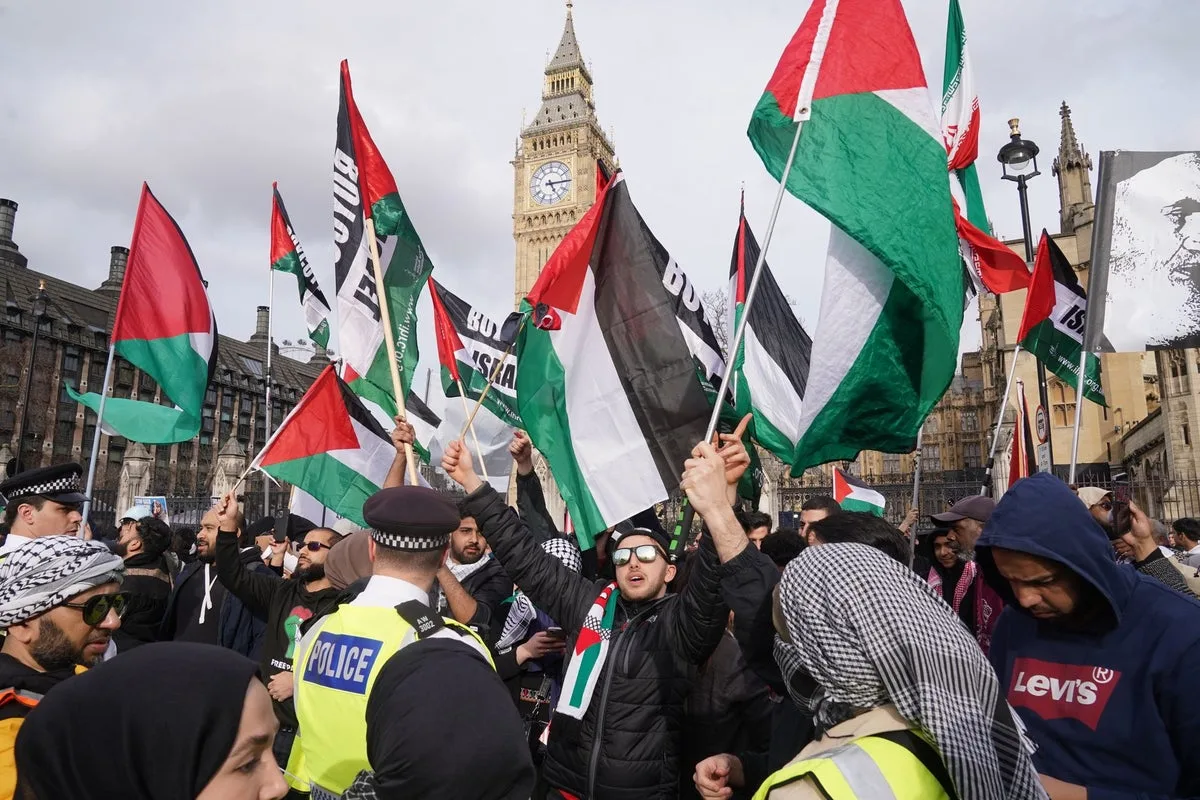
London's Al-Quds Day March Banned Over Iran Ties, First Protest Ban in Over a Decade
A pro-Palestinian march scheduled for Sunday has been prohibited by the UK government, representing the first protest ban in London for more than ten years. The decision, aimed at preventing serious public disorder, was approved by Home Secretary Shabana Mahmood following a request from the Metropolitan Police.
Government Cites Public Safety Concerns
Home Secretary Shabana Mahmood stated she was satisfied that banning the annual Al-Quds Day march was necessary to avert serious public disorder. This assessment considered the scale of the protest, multiple planned counter-protests, and the ongoing conflict in the Middle East. Mahmood emphasised that should any stationary demonstration proceed, police would enforce strict conditions, and she expects the full force of the law to be applied against those spreading hatred and division rather than engaging in peaceful protest.
Metropolitan Police's Risk Assessment
The Metropolitan Police based their request on a risk assessment of this specific event and associated counter-protests. They clarified that the decision was not about policing taste, decency, or political views but about reducing violence and disorder. Previous Al-Quds Day marches have led to arrests for supporting terrorist organisations and antisemitic hate crimes. The police described the international situation as uniquely complex, with severe risks that made mere conditions insufficient to prevent serious public disorder. They noted that while static protests cannot be banned by law, strict conditions would be imposed, though confrontations might still occur due to high tensions.
Organisers and Political Reactions
The Islamic Human Rights Commission (IHRC), which organises the protest, has previously insisted the demonstration is always good-natured and peaceful. A spokesman, Faisal Bodi, called the ban a sad day for freedom of expression, assembly, and legitimate protest, noting the event has occurred peacefully for 40 years. The IHRC has expressed support for Iran's late Supreme Leader Ayatollah Ali Khamenei, who founded Al-Quds Day after the 1979 Iranian Revolution to show support for Palestinians and oppose Israeli, Western, and Zionist influences.
Political figures from both Labour and Conservative parties had called for the march to be banned. Courts Minister Sarah Sackman argued that individuals supporting Iran's malign regime should not be on London's streets promoting hate and hostility. Shadow Home Office Minister Alicia Kearns also advocated for cancellation, stating there is no place in the UK for celebrating terrorists. Conversely, the Campaign Against Antisemitism welcomed the ban as a positive development, asserting that allowing the march would have sent a message that Islamists dominate in Britain.
Historical Context and Implications
This ban marks the first time a protest march has been prohibited in London since 2012, highlighting a significant shift in public order management. The decision underscores the government's heightened concerns over protests with international connections, particularly those linked to regimes like Iran. It raises questions about balancing public safety with civil liberties, such as freedom of assembly and expression, in a tense geopolitical climate.