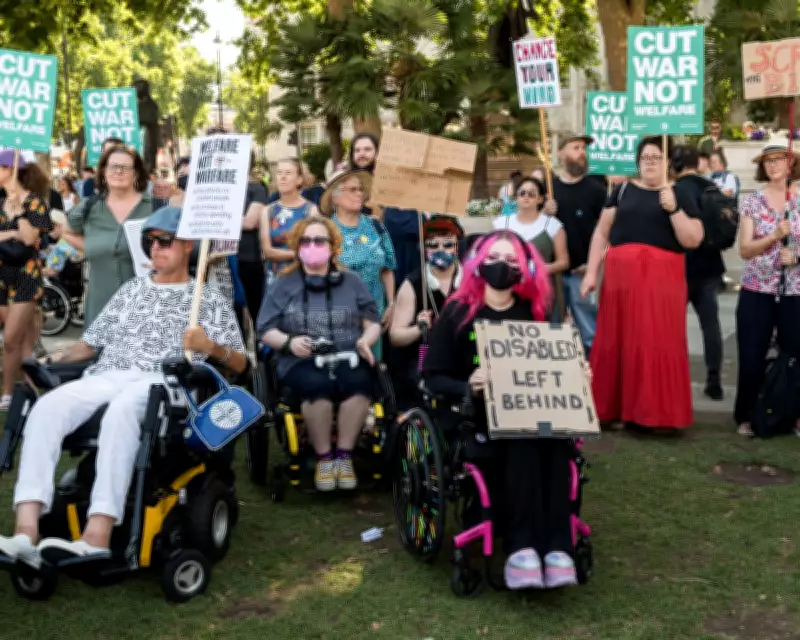
Government data projects that by the 2029-30 financial year, approximately 730,000 future recipients of Universal Credit will be excluded from a higher benefit rate, resulting in an average annual loss of £3,000 per individual. This forecast comes amid forthcoming rule changes that charities argue will disproportionately impact severely ill and disabled people.
Strict Criteria for Benefit Eligibility
Starting in April, the health element of Universal Credit—an additional payment for those deemed too unwell to work or prepare for employment—will be reduced to £50 per week and frozen for new claimants. Exceptions will only be made if a condition is classified as terminal or meets the "severe and lifelong" criteria, meaning it shows no prospect of improvement. Ministers had previously assured that this clause would protect the most vulnerable individuals from the lower rate.
Charities Voice Concerns Over Exclusion
However, charities and disabled people's organisations (DPOs) have raised alarms that many debilitating conditions may not qualify under these stringent rules, despite often rendering individuals unable to work. Conditions such as multiple sclerosis, learning disabilities, bipolar disorder, Parkinson's disease, ME, and long Covid are cited as potentially falling short of the eligibility threshold.

Samuel Thomas, a senior policy adviser at the anti-poverty charity Z2K, stated: "Cuts to Universal Credit's health element threaten to push some of the most seriously ill and disabled people in the country to the brink. The rigid test could exclude people who have had strokes or heart attacks, or those with conditions like cancer or schizophrenia."
Impact on Mental Health and Learning Disabilities
Ella Smith, the welfare rights policy lead for the ME Association, criticised the policy, saying: "The government claims it's protecting people with the most severe conditions, but in reality, this actively excludes swathes of severely ill and disabled people. Awarding a lower rate just because someone may hypothetically recover later turns the constant struggle with unpredictable conditions into an additional cruel penalty."
Hannah Nicholls-Harrison, a policy manager at Mencap, highlighted challenges for individuals with learning disabilities, noting: "Many people struggle to achieve a formal diagnosis due to lack of clear NHS pathways. Without proper documentation or support to navigate the system, they risk missing out on thousands of pounds annually."
Creation of a Two-Tier System
James Taylor, director of strategy at Scope, warned that the changes could establish a two-tier Universal Credit system. "Two people with similar conditions and extra costs will receive different amounts. The severe conditions criteria, while designed to protect some new claimants, may introduce inconsistency in how assessors interpret and apply the rules," he explained.
Charities also expressed concern that new claimants must provide extensive medical evidence from the NHS to qualify for the higher rate, a requirement that can be particularly difficult amid long waiting lists and diagnostic delays.
Political Context and Human Cost
While a Labour backbench rebellion last summer paused proposed reforms to Personal Independence Payments, MPs voted to proceed with the Universal Credit changes. Existing claimants will continue to receive £97 per week regardless of whether their disability is deemed lifelong.
Tom Pollard, head of policy at Mind, remarked: "The government's protection of a higher rate for those meeting severe conditions criteria acknowledges that the reduced rate is insufficient for long-term out-of-work individuals. Yet, many with severe mental health diagnoses may not meet these criteria, despite facing lifelong barriers to employment."
Samuel Thomas emphasised the human cost, stating: "Families losing this vital income could face eviction, go without food and heating, and lose access to essential care, pushing them towards destitution."

Government Response
A Department for Work and Pensions spokesperson defended the policy, saying: "We are committed to supporting vulnerable people. Under the severe conditions criteria, claimants are assessed based on how their condition affects them, not the condition itself. This is intended to protect those not expected to ever work due to a severe lifelong health condition. Those with the most severe conditions, end-of-life cases, and all existing Universal Credit health claimants will continue to receive the higher rate."
Despite these assurances, charities remain worried that the lower benefit rate will exacerbate poverty among disabled people, with some fearing it could lead to increased hardship and inequality in the welfare system.