

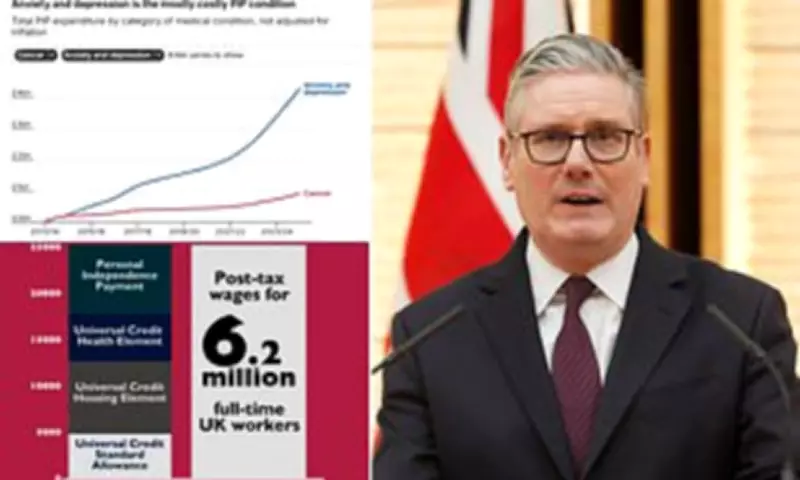
Labour is confronting intensified pressure to overhaul the welfare system today, as startling new figures reveal that more than six million British workers earn less than what individuals can receive through unemployment benefits.
A Quarter of the Workforce Financially Disadvantaged
According to calculations from the Centre for Social Justice, approximately 6.2 million people – representing one in four members of the workforce – would be better off financially if they were to claim the combined benefits available to a jobless individual receiving health and housing support.
This analysis emerges against a backdrop of growing concerns regarding Labour's perceived failure to tackle the rapidly escalating cost of welfare provision across the United Kingdom.

Spiralling Costs and Political Paralysis
Official projections have laid bare the scale of the financial challenge. The Office for Budget Responsibility warned during November's Budget that the overall bill for sickness benefits is now on course to reach a staggering £109 billion by the end of this decade.
Furthermore, the annual expenditure for Personal Independence Payment (PIP) alone is projected to surge from £25.9 billion when Labour entered office to an astonishing £44.9 billion. This marks a dramatic increase from the £13.7 billion cost recorded in the 2019-20 financial year.
Amid these alarming figures, Prime Minister Keir Starmer has reportedly ruled out introducing any welfare reform legislation in the upcoming King's Speech. This decision appears driven by fears of another backbench revolt, following the humiliating defeat of a previous government attempt to trim £5 billion from welfare costs.
The Stark Financial Comparison
The CSJ's detailed calculations indicate that an individual receiving PIP alongside Universal Credit, including housing and health elements, could secure approximately £25,200 per year. This sum is equivalent to a pre-tax salary of £30,100 – an amount that exceeds the earnings of 6.2 million workers across the nation.
To illustrate this disparity, the think tank highlighted several recent job advertisements, including a prison officer role in Leicester offering a salary of £28,187, a store cleaner position in Birmingham paying £26,312, and a nursing assistant job in Manchester with earnings of £24,465.
Perhaps most strikingly, the combined benefit package is valued at £3,400 more than the post-tax wages of a worker employed for 40 hours per week on the National Living Wage.
Undermining Work Incentives
The CSJ emphasised that although many Universal Credit claimants can work to supplement their incomes, these figures "demonstrate the powerful incentive to swap demanding, modestly paid employment for a higher benefit income with no requirement to work at all."
This assessment has sparked serious concerns about the erosion of work incentives within the current system, potentially discouraging employment among those capable of working.
Conservative Criticism and Calls for Action
Tory former Cabinet minister Iain Duncan Smith, architect of previous welfare reforms, issued a stern rebuke, stating: "My reforms brought workless households to an all-time low. But because of the post-Covid collapse in vetting, millions could now take home more from welfare than wages post-tax. The system must restore work incentives."
He described the situation as "an outrageous state of affairs" and argued that "the system must stop writing off thousands of people every day, and incentives to work must be restored to end this ruinous waste of human potential."
In a grave warning, Duncan Smith concluded: "Welfare reform is ultimately about transforming lives. The danger now is that Britain becomes a welfare state with a bankrupt country attached."
The publication of these findings places the Labour government under renewed scrutiny, as it balances fiscal responsibility with social support, while facing mounting calls to address what critics describe as a system increasingly disconnected from the realities of the working economy.






