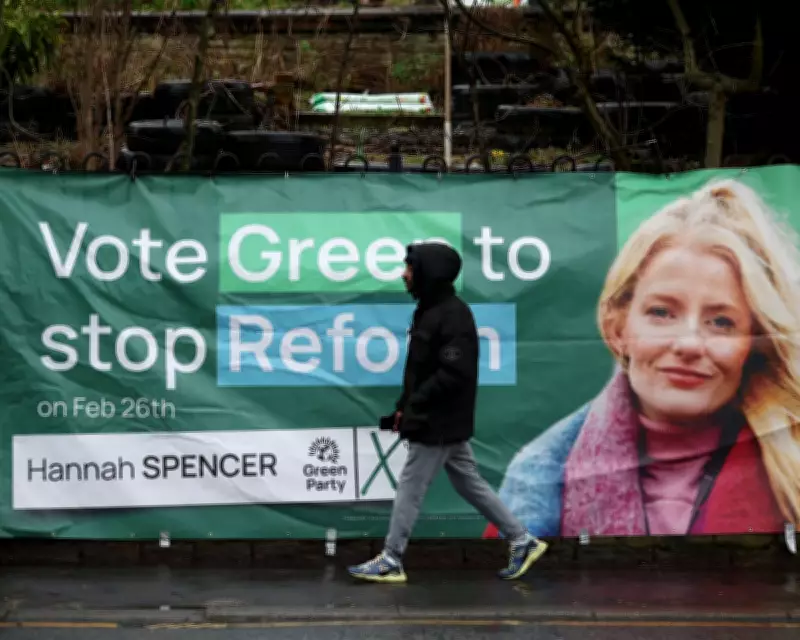
The Gorton and Denton Byelection Exposes Deep Cracks in Britain's Voting System
As the dust settles on the nail-biting Gorton and Denton byelection in Manchester, a stark reality has emerged: Britain's first past the post (FPTP) electoral system is under unprecedented strain. What should have been a straightforward Labour victory turned into a tense three-way contest with Reform UK and the Greens, highlighting the collapse of traditional political certainties and leaving voters grappling with strategic calculations in a fragmented landscape.
A System Designed for a Bygone Era
The Electoral Reform Society argues that this byelection illustrates everything wrong with FPTP. Campaigns become bogged down in tactical voting debates—who can beat whom—rather than focusing on policies, within a system built for a two-party world that no longer exists. FPTP's winner-takes-all design prioritises swift majority governments and has historically kept extremists at bay, but it struggles when both main parties disintegrate rapidly, creating multi-party races where candidates can win on worryingly low vote shares.
A recent YouGov model revealed that Reform UK could theoretically secure 48% of Westminster seats with just 27% of the vote, potentially leaving nearly three-quarters of the country governed by a leader they did not choose. This scenario underscores FPTP's limitations in encouraging broad political churches and stable governance, as MPs often remain in fracturing parties rather than risk doomed breakaways, though irreconcilable differences—like those over Brexit—can force healthier divorces.

The Proportional Representation Debate Intensifies
In light of these challenges, even sceptics of proportional representation (PR) are revisiting their stance. However, PR is not a panacea. It does not guarantee an end to grubby deal-making or the dilution of radical ideas; all democratic politics involves compromise. The choice shifts from internal party negotiations under FPTP to inter-party coalitions under PR, often leading to more horse-trading, not less.
While PR creates parliaments reflective of vote shares, this proportionality can falter during government formation, risking kingmaker roles for fringe parties or broken promises from junior partners, as seen in Israel or with the 2010 Liberal Democrats. Implementing PR would require lengthy debates over its specific form, a referendum, and legislation for contingencies, such as governance during prolonged deadlocks—imagine a security crisis like a NATO threat amid a seven-month vacuum, akin to Belgium's experiences.
No Quick Fixes Amid Growing Voter Discontent
Calls for pre-election changes to block Reform UK, as some on the left suggest, risk inciting public outrage over perceived rigging. If Labour cannot win on its record, the solution lies in improving that record, not altering the rules. Yet, the government cannot ignore this debate indefinitely. With a bill on votes at 16 due for a second reading, MPs have a platform to engage, especially as they appeal to Green or Lib Dem voters for support against Reform without offering concessions.
The all-party parliamentary group for fair elections advocates a commission to examine electoral options—a sensible step. Defenders of FPTP should confidently argue its merits, such as stability and extremism deterrence, while humbly considering opposing views. Ultimately, democracy thrives on robust discussion and adaptation, and the Gorton and Denton byelection serves as a potent reminder that Britain's electoral system must evolve to reflect today's political realities, or risk further alienating a disillusioned electorate.