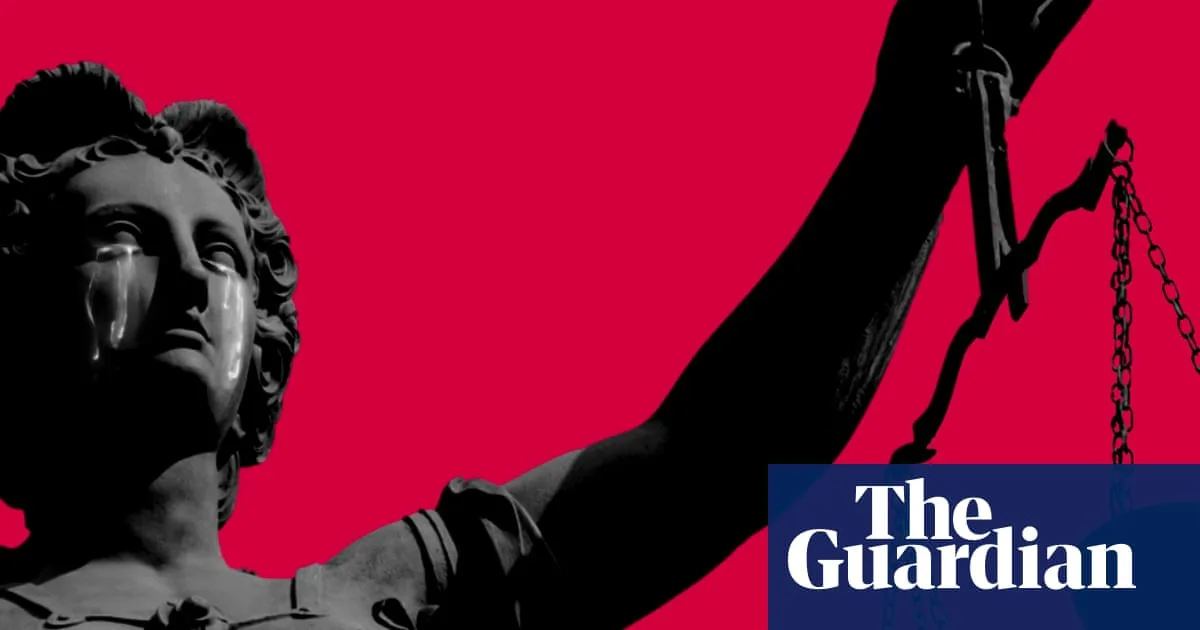
Supreme Court's Assault on US Democracy Reaches New Heights with Voting Rights Act Ruling
Supreme Court's Assault on US Democracy Reaches New Heights

In 1943, historian Henry Steele Commager issued a stern warning about the United States Supreme Court, asserting it had never been a friend to democracy and never would be. For those committed to majority rule, he argued, judicial review 'is wrong in theory and dangerous in practice.' That danger was fully realized on April 29, 2026, when the Supreme Court eviscerated Section 2 of the 1965 Voting Rights Act.

As the Department of Justice explains, Section 2 'prohibits voting practices or procedures that discriminate on the basis of race, color, or membership in one of the language minority groups ... or procedure that results in the denial or abridgement of the right of any citizen to vote on account of race, color, or membership in a language minority group.' However, the Voting Rights Act decision is only the latest in a string of rulings where the conservative-dominated Court has waged war on constitutional democracy.

A Decade of Democratic Erosion

The Court's assault on democracy began in earnest with Citizens United v. Federal Election Commission in 2010. That case arose when a conservative nonprofit challenged rules preventing it from airing a film critical of Hillary Clinton. In a 5-4 ruling, the Court struck down century-old prohibitions on corporate independent spending, holding that under the First Amendment, 'corporate funding of independent political broadcasts in candidate elections cannot be limited.' The decision opened the floodgates to unlimited money in politics, with Super PACs playing key roles in campaigns.

Wide Pickt banner — collaborative shopping lists app for Telegram, phone mockup with grocery list

In 2013, the Court took another step, declaring key provisions of the Voting Rights Act unconstitutional. Chief Justice John Roberts argued that Sections 4 and 5 were no longer responsive to current conditions and represented an unconstitutional violation of states' power to regulate elections. This led to a rash of new voting restrictions targeting minority groups.

In 2019, the Court ruled that states could engage in partisan gerrymandering without federal court intervention. Roberts again led the majority, disregarding three decades of precedent and allowing politicians to pick their voters. This decision also permitted racial gerrymandering if motivated by partisan considerations.

The Final Blow: Gutting Section 2

The April 29 ruling made it nearly impossible to prove racial discrimination in redistricting. The Court required convincing evidence of intentional discrimination, disregarding a 1982 Congressional amendment that allowed plaintiffs to establish violations based on discriminatory results. Justice Samuel Alito wrote that Section 2 protects only against 'present-day intentional racial discrimination regarding voting.'

Georgia Senator Raphael Warnock called the decision 'nothing less than a massive and devastating blow – not only to our democracy, but particularly to people of color in the South.' He noted that the intent requirement ignores history and is misleading.

The Only Solution: Democratic Action

As Commager observed, the only reliable way to preserve democracy is to act democratically – by winning at the ballot box and prevailing in the legislative process. That lesson should inspire massive turnout in November and a movement to pressure Congress to protect democratic institutions. There is no time to waste.

Pickt after-article banner — collaborative shopping lists app with family illustration




