
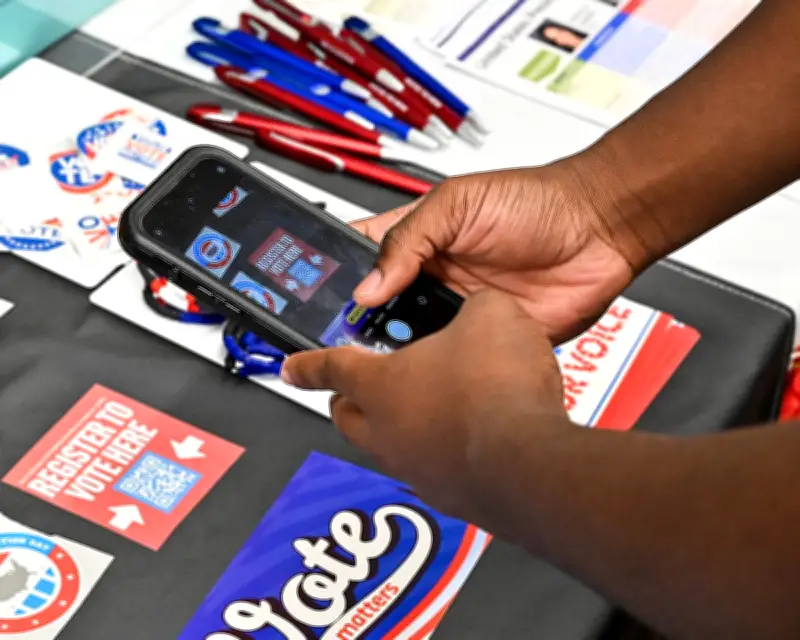
Approximately 4 million Americans will reach voting age in 2026, but historical trends indicate that under a third will be registered to vote in the November elections. Laura W Brill, founder and CEO of the Civics Center, argues that automatically registering every American upon turning 18 would be the most equitable and effective method to safeguard US democracy. However, the current electoral system often excludes young voters.
Low Registration Rates Among Youth
Each year, millions of 18-year-olds remain unregistered and excluded from the electoral process. According to US census data, fewer than 30% of 18-year-olds are registered in a typical midterm year, compared with nearly 75% of those aged 45 and older. Because they are absent from state voter files, candidates, campaigns, and pollsters overlook them, leaving their voices and policy needs unaddressed.
Conventional wisdom suggests that teenagers are apathetic about politics, as less than half of 18- to 24-year-olds voted in the past three presidential elections, versus more than two-thirds of those over 45. Yet when registered, 18-year-olds turn out at nearly the same rates as older voters. In Pennsylvania, for instance, over 80% of registered 18-year-olds voted in the 2020 and 2024 general elections, according to state data.
Barriers to Youth Registration
The low turnout among young people is not due to apathy but to a lack of access and support. Systems fail to welcome young voters into democracy upon eligibility. Although many states allow pre-registration at ages 15, 16, or 17, millions remain unregistered by their first election at 18. The barriers are not widely understood.
The 1993 Motor Voter law made state DMVs the primary voter registration agencies, and 24 states plus Washington DC have full or partial automatic registration for drivers. However, these automatic systems can be poorly designed, leading many eligible teens to opt out. In California, up to 45% opt out, according to state data.
Furthermore, teen driving rates have dropped dramatically. Today, only 44% of 17-year-olds and 60% of 18-year-olds have licenses, amounting to 4.25 million Americans who do not visit the DMV upon coming of age. Non-driver options, such as online registration, are also limited: 29 states require a driver's license or state ID to complete an online form. This affects not only young people but also millions of adults without licenses.
Solution: High School Voter Registration
A sustainable, practical, and cost-effective solution is to make voter registration a normal part of high school before graduation. While 40% of Americans do not attend college, virtually everyone is enrolled in high school. This allows reaching them in a trusted community space and teaching them how and why to vote. Most states have laws requiring high schools to assist with voter registration, but these are often ignored. Only three states—Tennessee, Louisiana, and Maine—have designated high schools as voter registration agencies.
The worst performers in registering teens, at less than 25%, include purple states like Pennsylvania and Ohio, as well as Connecticut and Alabama. However, some states have dramatically improved: Oregon registers 86% of eligible teens, and Michigan registers 77%. This shows the problem is fixable through better access.
Community and Legislative Action
Organizations like the Civics Center and the League of Women Voters work to help high school students register. Alongside community efforts, laws and leaders should prioritize empowering young voters by enacting and promoting pre-registration laws and building manageable onramps to democracy. Registering to vote should become a rite of passage for young Americans, regardless of race, zip code, or college attendance.
Until state-level leaders act, it falls on students, teachers, parents, and local communities to prepare young people for November and beyond. High school students taking the lead is inspiring; they gain confidence as they talk with peers, organize, and envision a future. Drives are a celebration of democracy, and every student is invited. When one student learns to register, they can activate their entire school, motivating friends, family, and community members. Teens are part of We the People, with the right to vote at 18, the power to register before then, and the capacity to participate and lead.




