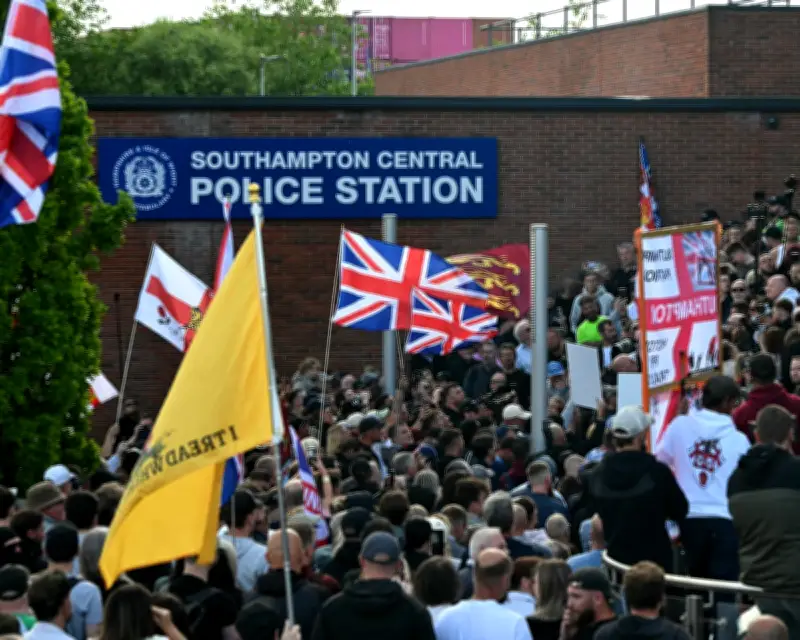
The arrest of Henry Nowak for protesting during a football match has ignited a fierce debate about free speech, patriotism, and the rise of the British right.
The Incident
During a Premier League match in Southampton, Henry Nowak, a 24-year-old activist, jumped onto the pitch holding a sign that read 'Justice for George Floyd' and 'Stop Racism'. He was quickly apprehended by security and later arrested by police. The crowd reacted with a mix of boos and chants of 'You're not English anymore'. The incident was captured on video and went viral, sparking a national conversation.
Public Reaction
Many condemned Nowak's actions as disrespectful to the sport and the nation. On social media, hashtags like #NowakTheTraitor and #ShameOnYou trended. Some called for harsher penalties, arguing that political protests have no place in football. Others, however, defended his right to protest, pointing out that peaceful demonstration is a cornerstone of democracy. The divide reflects a broader cultural war in Britain over identity and values.

The Rise of the British Right
The incident has been seized upon by right-wing commentators as evidence of a 'woke' agenda corrupting British traditions. They argue that Nowak's protest, inspired by the Black Lives Matter movement, is an import of American-style identity politics. This has fueled a backlash against what they see as the erosion of British sovereignty and culture. Conversely, left-leaning voices argue that the reaction to Nowak's protest reveals deep-seated racism and intolerance in British society.
Legal and Social Implications
Nowak faces charges of trespassing and breach of the peace. His case has become a cause celebre for free speech advocates. Legal experts are divided; some say his actions were lawful as a form of peaceful protest, while others argue that disrupting a public event is not protected speech. The outcome could set a precedent for future protests at sporting events.
Beyond the legal realm, the incident has exposed a generational and ideological rift. Younger Britons, more exposed to global social movements, tend to support Nowak, while older generations often view his actions as unpatriotic. This tension is likely to intensify as the country grapples with its post-Brexit identity.
Conclusion
The Henry Nowak protest is more than a fleeting news story; it is a symptom of a nation struggling with its conscience. As Britain navigates its place in a changing world, incidents like these force a reckoning with what it means to be British in the 21st century. Whether Nowak is seen as a hero or a villain, his actions have undeniably struck a nerve.