Nigel Farage Suggests Future Indyref2 Could Be 'Reasonable' If Issue Returns
Farage: Future Indyref2 Could Be 'Reasonable' If Issue Returns

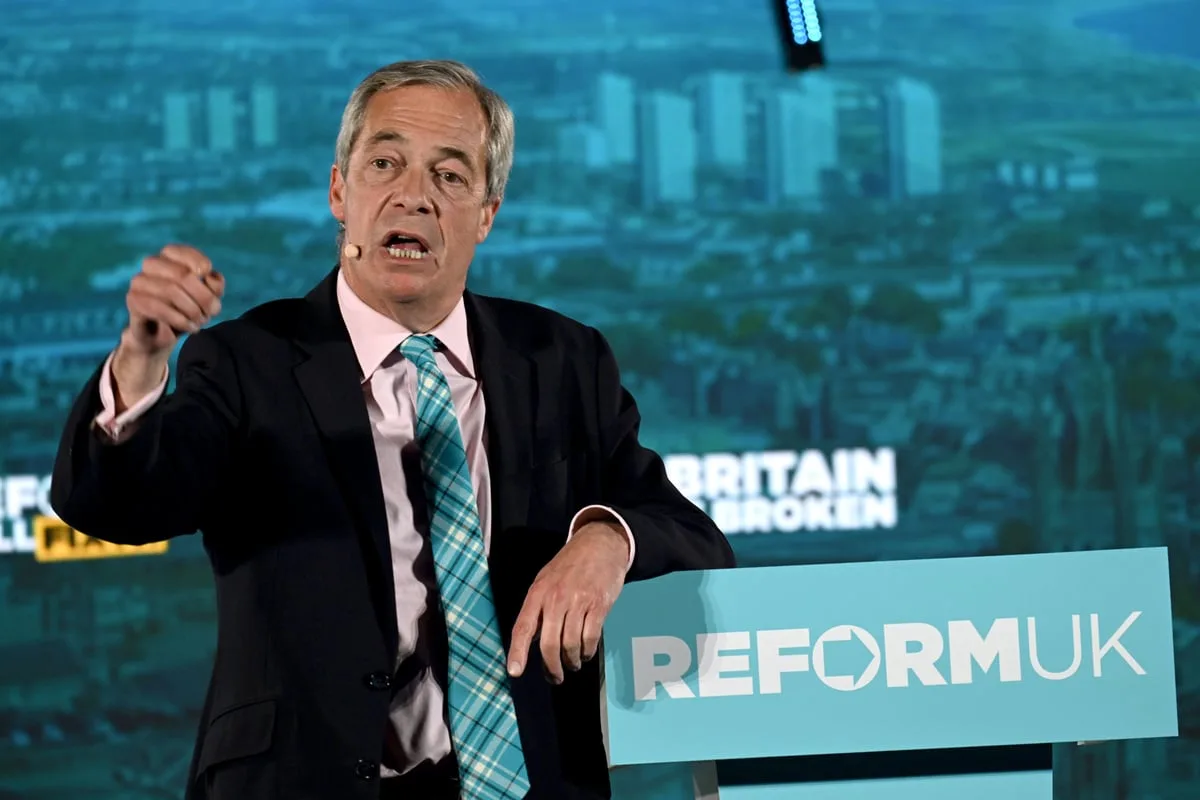
Nigel Farage, the leader of Reform UK, has indicated that a second Scottish independence referendum could be considered "quite reasonable" in the future if the issue regains relevance, despite his party's firm opposition to the "dissolution" of the United Kingdom at present.

Farage's Conditional Stance on Independence

Speaking to The Scotsman during a campaign visit to Glasgow, Farage clarified Reform UK's position, stating the party is "totally opposed to a dissolution" and believes independence would be detrimental for both Scotland and the rest of the UK. He referenced the 2014 independence referendum and the 2016 EU referendum as "once-in-a-generation" events that should be respected.

However, Farage introduced a significant caveat, suggesting that public sentiment could evolve over time. "If at some point in the future this issue comes back, then it's probably quite reasonable for Scotland [to have a referendum]," he remarked. "It's not relevant now, but I can't tell you how people will feel in 20 years' time."

Wide Pickt banner — collaborative shopping lists app for Telegram, phone mockup with grocery list

Campaigning in Scotland and Electoral Prospects

Farage has been actively campaigning across Scotland this week, addressing a rally in Aberdeen and visiting Shetland and Glasgow. His efforts come ahead of the Scottish Parliament election scheduled for May 7, with current polling indicating Reform UK could potentially become the second-largest party at Holyrood.

During his engagements, Farage also claimed that certain supporters of the Scottish National Party (SNP) might be persuaded to switch their allegiance to Reform UK. He specifically mentioned "genuine nationalists" within the SNP's voter base as a group that could be swayed, highlighting his party's broader appeal in the Scottish political landscape.

Political Backlash from Scottish Conservatives

Farage's comments on independence have drawn sharp criticism from Scottish Conservative leader Russell Findlay, who condemned the remarks as "incendiary." Findlay asserted that Farage's statements "confirm beyond doubt that Reform are not a unionist party" and accused him of "talking up the prospect of another unwanted and divisive referendum."

Findlay further argued that such rhetoric benefits SNP leader John Swinney by aligning with the SNP's persistent push for independence. "While the Scottish Conservatives stand up to the SNP, Reform are cheerleading for the SNP's obsessive desire to break up our country," he stated. "Farage and Swinney are a dangerous double act who are putting Scotland's economy and security at risk."

Broader Implications for Scottish Politics

Farage's nuanced position—opposing independence now while leaving the door open for a future referendum—adds a complex layer to the ongoing debate over Scotland's constitutional future. It reflects a strategic attempt to engage with pro-independence voters without fully endorsing the SNP's immediate goals, potentially reshaping political alliances as the election approaches.

This development underscores the volatile nature of Scottish politics, where issues of national identity, unionism, and self-determination continue to dominate discourse. As Reform UK gains traction in polls, Farage's ability to attract both unionist and nationalist voters could significantly influence the outcome of the upcoming election and the broader trajectory of the independence movement.

Pickt after-article banner — collaborative shopping lists app with family illustration




