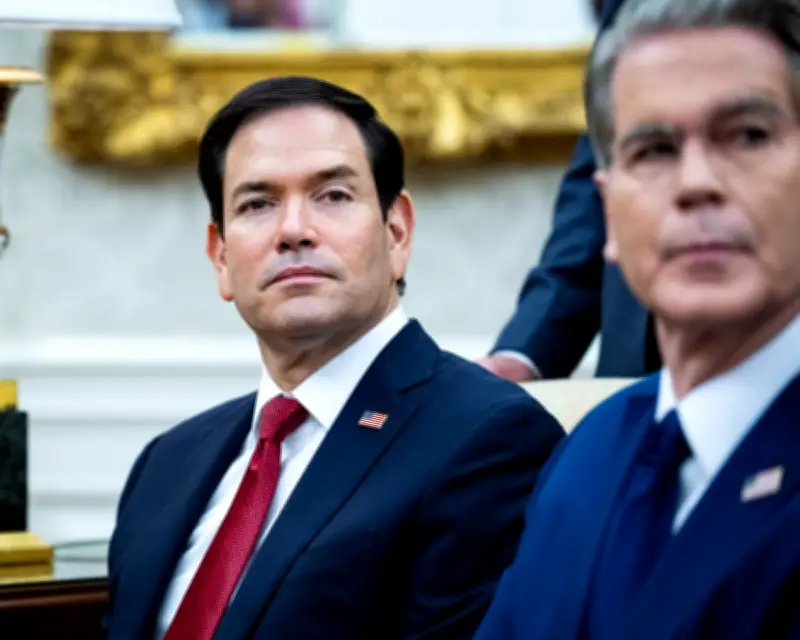
The Trump administration has declared a virtual war on the International Criminal Court (ICC), with Secretary of State Marco Rubio vowing to “dismantle” the court as a supposed threat to US sovereignty. However, Kenneth Roth, a former executive director of Human Rights Watch, argues that the administration's real goal is to secure impunity for war crimes, even those committed on the territory of ICC member states.
Rubio’s Dystopian Fiction vs. Reality
In a Wall Street Journal op-ed and a video posted on X, Rubio conjured a dystopia where local American officials such as police officers or border patrol agents “could be dragged before an international court, tried by judges from random countries across the globe, found guilty under international laws we neither consent to nor control, and then imprisoned thousands of miles from America.” Roth calls this “utter fiction,” noting that the ICC has no jurisdiction over crimes committed in the United States unless those officials are deployed abroad.
Rubio also claimed the US government does not consent to the laws applied by the court. Roth counters that these laws are drawn from treaties such as the Genocide Convention and the Geneva Conventions, which the US has ratified or incorporated into its military manuals. “Is it really un-American to outlaw genocide?” Roth asks.

The Real Objection: Territorial Jurisdiction
Behind the rhetoric, Roth argues, the Trump administration’s real objection is to the court’s power to prosecute war crimes committed on the territory of ICC member states when the perpetrator is a national of a non-member state. This territorial jurisdiction allows the ICC to prosecute individuals for crimes committed on the soil of member states, regardless of the perpetrator’s nationality.
Roth points out the irony: Rubio attacked international law while invoking it to declare Iran’s proposed fees for ships passing through the Strait of Hormuz illegal. “That sums up the Trump administration’s view of international law – to be weaponized when convenient and ignored when applied to its own conduct,” Roth writes.
Selective Sovereignty: From Putin to Netanyahu
Roth highlights the US government’s selective embrace of territorial jurisdiction. When the ICC used it in March 2023 to charge Russian President Vladimir Putin for kidnapping Ukrainian children, the US government supported the move. Joe Biden called the charges “justified,” and even Senator Lindsey Graham engineered a unanimous Senate resolution supporting the ICC.
But when the ICC charged Israeli Prime Minister Benjamin Netanyahu and former Defense Minister Yoav Gallant in November 2024 using the same territorial jurisdiction, the Biden administration was outraged. “The Israel exception to international law kicked in,” Roth notes. When Trump took office, he imposed sanctions on ICC judges and prosecutors.
What Worries Trump Officials Most
Roth asserts that what worries Trump officials most is the prospect that territorial jurisdiction could be used to prosecute them. For example, the court could reach summary executions of people in suspected drug boats if these crimes took place in the territorial waters of Venezuela or Colombia, both ICC members. Trump and Biden officials could be prosecuted for aiding and abetting Israel’s genocide in Gaza by continuing to provide arms and military aid. Trump might also be prosecuted for obstructing justice for imposing sanctions on ICC officials.
Rubio has promised a frontal assault on the ICC, with new sanctions and pressure on cooperating governments. Roth concludes, “What he really means is the risk that Trump officials might be brought to justice for war crimes committed in ICC states. God forbid!”