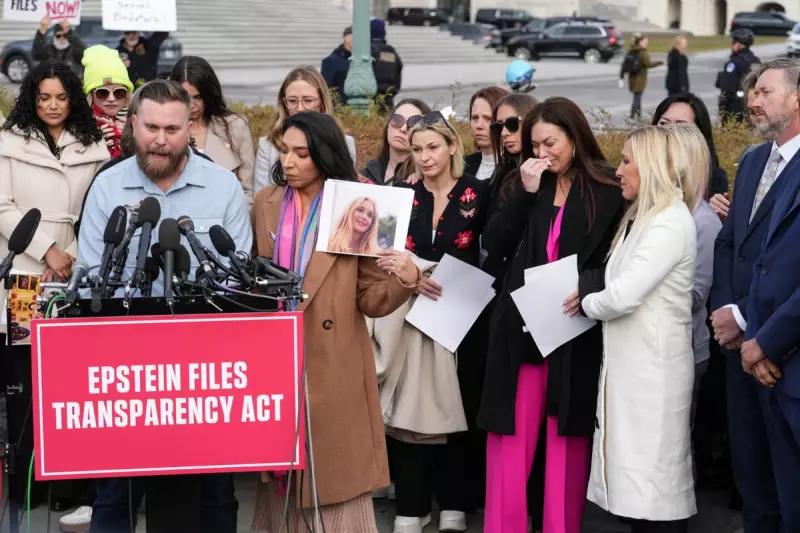
The United States government is under a strict legal deadline to release its entire cache of documents related to the late financier and convicted sex offender, Jeffrey Epstein. Following months of political pressure, Congress has passed and President Donald Trump has signed legislation compelling the Justice Department to make the files public before Christmas.
What the New Law Mandates
The legislation, known as the Epstein Files Transparency Act, requires the Justice Department to release all unclassified documents and investigative materials within 30 days of being signed into law on 19 November. This sets a hard deadline of 19 December 2025. The law overrides usual rules on grand jury secrecy, a point underscored on Friday 5 December when a federal judge authorised the release of transcripts from a Florida grand jury investigation into Epstein's abuse of underage girls.
The files are expected to encompass thousands of pages related to the aborted Florida investigation from the mid-2000s, the later Manhattan federal case, and any other Justice Department examinations of Epstein's dealings. This could include FBI agent notes, witness interview transcripts, photographs, videos, Epstein's autopsy report, and internal communications about immunity deals and charging decisions.

What Will Not Be Made Public
Despite the broad mandate, the law includes significant protections. Authorities must withhold or redact any material containing a victim's personally identifiable information or that would constitute a clearly unwarranted invasion of personal privacy. Crucially, any materials depicting the sexual abuse of children cannot be released.
However, the Act explicitly states that records cannot be withheld solely to prevent embarrassment or reputational harm to public figures, government officials, or foreign dignitaries. Furthermore, the Justice Department has confirmed that a rumoured "client list" of Epstein's famous associates does not exist, dispelling a long-held theory among conspiracy circles.
Context and Ongoing Investigations
Jeffrey Epstein was a millionaire money manager accused of sexually abusing dozens of underage girls. After a controversial 2008 plea deal in Florida, he was charged federally with sex trafficking in 2019 during Trump's first term, but died by suicide in jail a month after his arrest. His associate, Ghislaine Maxwell, was convicted in 2021 and is serving a 20-year prison sentence.
While the core investigations into Epstein and Maxwell are concluded, a potential hurdle to full disclosure emerged last week. Attorney General Pam Bondi ordered a new investigation into people who knew Epstein, including some of Trump's political foes like former President Bill Clinton. This probe, initiated at Trump's urging, could provide grounds for the government to temporarily withhold some material if it is deemed to jeopardise an active investigation.
Public and political momentum for transparency built after the Justice Department stalled on releasing promised documents earlier this year. This led to a bipartisan push in Congress, resulting in the swift passage of the new law. While many documents—such as flight logs, police reports, and depositions—are already public, the imminent release is expected to provide unprecedented insight into the decisions that allowed Epstein to evade justice for years.