A growing chorus of conservative commentators and supporters are raising the alarm over President Donald Trump's recent flurry of pardons and commutations, fearing they could severely damage his reputation and lay the groundwork for future legal troubles.
Conservative Figures Sound the Alarm
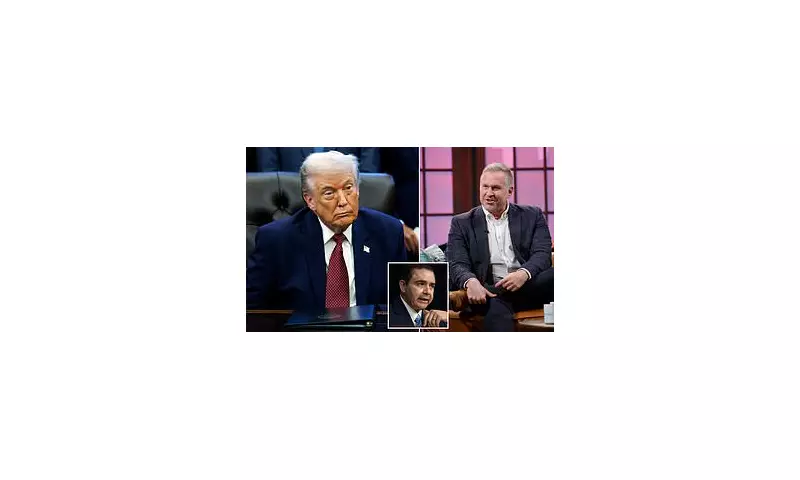
The critique gained prominence when right-wing pundit Mike Cernovich took to social media platform X to issue a stark warning. 'If there's anyone close to Trump who actually gives a s***, they need to do an intervention on the pardons,' he posted. His comments followed President Trump's surprising Wednesday pardon of sitting Texas Democratic Congressman Henry Cuellar.
Cernovich expanded his criticism, stating, 'Totally corrupt scammers are getting cases dismissed, sentences commuted, it's totally out of control.' The congressman and his wife, Imelda, faced charges from the Department of Justice (DOJ) for bribery and acting as agents of a foreign government. The allegations centred on a $600,000 scheme involving shell companies linked to Mexico and Azerbaijan, though the couple maintain their innocence.

A Surprise Pardon and a Pattern of Clemency
In his statement, President Trump defended his action, claiming Cuellar was 'unfairly persecuted' by the DOJ under former President Joe Biden. The Texas Democrat was scheduled to face trial next year. This move forms part of a broader pattern of presidential clemency. Across his two terms, Trump has granted clemency—encompassing both pardons and sentence commutations—to approximately 1,700 individuals. This figure includes around 1,500 defendants charged in connection with the January 6th Capitol riot.
For context, during his single term, President Biden granted clemency to more than 4,200 people, a number that included family members and numerous US officials. Former President Barack Obama authorised roughly 1,920 clemency actions during his tenure.
Political Fallout and Accusations of 'Pay for Play'
The White House, through spokeswoman Abigail Jackson, defended Trump's use of his constitutional power. She contrasted his actions with Biden's, accusing the current president of pardoning 'violent criminals including child killers and mass murderers' and issuing proactive pardons for family members like his son, Hunter.
Despite this defence, concern is spreading among some of Trump's base. Scott Morefield, a writer for the conservative publication Town Hall, expressed a common worry on X: 'I voted for Trump and support most of what he's doing, but it's hard to shake the feeling that all it takes to get a pardon from Trump is some combination of knowing the right people or being a celebrity.' He cautioned that such actions provide easy ammunition for Democrats and represent an 'entirely self-inflicted wound.'
The political shockwaves were immediate. House Speaker Mike Johnson told Axios he was unaware of the Cuellar pardon beforehand, and another senior House Republican, Rich Hudson, admitted the surprise move complicated campaign efforts.
Democrats have been quick to condemn the pardons. Connecticut Senator Chris Murphy labelled them a 'huge, growing scandal,' alleging they form part of a 'money making operation' for Trump and his associates.
The controversy extends beyond Cuellar. Recent clemency grants include former real estate executive Tim Leiweke, who was indicted in July for an alleged rigged bidding scheme, and Juan Orlando Hernández, the former Honduran president sentenced to 45 years for drug trafficking. The latter pardon has drawn particular criticism given Trump's simultaneous actions against alleged Venezuelan drug operations.
As the list of beneficiaries grows, the internal conservative warning remains clear: without immediate correction, these pardons could precipitate a significant political downfall for the president.