
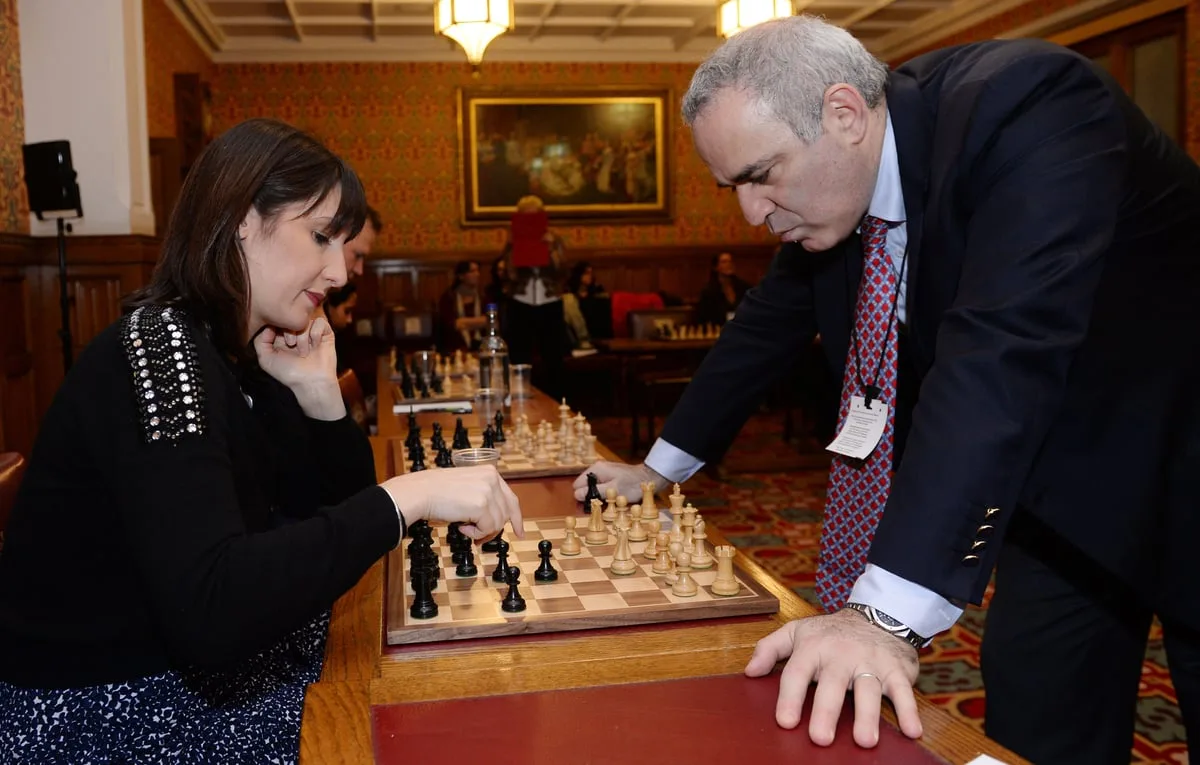
Chancellor Rachel Reeves has been accused of overstating her chess achievements, with a finance professor claiming she misrepresented her teenage titles. Reeves has previously cited her chess skills to bolster her image as a strategic and competitive Chancellor, posing with a chessboard ahead of her Budget and telling the Guardian in 2023: “I am — I was — a geek. I played chess. I was the British girls’ under-14 champion.”
Alex Edmans, a finance professor at London Business School who competed in junior chess from 1987 to 1996, told the Times that Reeves actually placed “joint 26th out of 34” in the tournament and only shared a title for a smaller competition. According to online records, the 1993 British girls’ under-14 champion was composer Emily Howard, not Reeves. Edmans noted that Reeves’ title was from the British Women’s Chess Association (BWCA) Girls Championship, which he argued is distinct from the official British girls’ championship.
Malcolm Pein, founder of the London Chess Centre and Director of International Chess for the English Chess Federation, defended Reeves, stating that the BWCA competition was “the only credible girls championship” at the time, as it was exclusively for girls, unlike the open British U14 Championships dominated by boys. A source close to the Chancellor dismissed the accusations as “absolute nonsense”.
Health Secretary Wes Streeting laughed off the controversy on Wednesday, telling LBC: “As a friend of Rachel, I'm absolutely thrilled that she's finally being called out on this chess thing.” He noted that Reeves only plays chess against children on Instagram and is “ruthless” in beating them, adding: “If she's prepared to beat kids at chess, because she's that ruthless, that is exactly the sort of person you need to sort out the dire state of the economy and the public finances.”
The row over Reeves’ chess claims comes amid broader criticism over allegations she misled the public and cabinet ministers about the state of the economy to justify tax hikes in her Budget. Streeting defended her, saying she has “the hardest job in government” and that her tough choices may be vindicated if the economy recovers.




