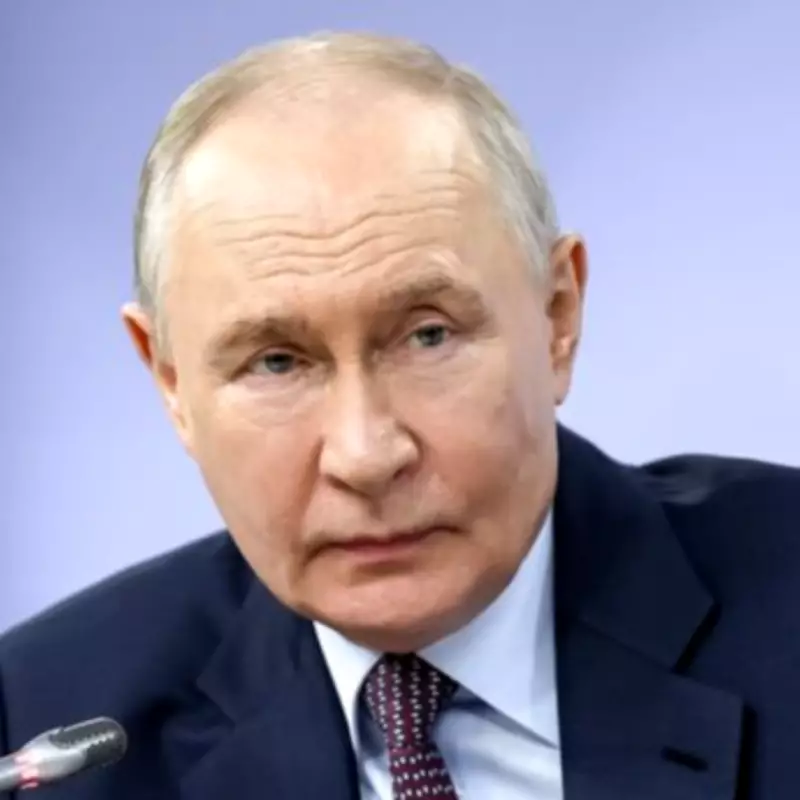
Vladimir Putin has reportedly retreated to bunkers where he works for weeks at a time amid new fears of a coup, according to a report citing a Western intelligence agency. Security has been massively increased around the Kremlin dictator, who has abandoned his favourite palaces, fearing they could be targets of drone strikes by the Russian political elite.
Intelligence Report Details
The new analysis, based on an unnamed Western intelligence agency and revealed by the independent Russian news outlet Important Stories, states that since the beginning of March 2026, the Kremlin and Vladimir Putin have been concerned about a leak of sensitive information and the risk of a plot or coup attempt against the Russian president. In particular, Putin fears the use of drones for a possible assassination attempt by members of the Russian political elite.
Sergei Shoigu, the Security Council Secretary and former Defence Minister, is associated with the risk of a coup attempt. A bid to weaken Shoigu came last month with the arrest of his former deputy Ruslan Tsalikov, suspected of corruptly amassing almost £50 million in family assets. Shoigu was first linked with coup fears last month.

Security Measures Intensified
The Federal Protective Service (FSO) has significantly tightened security measures around Putin. Visitors to the Presidential Administration undergo two levels of screening, including a full body search by FSO officers. The FSO has reduced the list of locations regularly visited by the president; neither he nor his family visit their usual residences in the Moscow region and Valdai anymore.
Putin reportedly lives with his partner Alina Kabaeva, 42, and their sons Ivan, 11, and Vladimir, six. The children use the family name Spiridonov.
Bunker Life and Pre-Recorded Footage
The report alleges that since the beginning of the war in Ukraine, Putin has often taken refuge in renovated bunkers, particularly in the Krasnodar region, where he may work for weeks, while Russian media continue public communication using pre-recorded footage. This region, frequently attacked by Ukrainian drones, is the location of his £1 billion clifftop Gelendzhik palace, equipped with multiple underground floors.
Frightened Putin has halted visits to military infrastructure this year, when such visits were claimed to happen in 2025. Mobile internet is frequently cut off in Moscow, seen as a security measure. FSO officers conduct large-scale checks using canine units and are deployed along the Moscow River, ready to respond to possible drone attacks.
Paranoia and Control
Putin’s normal public relations team has been sidelined, and his security operatives now approve Russian media reports about the dictator, following a secret presidential decree. Personnel working near Putin are prohibited from using mobile phones and must use devices without internet access. These employees are also banned from using public transportation and move exclusively using FSO transport. Surveillance systems have been installed in the homes of cooks, photographers, and bodyguards.
Security has been stepped up around ten senior generals after the killing of Lt-Gen Fanil Sarvarov in a car bomb in Moscow in December, an assassination seen as a Ukrainian operation. This triggered a meeting that descended into a shouting match as Putin’s top security officials blamed each other for the failure to protect the elite. At the end of this tense meeting, Putin called for calm, proposing to change the format of the discussion and instructing participants to submit proposals within a week.