A former undercover police officer has told a public inquiry that senior officers actively resisted disclosing the covert surveillance of Stephen Lawrence's family to a landmark investigation into police failings.
Hostile exchanges over Macpherson inquiry disclosure
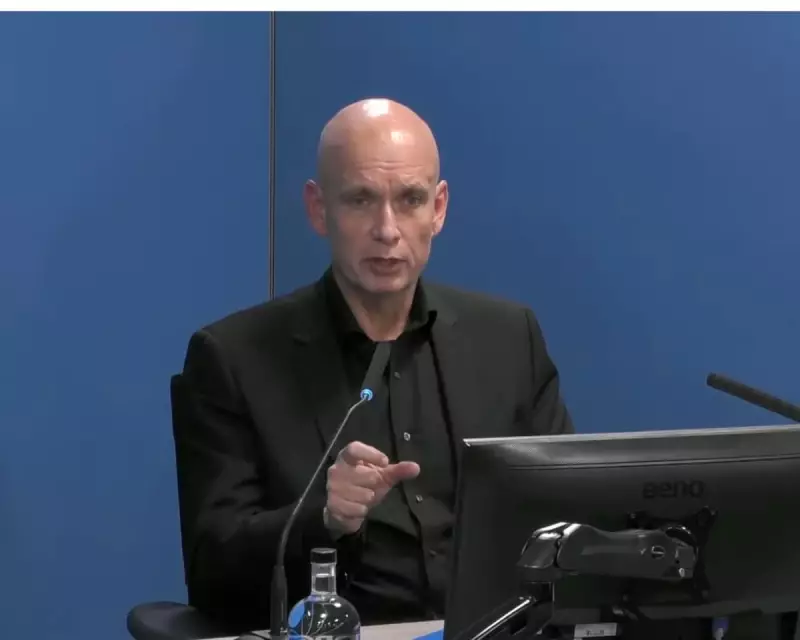
Peter Francis, a whistleblower from the Metropolitan Police's Special Demonstration Squad (SDS), testified that he had "hostile and heated" exchanges with his managers in the late 1990s. He wanted to reveal his secret monitoring of the Lawrence family's campaign for justice to the public inquiry led by Sir William Macpherson.
The Macpherson inquiry was established in 1997 to examine the Metropolitan Police's deeply flawed investigation into the racist murder of the black teenager in 1993. Francis said he argued "quite forcefully" that the inquiry should be told he had been tasked with spying on the campaign and gathering information to undermine it.

"It was about doing the right thing, but it was also about looking out for myself," Francis told the ongoing Undercover Policing Inquiry. "I did not want to be in a situation where the information was withheld and later came out, coming back on me. I felt it was morally wrong to hide the fact of my deployment."
Instructions to undermine justice campaign
Francis joined the SDS in 1993. He stated that spying on the Lawrence campaign and black justice groups was the top priority of his four-year deployment, during which he infiltrated anti-racist and leftwing groups.
He has previously alleged that a head of the SDS gave him specific instructions to collect any information that could be used to "stop or undermine" the Lawrences' campaign for justice. The police deny this allegation.
Francis told the inquiry he felt "conflicted" about his work, especially given the context of police racism highlighted by the Lawrence case. "I felt bad being undercover on demonstrations amongst the black justice groups. It felt morally wrong spying on those groups on behalf of the police," he said.
His anger reportedly boiled over at one point. After being asked to spy on demonstrations for two justice campaigns, he recalled telling his managers: "go back and tell the police to 'stop fucking killing black people'."
Cover-up and consequences
Despite Francis's protests, his managers opposed informing the Macpherson inquiry. He claimed one manager "ridiculed" the idea, insisting the secret unit would never be discovered and that Francis would "be looked after".
Francis was warned that if he continued to push for disclosure, "the consequences for me would be bad". The Macpherson inquiry's final report, published in 1999, contained no reference to the undercover surveillance. A member of that inquiry, Richard Stone, has confirmed they were never told about the covert operations.
The Macpherson inquiry concluded the Met's investigation was "marred by a combination of professional incompetence, institutional racism and a failure of leadership". The Lawrence family only discovered the surveillance over 15 years later, after Francis blew the whistle to the Guardian in 2014, leading to the establishment of the ongoing Spycops inquiry.
The Metropolitan Police has since apologised to the Lawrence family for placing them under surveillance. The Undercover Policing Inquiry, which is examining the conduct of 139 officers who spied on political activists from 1968 to 2010, continues to hear evidence.