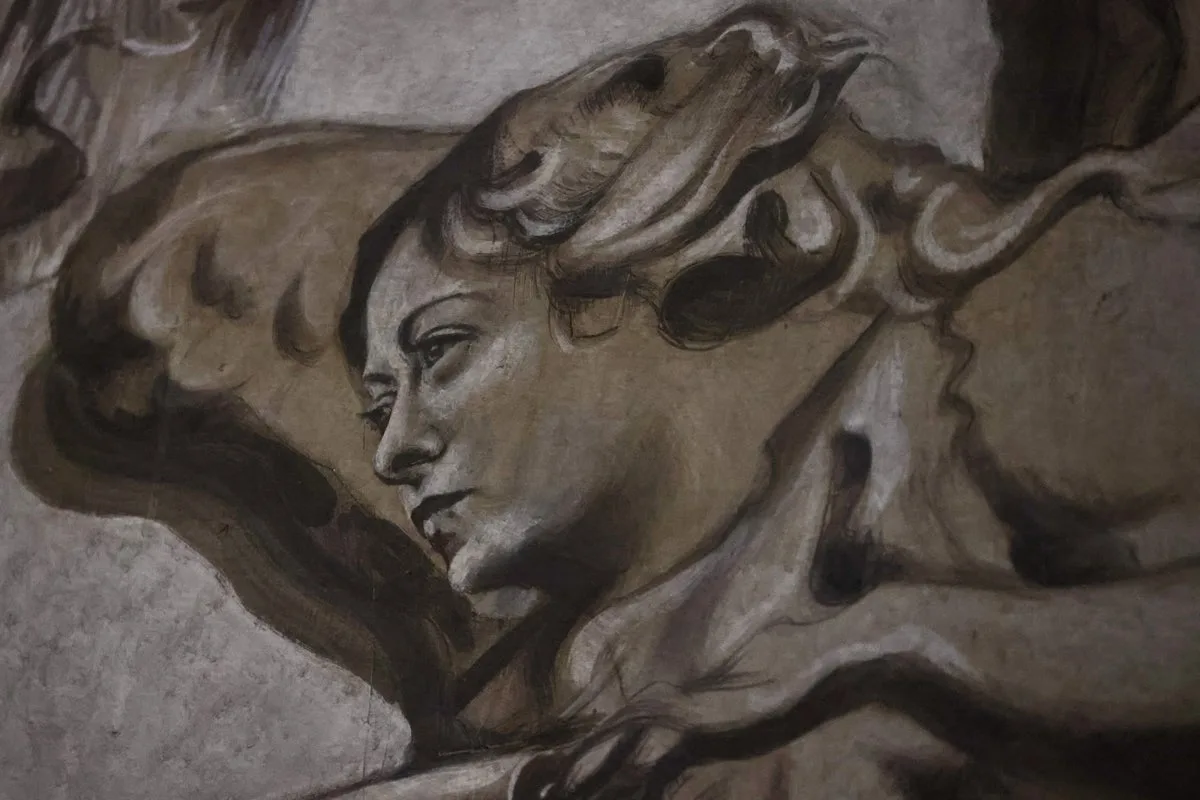
A cherub bearing a striking resemblance to Italy's Premier Giorgia Meloni has ignited a minor scandal after its appearance in a historic Roman basilica. The unexpected depiction, part of recent renovations at the Basilica of San Lorenzo in Lucina, prompted investigations from both the diocese of Rome and the Italian Culture Ministry.
The furore began after photographs of the 'Meloni-esque' cherub were published in national newspapers. The church was reportedly packed with curious visitors eager to photograph the angel in a side chapel near the main altar, occasionally disrupting Mass services. Ms Meloni tried to tamp down the outcry, writing on social media: “No, I definitely don't look like an angel,” alongside a laughing/crying emoji.
The basilica, located near the Spanish Steps, was consecrated in 440 and is now property of the Interior Ministry. In 2000, a front chapel was renovated to include a bust of the last king of Italy, Umberto II, and a cherub holding a map of Italy, seemingly kneeling before the king. That cherub's face, after a recent restoration, appears modelled on Ms Meloni. The position of deference is problematic because Italians rejected the monarchy after World War II for its support of Mussolini, and Ms Meloni's party has neo-fascist roots.

The restorer, Bruno Valentinetti, denied using Ms Meloni as a model, saying she is “in the eye of the beholder” and that he merely restored his own original 2000 painting. The parish priest, Rev. Daniele Micheletti, acknowledged the resemblance but dismissed its significance, noting that artists have long depicted real people in their works. He added: “The priest is not responsible for the decorations… So, what do they want from me? I did not do the painting.”
The Culture Ministry sent a special delegate to survey the angel, aiming to “ascertain the nature of the work” and “decide what to do”. The diocese of Rome announced an investigation, stating: “Images of sacred art and Christian tradition cannot be misused or exploited, as they are intended exclusively to support liturgical life and personal and communal prayer.”