
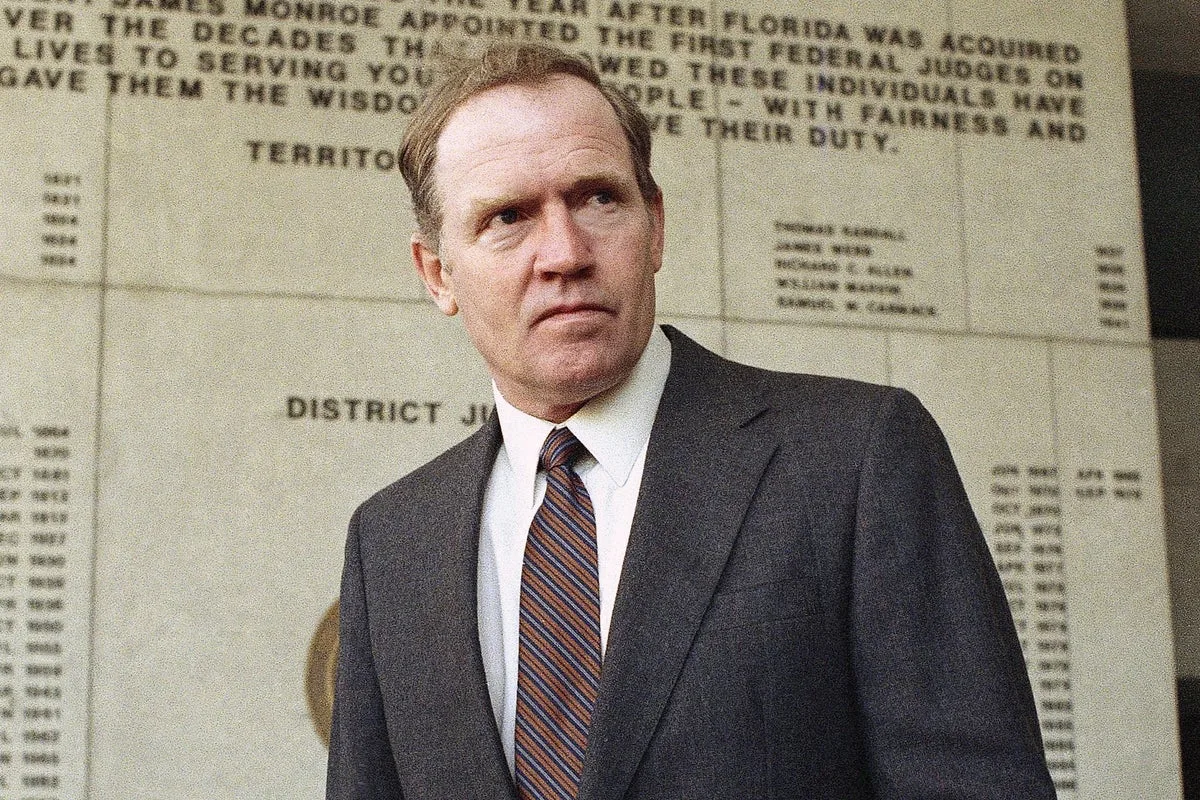
Eugene Hasenfus, who played a key role in exposing the Iran-Contra affair after his CIA-backed supply plane was shot down over Nicaragua in 1986, has died at the age of 84. He passed away on November 26 in Menominee, Michigan, following a nine-year battle with cancer, according to his obituary from the Hansen-Onion-Martell Funeral Home in Marinette, Wisconsin.
Born on January 22, 1941, in Marinette, Hasenfus served in the US Marines during the Vietnam War before pursuing a career in aviation. In 1986, he became a central figure in the Cold War scandal when his plane, part of a secret White House-directed supply network to the Nicaraguan Contras, was shot down. Three crew members died, but Hasenfus parachuted to safety and was captured by the leftist Sandinista government.
After his capture, Hasenfus revealed that the CIA was supervising the supply flights, contradicting initial denials by the Reagan administration. His capture spurred a congressional investigation into the Iran-Contra affair, which involved the covert sale of arms to Iran to fund the Contras, despite a congressional ban on military aid. Hasenfus was convicted in Nicaragua and sentenced to 30 years in prison, but was pardoned by President Daniel Ortega a month later and returned to Wisconsin.
In later years, Hasenfus filed an unsuccessful lawsuit seeking $135 million in damages related to the affair. He also faced legal issues in 2003, pleading guilty to lewd, lascivious behaviour after exposing himself in a grocery store car park. He is survived by four children and eight grandchildren.




