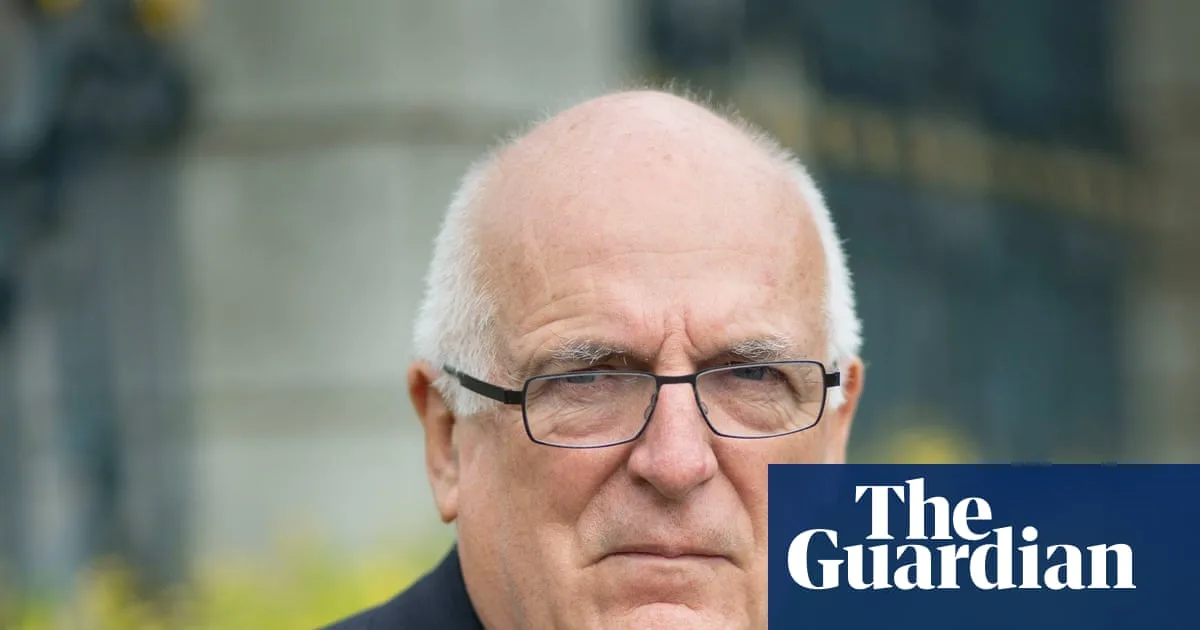
For decades, Yinka Bankole held his silence, wrestling with the decision to publicly recount a painful chapter from his childhood. That internal debate ended abruptly on Thursday, as he watched Nigel Farage address allegations of historical racism in a televised press conference.
A Press Conference That Broke the Silence
Farage, responding to claims about his behaviour as a teenager at Dulwich College, attempted to deflect criticism by lambasting the BBC and ITV for broadcasting content from comedian Bernard Manning and the fictional bigot Alf Garnett in the 1970s. To Bankole, a Christian, this was a profoundly disingenuous evasion, a modern-day example of "let he without sin cast the first stone." It was, he says, the final straw that compelled him to share his story.
Bankole's parents were part of the Windrush generation, emigrating from Nigeria to the UK in the 1950s to serve the nation. His mother retrained as a nurse for the NHS, while his father qualified as an osteopath. Their story is one of contribution and building a healthy nation, a stark contrast to the reception their son would later face.
The Incident at Dulwich College
Bankole attended the prestigious Dulwich College in south-east London for a single year, from 1980 to 1981, starting at just nine years old. He was in the Junior Class (JC) of the vast lower school. The pride his hard-working parents felt at his securing a place there was immortalised in photographs.
His peaceful school life was shattered when he was spotted in the lower-school playground by an older pupil: Nigel Farage, then aged about 17. Towering over the young boy, Farage demanded, "Where are you from?" After listening to Bankole's confused, stammering reply, Farage delivered a clear, cruel response.
"That's the way back to Africa," Farage said, accompanied by a hand gesture pointing to some distant place. Once identified as a target, Bankole says Farage would wait for him at the lower school gate to repeat the vulgar taunt.
Bankole dismisses Farage's recent attempts to categorise such behaviour as "direct or indirect" or "malicious or non-malicious." He states simply: "It certainly felt malicious to me." The memory that haunts him most is the look of pure hatred in Farage's eyes, directed at him seemingly for no reason other than his existence and the colour of his skin.
The Lingering Trauma of Abuse
Farage has questioned how anyone could reliably recall events from over four decades ago. Bankole poses a counter-question: "Can a victim of such abuse ever forget? I know I haven't forgotten." He recalls recognising Farage's distinctive walk on television years later—the same walk that used to approach him with menace in the playground.
Bankole considers it a stroke of luck that his family's relocation and the high fees meant he left Dulwich after only that one year. "The thought terrifies me of what could have happened if I was there the following year when the bully would have had even more authority," he writes. The prospect of that individual later wielding significant political power is, he admits, a "truly chilling thought."
Guided by his late mother's peaceful, tolerant attitude—a common trait among immigrants, he notes—Bankole had long preferred to "just get on with it." He had begun writing a memoir dedicated to her, never intending for it to reach a wide audience. However, the sight of a perpetrator denying or dismissing hurt proved a powerful trigger. For this quiet, private person, the time for silence was over. His account stands as a testament to the enduring scars of racial abuse and a direct challenge to historical revisionism.