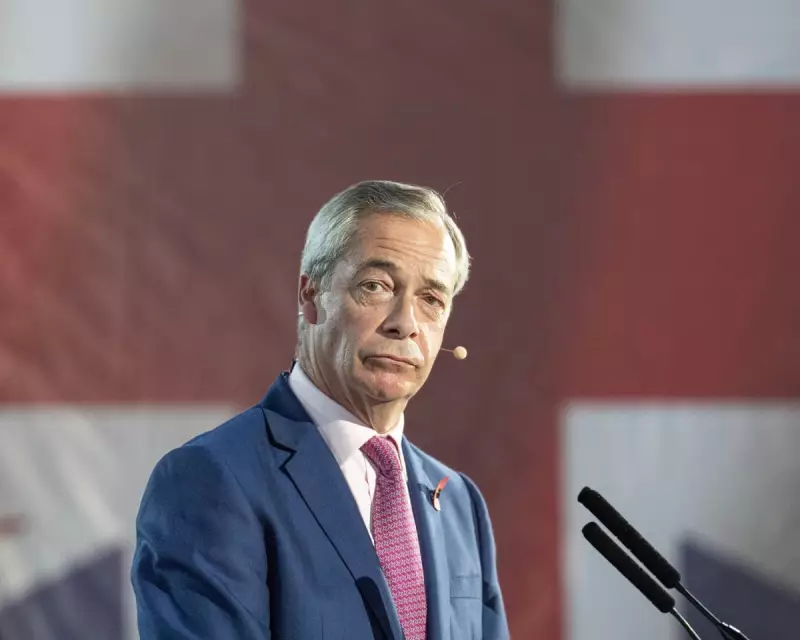
The recent controversy surrounding Nigel Farage's denial of antisemitic bullying allegations has ignited a powerful response from readers who assert a simple, painful truth: victims of childhood cruelty never forget, and the refusal to apologise speaks louder than any denial.
The Indelible Mark of Bullying
Following Peter Ettedgui's account in The Guardian on 25 November, detailing the antisemitic taunts he endured as a teenager which he attributes to Nigel Farage, a chorus of voices has emerged. They collectively challenge the notion that such experiences can be dismissed as mere 'banter' or fade with time. Anthony Richards from London articulated a core psychological reality: the bullied remember far more clearly than the bullies ever do. This, he notes, is the very nature of trauma—an event that lodges permanently for one person may barely register for the other.
Richards shared a personal anecdote of confronting a former school bully. While the perpetrator had no memory of the incident, his unprompted apology—"If I did that, I'm really sorry"—proved transformative. "It closed a circle I hadn’t realised was still open," Richards wrote, highlighting how a single word, offered without defensiveness, can hold immense power. This stands in stark contrast to public figures who, when confronted, resort to denial, minimisation, and accusations of dishonesty.

Lifelong Scars from Schoolyard Cruelty
Other readers provided poignant testimony to the enduring pain of school-based harassment. Kirsty Pierce from Whaley Bridge, Derbyshire, recalled with crystal clarity a denigrating comment about her weight made in 1976. "That foul, denigrating comment has travelled with me throughout life," she stated, despite significant personal changes since.
Barry Neville, 80, from Wokingham, Berkshire, echoed this sentiment, stating he cannot forget insults about his facial appearance. "They hurt then, and have shaped my life since," he wrote, aligning himself with Peter Ettedgui's decision to finally speak out decades later.
One anonymous contributor, who attended a private school in Hull in the mid-to-late 1970s, described enduring daily antisemitic taunts similar to those alleged. While it may have been "the language of the time," the impact was profound and lasting. "It led to me leaving the school at 16, which affected my education. I carried the hurt and shame for years," they attested, confirming the memory of such pain remains vivid.
The Hollow Defence of 'Banter' and Faulty Memory
These accounts directly counter Nigel Farage's defence. In response to the allegations, Farage stated categorically, "I can tell you categorically that I did not say the things that have been published in the Guardian." Yet he also implied the passage of time—these being events from the 1970s—makes reliable memory impossible.
Readers find this position contradictory and unconvincing. Keith Mason of London posed the critical question: "Who is more likely to misremember these attacks: the person who thinks it’s just banter or the traumatised person on the receiving end?" The consensus among correspondents is clear: trauma etches details into memory, while casual cruelty is often forgotten by the perpetrator.
The central issue, as framed by Anthony Richards, is no longer about the precise accuracy of memory after decades. What matters now is whether an adult can acknowledge harm, show contrition, and take responsibility. The repeated use of 'banter' as an excuse, the denial, and the absence of any form of apology are interpreted by these readers as a revealing measure of character—or the lack of basic human decency. In the court of public opinion, the missing "sorry" is delivering a damning verdict.